







9th July 2026
One-Stop Metal Supplier Checklist for Industrial Buyers
A one-stop metal supplier checklist helps industrial buyers compare suppliers before RFQ, supplier replacement, or new OEM project launch. For custom metal parts, the risk is rarely limited to one process. A project may require tooling, stamping, sheet metal fabrication, CNC machining, welding, powder coating, painting, assembly, inspection, and packaging. If each step is handled by a different supplier, purchasing teams may face longer communication loops, unclear responsibility, repeated inspections, delayed samples, and higher total project cost.
A useful checklist should not only ask, “Can this supplier make the part?” It should ask, “Can this supplier control the full manufacturing route, quality responsibility, engineering changes, and delivery plan for this specific application?”
Why Industrial Buyers Need a Metal Supplier Checklist Before RFQ
Before sending drawings to a metal parts supplier, industrial buyers should define what the project actually requires. A simple bracket, shaft, terminal, enclosure, or painted cover may look straightforward on a drawing, but the final production route can involve several dependent steps.
Low unit price does not show full project risk. A quote may look attractive when each process is priced separately, but extra costs often appear later through sample revisions, secondary processing, surface defects, inspection delays, packaging problems, or assembly failures. This is especially common when buyers source from multiple specialized vendors without one accountable process owner.
A checklist is useful when the project includes:
- Custom metal parts with more than one process
- Tight tolerance or appearance requirements
- Powder coating, painting, or surface protection
- Repeated OEM production instead of one-time samples
- Engineering changes during development
- Imported components that require clear documentation and communication
For broader sourcing decisions, buyers can also review how one-stop precision metal manufacturing reduces supplier management cost and lead time to understand how integrated manufacturing affects supplier coordination beyond one single part.
What a One-Stop Metal Supplier Should Actually Cover
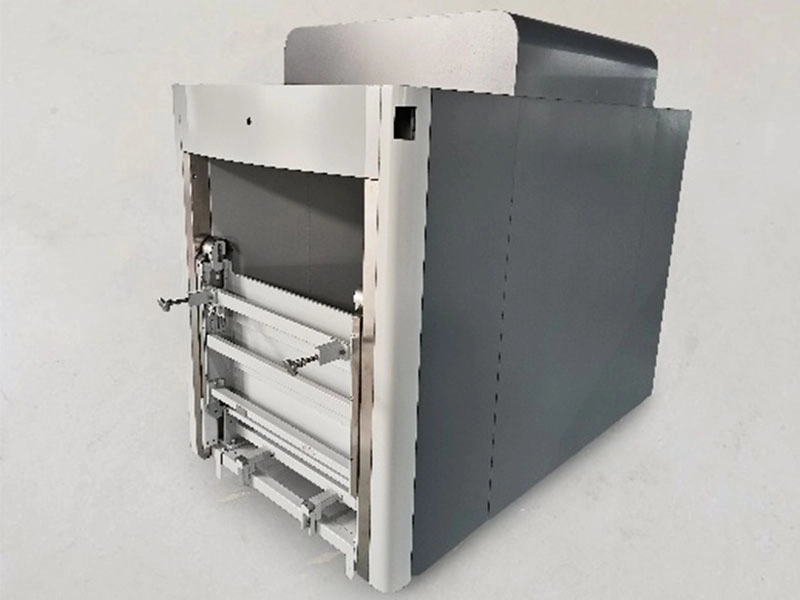
A one-stop manufacturing supplier should not be judged only by the number of processes listed on a website. Industrial buyers should check whether those processes are connected through engineering review, production planning, inspection, and project communication.
Tooling and metal stamping capability
For formed parts, clips, brackets, terminals, inserts, and volume production components, tooling and stamping capability can affect cost, repeatability, and production stability. Buyers should ask whether the supplier can review stamping feasibility, material selection, forming risk, and tooling requirements before production.
For high-volume or repeat metal components, one-stop precision metal manufacturing can help buyers compare whether a part should be made through stamping, sheet metal fabrication, machining, welding, or a combined process.
Sheet metal fabrication, welding, and surface finishing capability
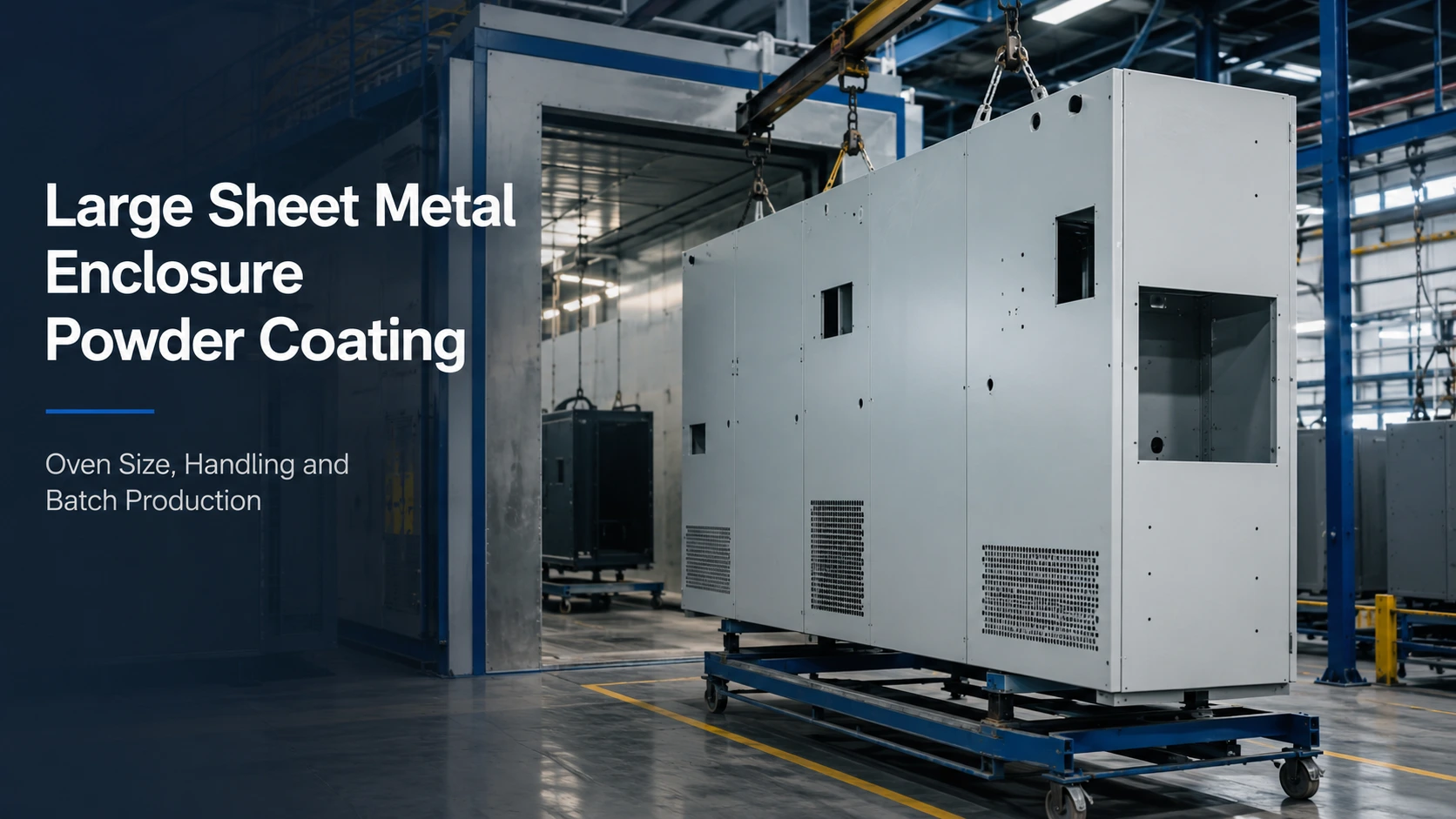
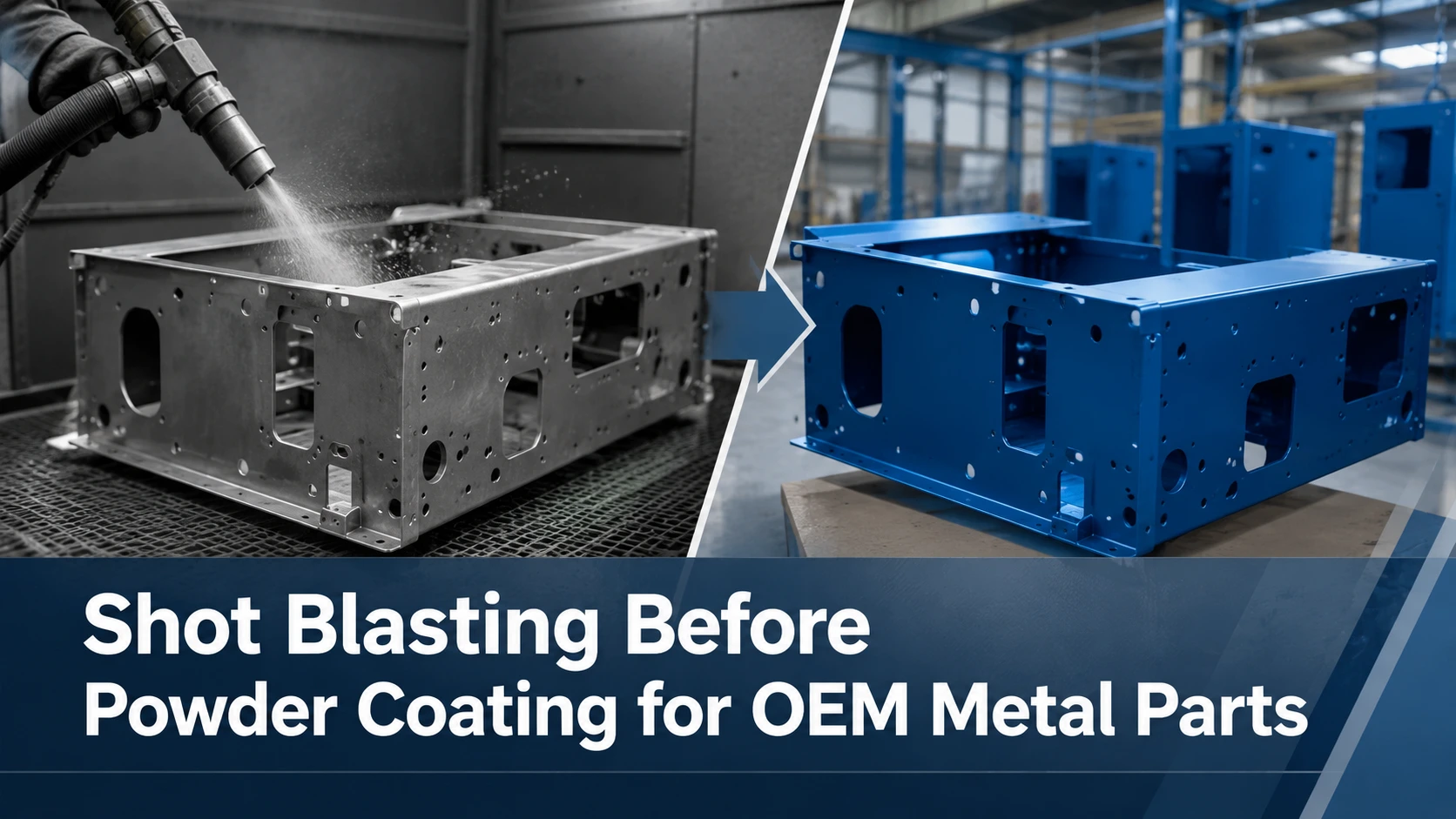
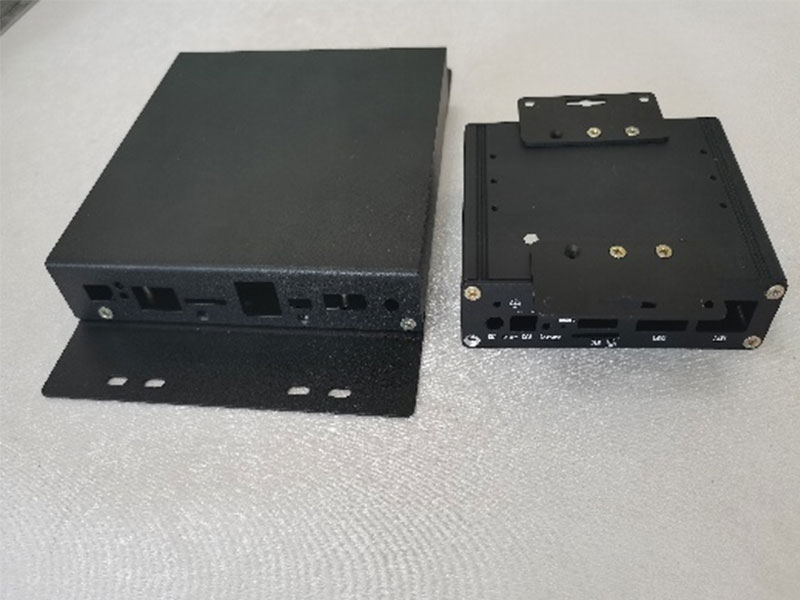
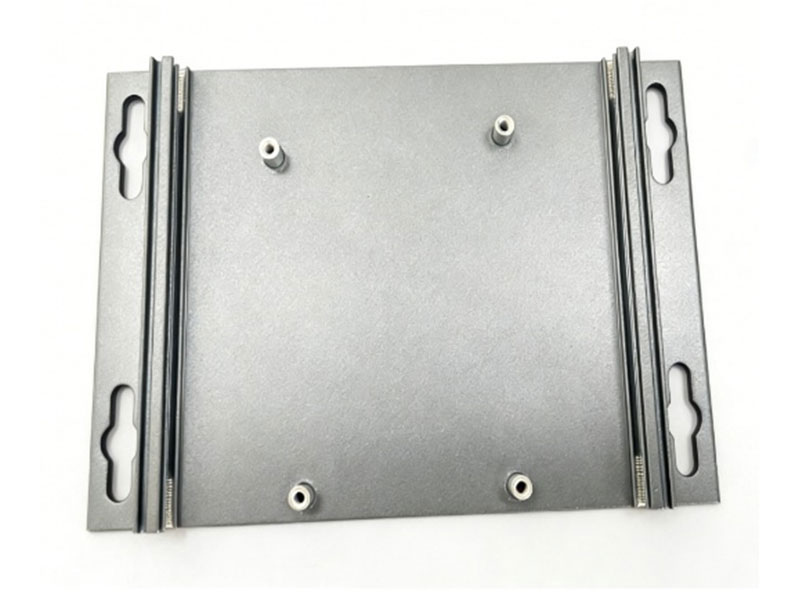
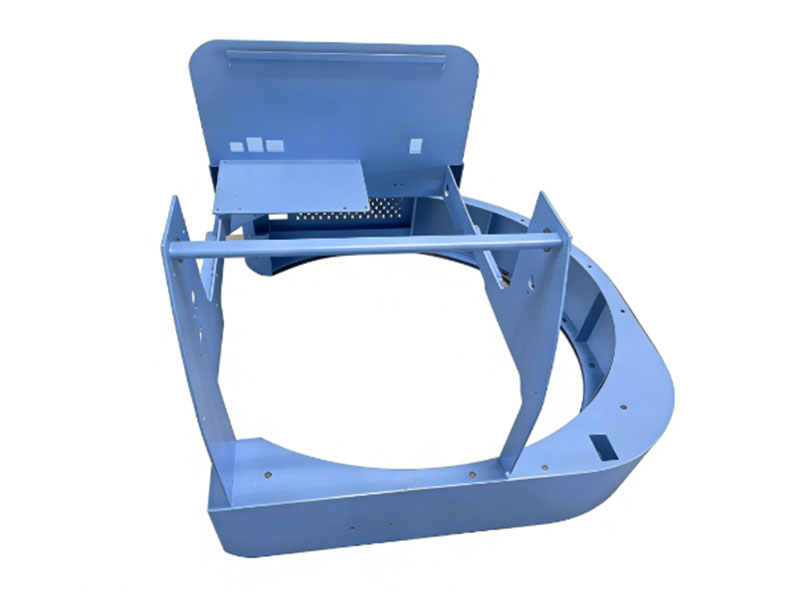
For enclosures, covers, panels, frames, cabinets, and equipment housings, sheet metal fabrication capability should include more than cutting and bending. Buyers should also review welding, riveting, grinding, surface preparation, powder coating, painting, and final assembly requirements.
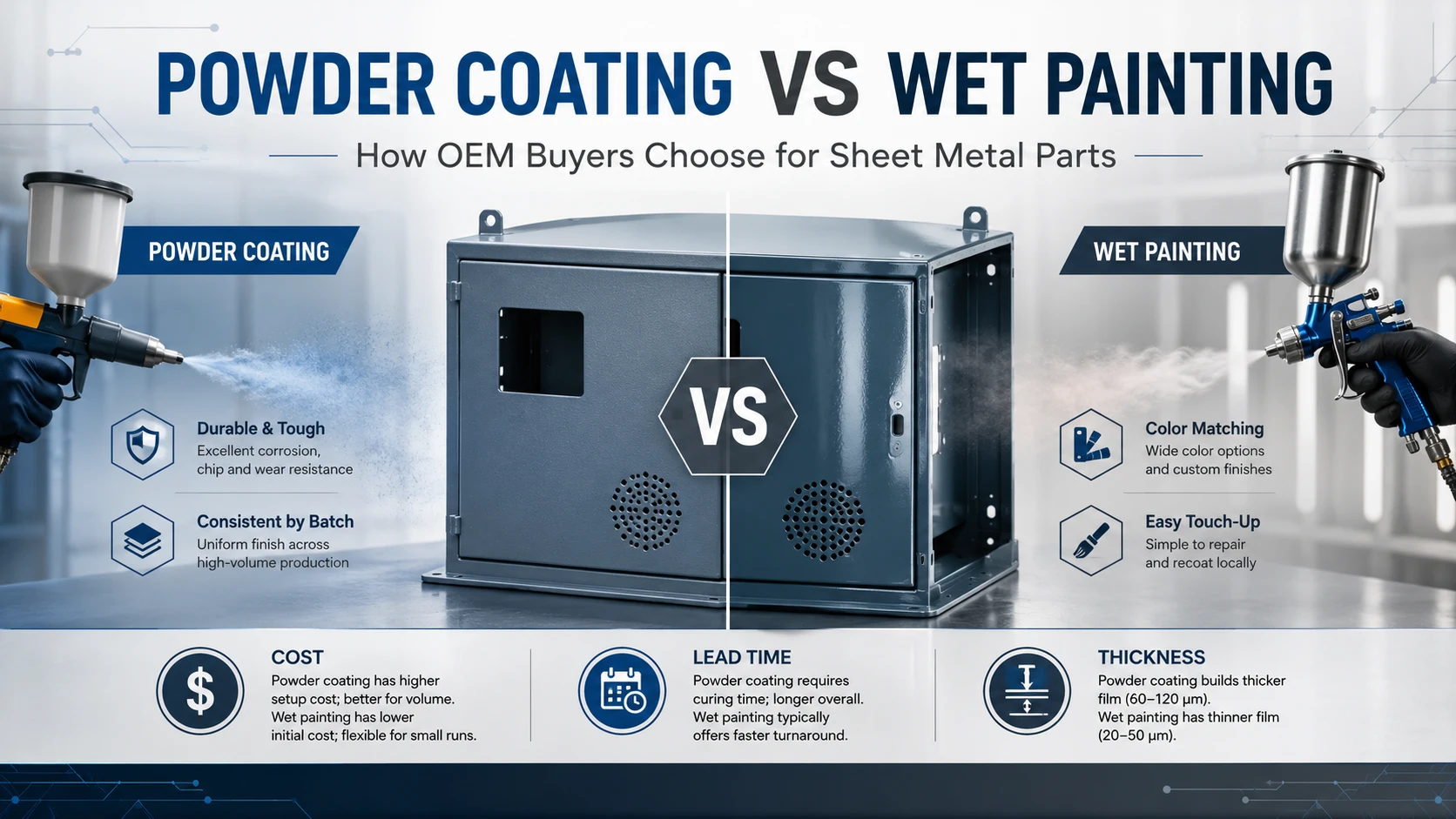
If surface finish is critical, the supplier should understand how coating thickness, masking, threaded holes, mating surfaces, and appearance requirements affect assembly. These details should be verified against drawings, samples, or product specifications.
CNC machining and precision component support
Some metal assemblies require machined shafts, threaded parts, bushings, inserts, blocks, or precision mating components. In these cases, CNC machining capability can reduce supplier handoffs and help engineering teams solve fit-up problems earlier.
When a metal supplier can support stamping, sheet metal, machining, finishing, and assembly under one project workflow, buyers may reduce the number of separate vendors they need to manage.
In-House Capability vs. Outsourced Processes: What Buyers Should Ask
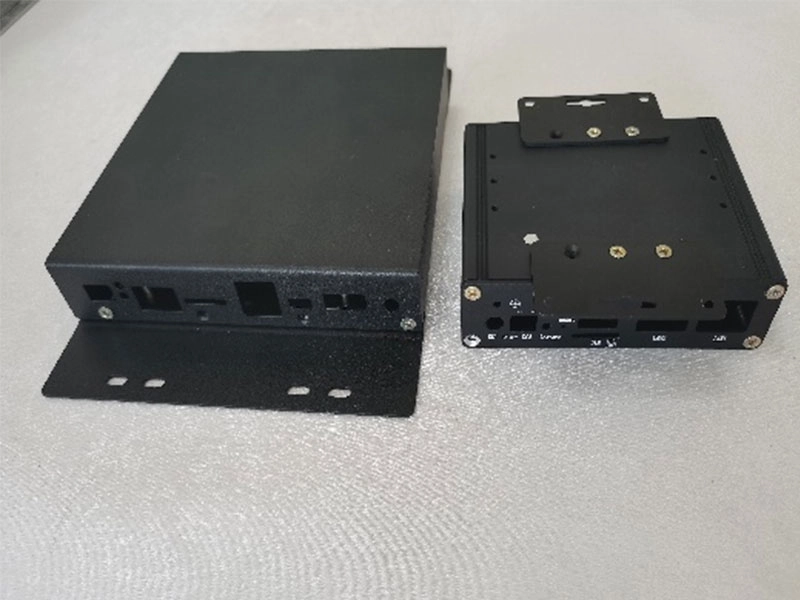
Not every process must be done in-house. However, buyers should clearly know which steps are internal and which are subcontracted. Outsourcing is not automatically a problem, but unmanaged handoffs can create lead time, quality, and responsibility risks.
| Buyer question | Why it matters |
|---|---|
| Which processes are handled in-house? | Shows where the supplier has direct control over schedule and quality |
| Which processes are subcontracted? | Helps identify possible delay or communication risks |
| Who checks parts after each process? | Reduces hidden defects before final delivery |
| Who is responsible for process-related defects? | Avoids blame shifting between vendors |
| How are drawing revisions shared? | Prevents outdated versions from entering production |
A reliable integrated metal fabrication supplier should be able to explain the full process route from RFQ to shipment. If a process is outsourced, the buyer should ask how the supplier controls subcontractor quality, inspection, scheduling, and revision updates.
Quality Checklist for OEM Metal Parts Suppliers
For OEM buyers, a sample approval is only the first step. The more important question is whether the supplier can repeat the same result in batch production.
Quality review should include drawing control, material confirmation, dimensional inspection, surface checks, defect response, and repeat production control. If a metal component is used in electrical equipment, agricultural machinery, industrial automation, power equipment, home appliances, or other assembled products, even a small deviation can affect installation or final equipment performance.
Important quality questions include:
- How are drawing revisions and engineering changes controlled?
- Are material grade, thickness, and surface requirements confirmed before production?
- Which dimensions are considered critical to function?
- How are coating, burrs, welding marks, threads, and assembly surfaces checked?
- What happens when a repeated defect appears?
- Can inspection documents or sample reports be provided when required?
Quality requirements may vary by material, size, load, tolerance, appearance grade, and operating environment. The checklist should reflect the real application instead of using one generic standard for every project.
Lead Time and Production Scheduling Checklist
Lead time problems often come from poor coordination rather than slow production alone. A supplier may cut parts quickly but wait for welding capacity. A finished welded frame may be delayed by painting. A coated part may require rework because a masked area was not clearly defined.
Before approving a quote, industrial buyers should ask how the supplier plans prototype samples, pilot runs, batch production, inspection, and delivery. For repeat orders, buyers should also discuss forecast, batch size, packaging method, and expected order frequency.
A practical lead time checklist should cover:
- Sample production and approval process
- Batch production planning
- Capacity for repeat orders
- Surface finishing schedule
- Assembly and inspection sequence
- Packaging and shipping requirements
- Communication process for urgent changes
The goal is not to push every supplier for the shortest possible delivery promise. The goal is to understand whether the promised delivery schedule is realistic for the required material, process route, quantity, finish, and inspection level.
RFQ Checklist for Industrial Metal Parts Buyers
A complete RFQ helps suppliers quote more accurately and reduces back-and-forth communication. When buyers only send a simple drawing without application details, the supplier may miss important functional requirements.
A metal parts RFQ should include:
- 2D drawings and 3D files, if available
- Drawing revision number
- Material grade, thickness, and special requirements
- Tolerance and critical dimensions
- Surface finish, coating, painting, or plating requirements
- Assembly interfaces, mating parts, or installation conditions
- Sample quantity and expected production volume
- Annual forecast or repeat order plan, if available
- Inspection, documentation, labeling, and packaging needs
- Known problems from previous suppliers, if any
For OEM and ODM projects, buyers can use an OEM/ODM metal manufacturing supplier page to understand whether the supplier’s process range fits the project before sending a detailed RFQ.
When a One-Stop Metal Supplier Is the Right Choice
A one-stop metal supplier is often suitable for custom parts that require multiple connected processes. Examples include stamped parts with secondary machining, sheet metal enclosures with powder coating, welded frames with machined inserts, painted covers with assembly requirements, and equipment components that need both function and appearance control.
However, one-stop sourcing is not the right answer for every project. Dual sourcing may still make sense for critical components, capacity backup, regional supply security, or highly specialized processes. Buyers should avoid over-consolidating the supply chain when a project requires a niche process that is better handled by a specialist.
The decision depends on process complexity, quality risk, order frequency, engineering change frequency, supplier communication, and the cost of managing multiple vendors. A good supplier checklist helps buyers make that decision with evidence instead of assumptions.
How CK Metal Tech Supports One-Stop Metal Manufacturing Projects
Industrial buyers should look for a supplier that can connect process capability with engineering review, production control, quality management, and practical communication. A qualified custom metal parts supplier should be able to discuss not only whether a part can be made, but also which route may reduce handoffs, rework, and supplier management risk.
Zhejiang Chuangkai Mechanical and Electrical Technology Co., Ltd., known as CK Metal Tech, is an integrated precision metal manufacturing company with confirmed capabilities in precision tooling design and manufacturing, precision metal stamping, precision sheet metal processing, precision machining, surface spraying, painting, powder coating, and precision component assembly.
For buyers reviewing a custom metal parts supplier in China, CK Metal Tech can support projects involving stamping, sheet metal fabrication, CNC machining, surface finishing, and assembly. The suitable production route still depends on the drawing, material, tolerance, surface requirement, quantity, and application environment.
Conclusion
A one-stop metal supplier checklist helps industrial buyers move beyond price comparison and evaluate the real project risks behind custom metal parts sourcing. The most important questions are whether the supplier can understand the full process route, control in-house and outsourced steps, manage drawing revisions, support quality inspection, and plan realistic delivery.
For new projects, supplier replacement, or RFQ preparation, buyers can prepare drawings, material requirements, surface finish details, target quantity, sample needs, application conditions, and any known quality issues. A supplier capability review can then help determine whether the project is better handled through stamping, sheet metal fabrication, CNC machining, welding, coating, assembly, or a combined manufacturing route.
FAQs
Q1: What are the factors to be considered while evaluating a one-stop metal supplier?
A1: The factors that can be considered while evaluating a one-stop metal supplier include capability, in-house/outsource, quality control, engineering support, lead time plan, communication process, and experience on multi-process custom metal parts.
Q2: What should be considered by the industrial buyers before selecting a metal supplier?
A2: Some things to consider for industrial buyers while selecting a metal supplier include the capability of the supplier to produce the required part in terms of material, tolerance, surface finish, production volume, inspection requirement, packaging, and engineering changes. The supplier should also provide the entire manufacturing process before going for production.
Q3: Will the one-stop metal supplier be a good choice compared to multiple suppliers?
A3: It will be good if the supplier is handling all the processes in connection to each other like tooling, stamping, machining, welding, sheet metal fabrication, coating, and assembly. In some cases, multiple suppliers can be selected depending upon dual sourcing or regional backup.
Q4: What needs to be provided in a metal parts RFQ?
A4: A metal parts RFQ should include drawings, 3D files if available, revision numbers, material, tolerance, finish, quantity, application details, inspection requirements, packaging needs, and known problems from previous production.
Q5: How do I choose a custom metal parts supplier in China?
A5: Choose a custom metal parts supplier in China by reviewing process capability, communication quality, quality management, drawing review process, surface finishing capability, production planning, and whether the supplier can support the specific application rather than only quote the lowest unit price.
Leave a reply