







20th Agustus 2026
Does EU CBAM Apply to Custom Steel and Aluminum Parts? 2026 CN Code and Buyer Checklist
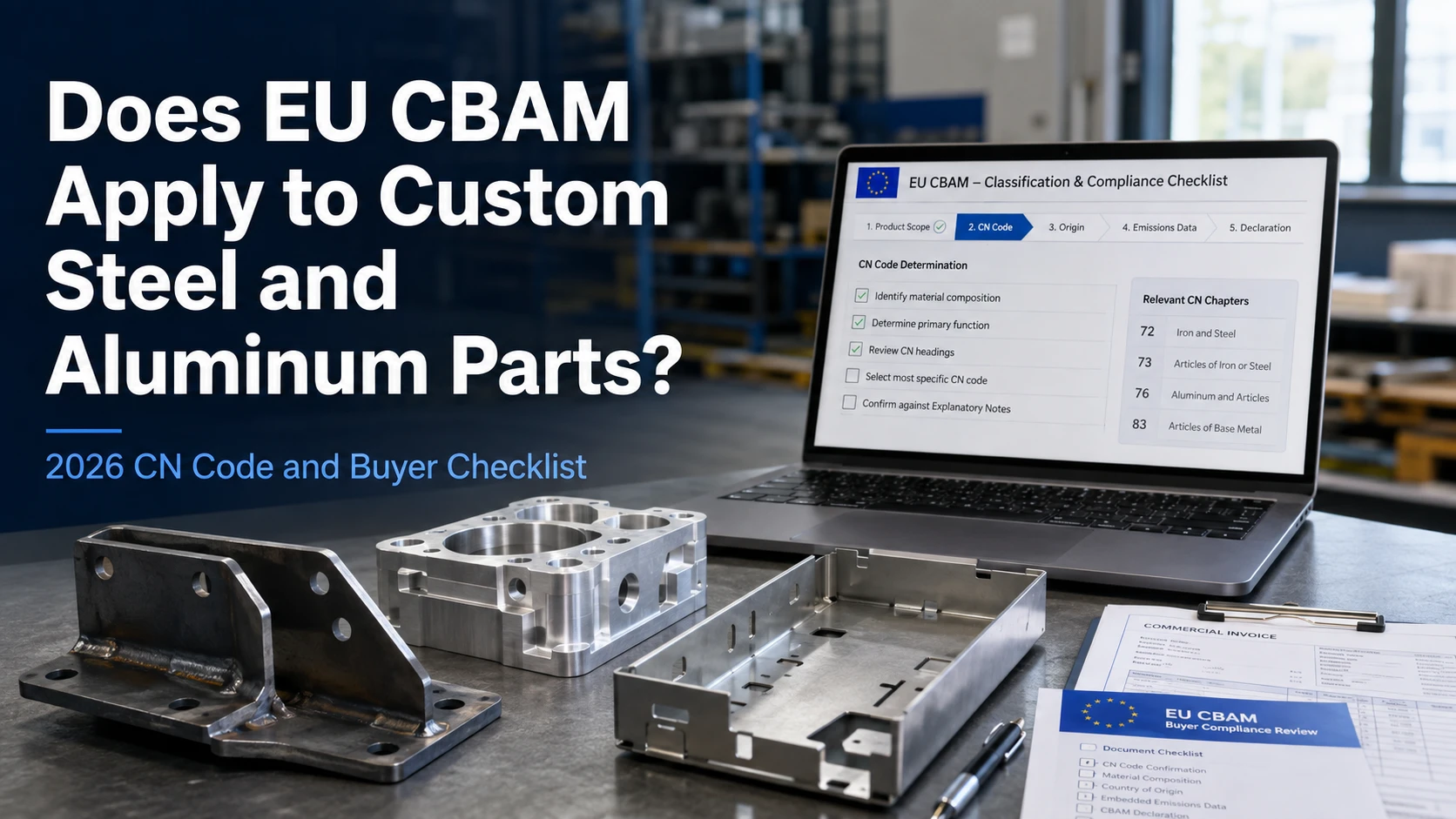
Custom steel or aluminum content does not automatically place a part inside or outside the EU Carbon Border Adjustment Mechanism. To determine whether EU CBAM applies to custom steel and aluminum parts, buyers must classify the finished imported product, check its CN code against the current CBAM scope, monitor the importer’s annual covered net mass, and confirm what embedded-emissions information is available from the supply chain.
CBAM entered its definitive regime on January 1, 2026. The following process helps OEM buyers identify the questions that require customs, legal, or emissions-data review before an order is placed.
The Quick Answer: Material Alone Does Not Determine CBAM Scope
Why the Imported Product’s CN Code Is the Starting Point
CBAM applies to goods listed by CN code in Annex I of Regulation (EU) 2023/956. It does not apply automatically to every product containing carbon steel, stainless steel, or aluminum.
An engineering description such as “machined aluminum housing” or “fabricated steel mounting bracket” may not provide enough information for customs classification. The finished product’s function, construction, imported condition, material, and intended use may all affect its final code.
Buyers should therefore begin with the eight-digit CN code used for EU importation. A supplier may provide a proposed HS or CN code, but the EU importer remains responsible for confirming the declaration with its customs broker, competent authority, or qualified customs adviser.
Why Custom-Made, Machined, or Finished Does Not Decide Coverage
Manufacturing processes do not create an automatic CBAM exemption. Cutting, stamping, CNC machining, welding, bending, coating, or assembly may change the product’s form, but coverage still depends on the classification of the imported article.
A component made from aluminum sheet classified under heading 7606 as raw material may no longer be imported under that heading after it becomes a complete equipment housing. Conversely, a fabricated component may fall under a broad heading for other articles of aluminum or steel.
The same principle applies to multi-material assemblies. Buyers should classify the imported configuration rather than an earlier production stage or the material with the greatest purchase value.
Which Custom Steel and Aluminum Parts May Be Covered?
Steel Fasteners, Brackets, and Fabricated Parts
Annex I includes heading 7318, covering iron or steel screws, bolts, nuts, rivets, washers, and similar articles. It also includes heading 7326 for other articles of iron or steel. This means certain fasteners, brackets, plates, and fabricated steel components may be covered. It does not mean every item described commercially as a bracket belongs under 7326.
A specialized machine component could be classified differently from a general-purpose metal article. Stainless steel is also not automatically excluded; the applicable code, rather than the informal material name, controls the initial CBAM scope check.
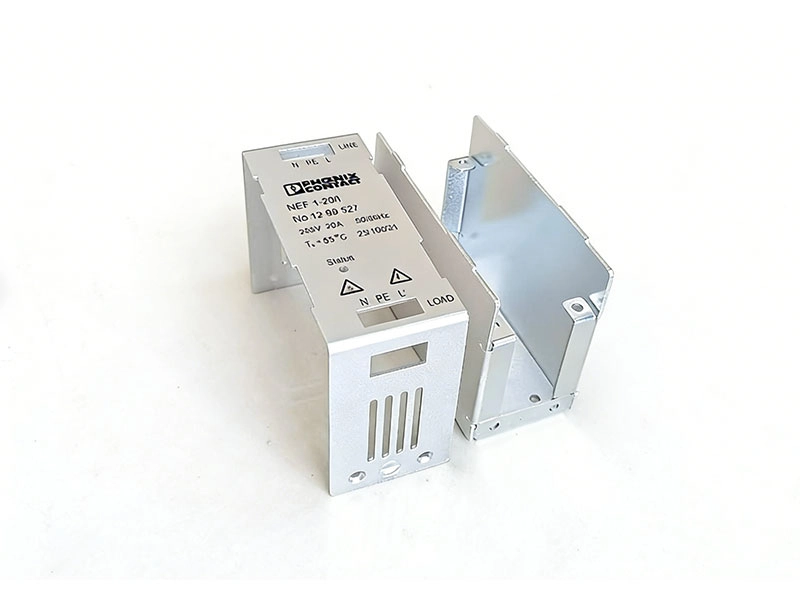
A fabricated galvanized steel contact filter bracket provides a useful example of why buyers need the drawing, material, product function, installation method, and imported configuration before assigning a CN code. The product page can illustrate the manufactured part, but it should not be treated as a tariff ruling.
Aluminum Sheets, Structures, Housings, and Other Articles
The current Annex I includes aluminum plates and sheets under 7606, certain structures and structural parts under 7610, and other articles of aluminum under 7616. Several additional aluminum categories are also listed.
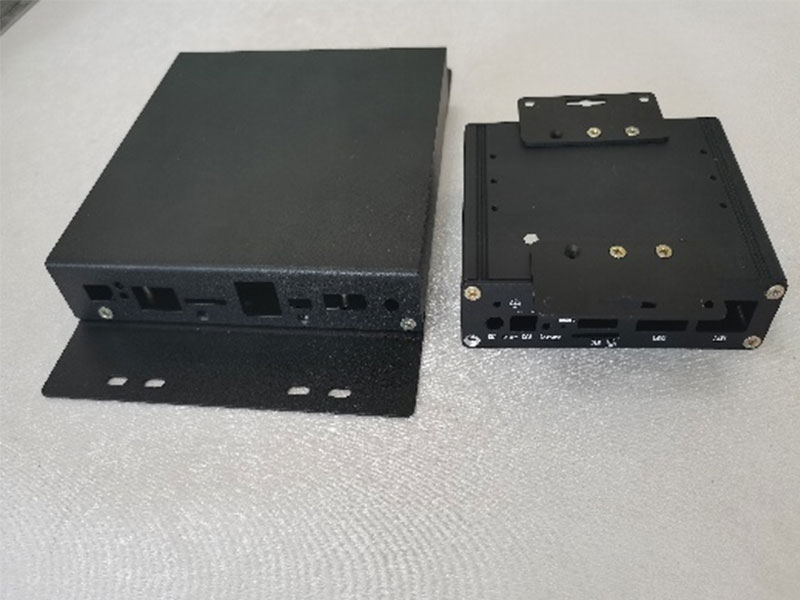
A CNC-machined aluminum housing could potentially fall under 7616, but it may instead be classified under a heading associated with machinery, electrical equipment, or another finished product category. A sheet metal enclosure manufactured from 7606 material does not necessarily retain the raw-sheet classification after fabrication.
Buyers sourcing custom steel and aluminum sheet metal fabrication should therefore keep manufacturing capability separate from customs classification. The supplier can confirm the material, process, weight, and product description, while the importer verifies the code for the finished imported article.
When the Part May Be Machinery or Electrical Equipment
A metal component designed solely or principally for a particular machine may raise classification questions under Chapters 84 or 85. That does not mean every dedicated component belongs in those chapters. General-use parts, fasteners, structures, and articles described elsewhere may follow different rules.
For uncertain products, provide the customs adviser with:
- Complete drawings and photographs
- Material and BOM
- Product function
- Installed location
- Imported assembly condition
- Details of any electrical or mechanical equipment supplied with it
A Binding Tariff Information decision or equivalent professional review may be appropriate where the classification affects repeated or high-value imports.
Apply the 2026 CBAM Scope and Threshold Checklist
Confirm the CN Code, Origin, and Importer of Record
After confirming the code, check whether it appears in the current Annex I. Also distinguish the country of origin from the shipping country. A product shipped from one country may have been manufactured or substantially transformed elsewhere.
The buyer must then identify the importer of record and the entity responsible for the CBAM declaration. Depending on the customs arrangement, this may be the EU importer or an eligible indirect customs representative.
Maintain a classification register that connects each part number with its description, CN code, origin, supplier, net mass, and responsible importer. This reduces the risk of treating the same component differently across purchasing, customs, and sustainability systems.
Calculate the 50-Tonne Threshold Correctly
For iron and steel, aluminum, cement, and fertilizers, the current de minimis exemption uses one cumulative mass-based threshold of 50 tonnes per importer per calendar year. It is not calculated separately for each shipment, SKU, supplier, or CN code.
The relevant net mass is aggregated across covered codes in those four sectors. If an importer exceeds the threshold during the calendar year, the regulation applies to the embedded emissions of all covered goods imported by that importer during that year—not only the quantity above 50 tonnes.
Procurement teams should set an internal warning below the threshold so that authorisation and data collection do not begin after it has already been exceeded.
Separate the Importer’s Obligations from the Supplier’s Role
What the EU Importer or Authorized Declarant Must Manage
Importers above the applicable threshold must address authorised CBAM declarant status, maintain import and emissions records, submit the annual declaration, and surrender the required certificates. The European Commission states that the first declaration covering 2026 imports is due by September 30, 2027.
The importer also decides whether to rely on applicable Commission default values or report actual embedded emissions. This requires coordination among customs, procurement, sustainability, finance, and legal teams.
What a Non-EU Parts Supplier May Need to Provide
A non-EU metal parts manufacturer is generally not the EU declarant. Its practical role is to support the importer with accurate product and supply-chain information.
Depending on the product and reporting method, requested information may include:
- Product identification and net mass
- Material specification and origin
- Purchased precursor materials
- Upstream production installation
- Production-route information
- Actual embedded-emissions data
- Verification status
- Carbon price paid in the country of origin, where relevant
A mill certificate confirms material chemistry or grade; it does not by itself provide complete CBAM emissions information.
What CBAM Data Should Buyers Request?
Product, Material, Weight, and Installation Traceability
Data should be linked to a part number, revision, production batch, and material source. Buyers should distinguish finished-product net mass from raw-material input and manufacturing scrap.
When a component combines fabricated sheet, machined inserts, fasteners, castings, or purchased profiles, the supplier should identify which inputs can be traced to their upstream installations. A trader’s name alone may not identify the plant where steel or aluminum was produced.
Material substitutions and changes in upstream source should trigger notification because they may change both technical performance and emissions data.
Actual Embedded Emissions Versus Default Values
The Commission permits importers to use actual values or applicable default values. When actual values are used, the third-country producer must provide verified information on total embedded emissions in accordance with the definitive-regime rules.
A lower unit price should not be reviewed separately from data readiness. A supplier with incomplete upstream information may create additional administrative work or force the importer to use default values. The commercial effect depends on the applicable rules, product classification, emissions methodology, and certificate price.
Use a Custom-Parts Decision Table Before Seeking a Classification Ruling
| Product scenario | Possible classification question | Buyer’s next action |
|---|---|---|
| Steel screw, bolt, nut, rivet, or washer | Could fall under heading 7318 | Confirm the exact eight-digit CN code |
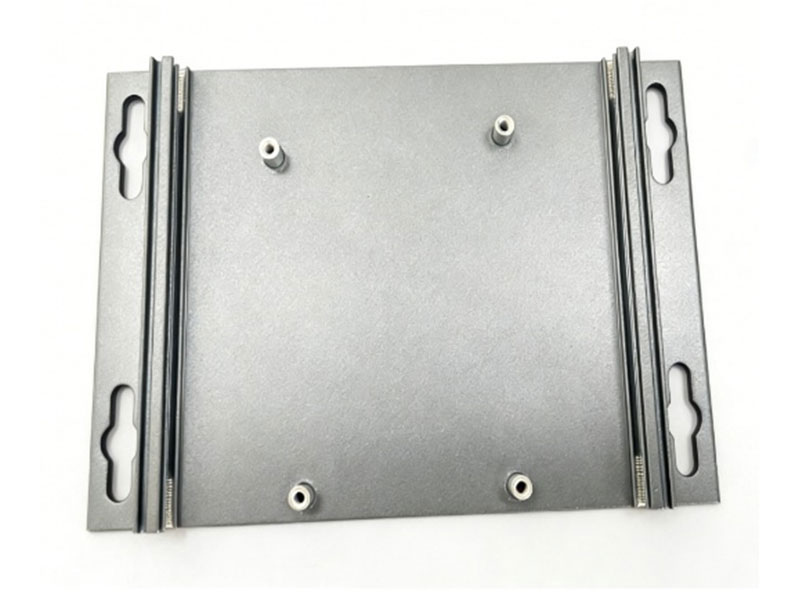
| Fabricated steel mounting bracket | Could fall under 7326 or another heading | Submit drawings, function, and material for review |
| CNC-machined aluminum housing | Could fall under 7616 or a machinery/electrical heading | Classify the finished imported product |
| Sheet metal equipment enclosure | Material and final function may lead to different headings | Review the complete assembly and intended use |
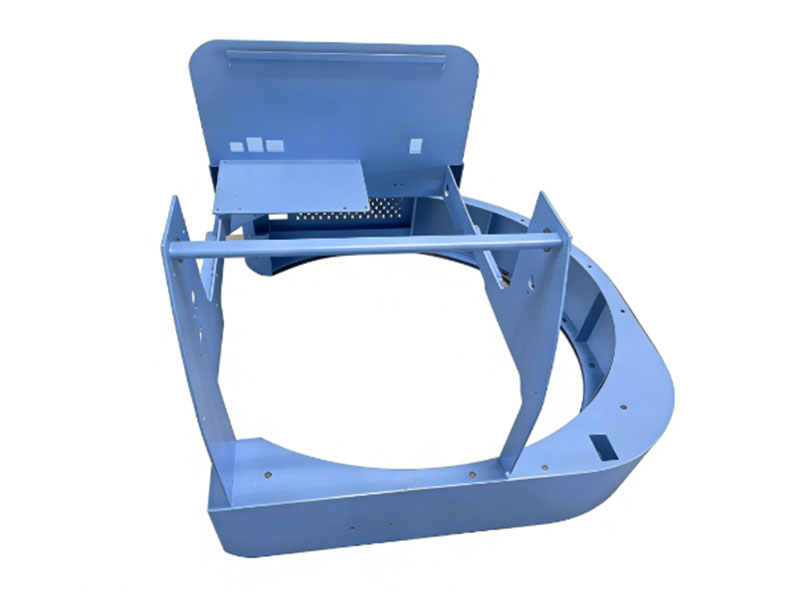
| Multi-material mechanical assembly | Classification may follow the complete product | Provide the BOM and functional description |
| Housing imported with equipment installed | May differ from an empty enclosure | Classify the actual imported configuration |
These examples identify classification questions; they are not customs rulings.
Add CBAM Requirements to the RFQ and Supplier Review
Add Classification and Emissions Fields to the RFQ
A CBAM-aware RFQ should request the technical and supply-chain information required to assess the imported part. Useful fields include the material grade, product net mass, country of origin, proposed classification if available, upstream material supplier, production installation, availability of actual emissions data, verification status, and purchased-component information.
The RFQ should distinguish among:
- Data available with the quotation
- Data requiring an upstream request
- Data available only after order placement
- Data the supplier cannot provide
It should also require notification when the material grade, mill, smelter, precursor supplier, or manufacturing route changes.
CBAM data collection can become more difficult when sourcing, machining, fabrication, finishing, and assembly are divided among unrelated companies. The existing guide to manufaktur logam presisi terpadu explains the broader process-responsibility issues that arise when multiple manufacturing stages must be coordinated.
Compare Data-Ready and Data-Poor Suppliers
A data-ready supplier should be able to connect the part, production batch, material batch, and upstream source without making unsupported legal claims. Evidence may include structured product records, material documents, facility information, change controls, and a named person responsible for data requests.
Treat phrases such as “CBAM certified” or “fully CBAM compliant” cautiously. CBAM does not replace the importer’s legal responsibility, and a supplier’s general statement does not confirm the product code, threshold calculation, emissions methodology, or verification status.
Incomplete data does not necessarily require immediate supplier replacement. Buyers can begin with a limited data trial on representative parts and identify gaps before awarding long-term volume.
How CK Metal Tech Can Support the Manufacturing Review
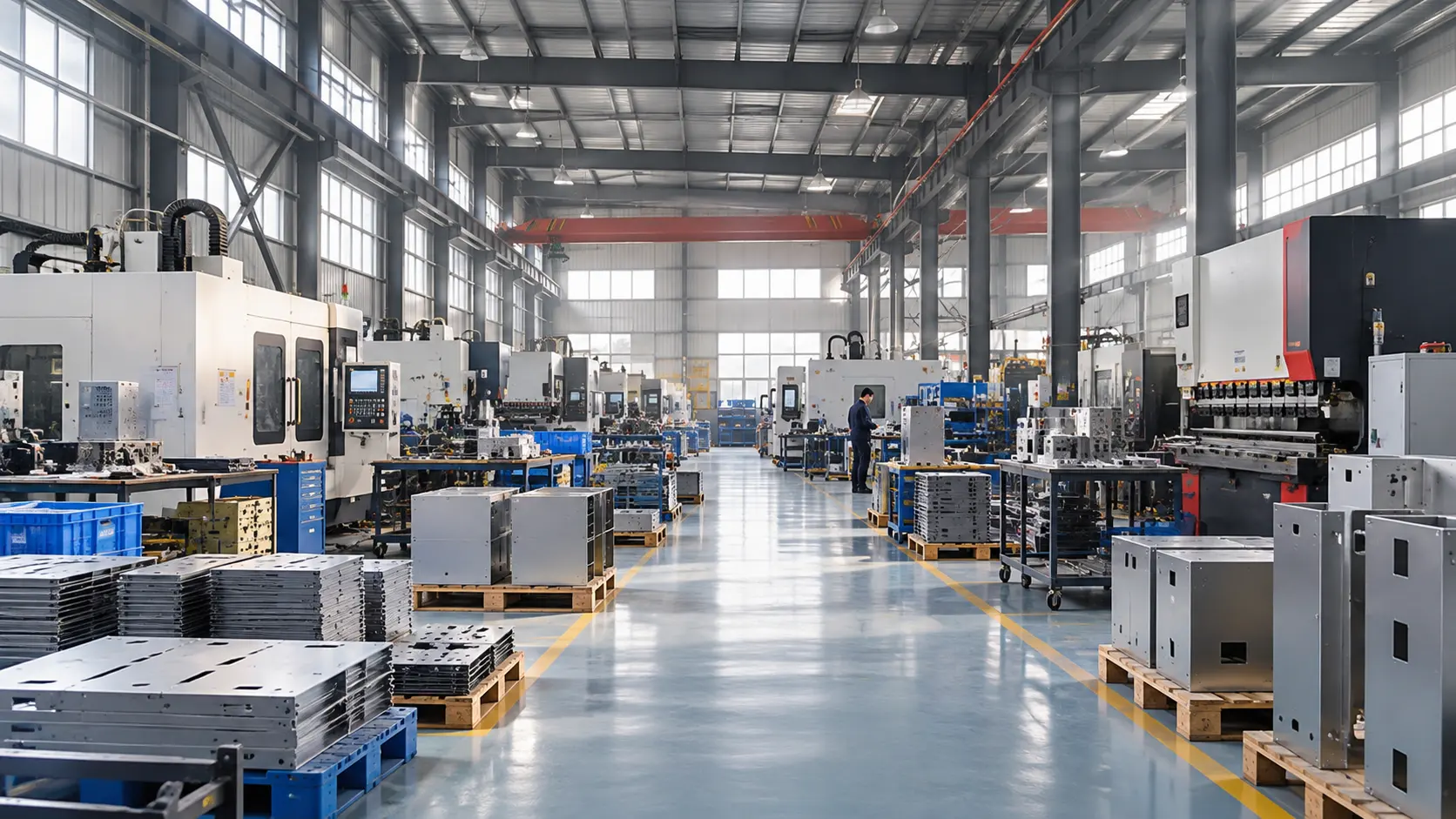
Zhejiang Chuangkai Mechanical and Electrical Technology Co., Ltd., operating as CK Metal Tech, provides custom steel and aluminum parts manufacturing capabilities covering sheet metal processing, machining, stamping, welding, surface finishing, and component assembly. The published material range includes carbon steel, stainless steel, aluminum alloy, galvanized sheet, and aluminum-zinc-coated sheet.
These manufacturing capabilities do not determine a product’s CN code or establish the availability of verified CBAM emissions data. For an EU-bound project, CK Metal Tech would need to review the drawing, BOM, material, finished weight, volume, imported configuration, and requested documentation. Availability of upstream installation and emissions information should be confirmed for each supply chain.
Monitor Current Rules Separately from Proposed Expansion
The current scope should be assessed under the legislation in force when the goods are imported. Separately, EU institutions are considering an extension to additional steel- and aluminum-intensive downstream goods.
The Council adopted its negotiating position in June 2026, and the European Parliament’s environment committee subsequently backed an expanded downstream scope. The proposal remains subject to the EU legislative process and should not yet be treated as the final operative product list.
Buyers with multiyear contracts should review classifications regularly and include provisions covering new data duties, scope changes, and cost reassessment.
Kesimpulan
EU CBAM coverage for a custom metal part cannot be decided from material or manufacturing method alone. Confirm the finished product’s CN code, check the current Annex I, identify the importer, monitor the annual mass threshold, and assess supplier emissions-data readiness before comparing landed cost.
EU buyers may submit custom metal part drawings and CBAM data requirements together with the BOM, material, product weight, annual quantity, intended use, destination, existing HS or CN code, and required supplier documentation. CK Metal Tech can review the manufacturing route and identify which requested product and material records require project-specific confirmation.
This article provides general purchasing and compliance information. Product classification and CBAM obligations should be confirmed with the importer’s customs broker, competent authority, or qualified legal and customs adviser.
Pertanyaan yang Sering Diajukan
Are CNC-machined aluminum parts covered by EU CBAM?
They may be. Coverage depends on the CN code of the finished imported component. CNC machining and use of CBAM-covered aluminum input material do not independently establish the final classification.
Are steel brackets and sheet metal enclosures subject to CBAM?
Some may fall under covered Chapter 73 headings, while others may be classified according to a particular mechanical, electrical, or structural function. Review each imported configuration individually.
Is the 50-tonne CBAM threshold per shipment or per year?
It is an annual cumulative threshold per importer for covered goods in the four mass-based sectors. It is not a separate threshold for each shipment, supplier, part number, or CN code.
Who is responsible for CBAM—the importer or the manufacturer?
The EU importer or eligible indirect customs representative carries the legal declaration and certificate obligations. The non-EU manufacturer supports the process by providing accurate product, material, origin, weight, facility, and emissions information.
What data should a metal parts supplier provide for CBAM?
Buyers may need product identification, net mass, material, origin, upstream production installation, embedded-emissions information, verification status, purchased-component data, and notification of material or source changes.
Tinggalkan balasan