




3rd July 2026
Powder Coating for Sheet Metal Parts and Enclosures: Process, Materials and Applications
Why Powder Coating Matters in OEM Sheet Metal Projects
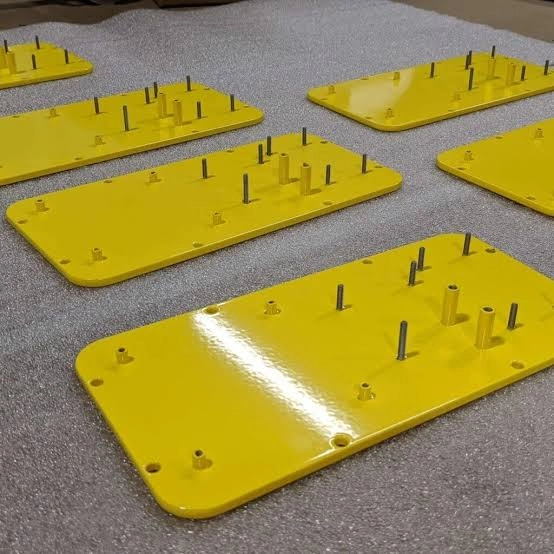
The decision to powder coat sheet metal components and enclosures may come up where OEM customers require more than just aesthetics from their components and enclosures. A powder coated component such as an enclosure, chassis, bracket, cover or frame needs to be tough enough to withstand handling, assembly, packaging, export, and use. In cases where coating chips off along edges, forms a buildup in threaded openings, or fails in just a few months in operation, this may not be a purely aesthetic problem.
Sourcing teams should look into powder coating in conjunction with sheet metal fabrication, welding, masking, surface conditioning, coating thickness, curing, and packaging.A good finish starts long before powder reaches the part.
What Is the Powder Coating Process for Sheet Metal Parts?
Surface Preparation Before Powder Coating
The first step in powder coating is a parts review. The engineer will review the drawing, material, cosmetic surface finish, hole placement, insert location, bends, and assemble points. When it comes to cold rolled steel, carbon steel, aluminum, stainless steel, galvanized sheet, and aluminum-zinc coated sheets, surface conditions greatly influence the adhesion of powder coating.
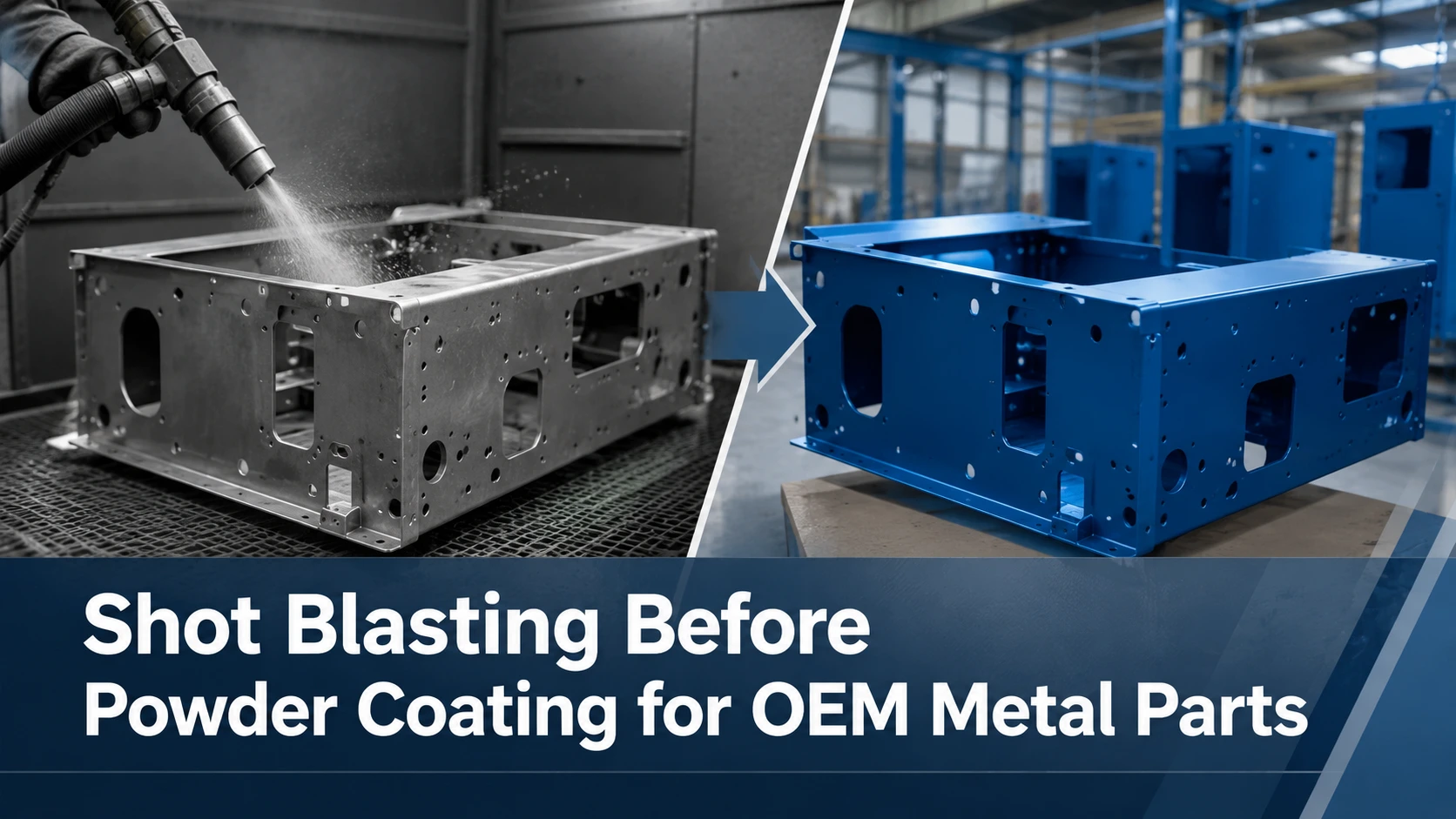
Surface preparation prior to powder coating includes either cleaning, degreasing, grinding, sanding, or shot blasting. Oil, welding residues, rust, sharp burr, and uneven grinding marks can all be evident from the finished product. In the case of powder coated sheet metal enclosures, a weld mark will be noticeable even on a large surface like a cover.
Masking, Electrostatic Spraying and Curing
After cleaning, the supplier should cover threaded holes, grounding points, bearing surfaces, PEM fasteners, assembly contact surfaces, and tolerance-sensitive slots. It is an easily overlooked step, but one that has direct effects on assembly. A layer that is satisfactory on the surface may cause problems if screws cannot be screwed in properly or panels don’t fit anymore.
Powder coating with electrostatics involves charged powder particles adhering to metal pieces that are grounded. After the coating, the parts are baked in the oven, where the heat helps in making the film. In case of custom powder coated parts, the process validation steps involved are type of powder, color standard, texture, gloss, coating thickness, curing time, hanging of parts, and final inspection after cooling.
Materials Used for Powder Coated Sheet Metal Parts
Cold-rolled steel is widely used for equipment housings, medical equipment enclosure parts, electrical equipment enclosure panels, and indoor industrial covers. It forms well and accepts coating after proper cleaning. Powder coating cold rolled steel is common when buyers need a smooth appearance and controlled cost.
Aluminum sheet metal is preferred where weight reduction matters, such as communication boxes, covers, and control panels. Powder coating aluminum sheet metal requires careful pretreatment because poor cleaning can reduce adhesion. Stainless steel may be selected for cleaner environments or corrosion-sensitive applications, while galvanized steel and aluminum-zinc coated sheet are often used where base-metal corrosion resistance is part of the design.
Material choice should match the use environment. Indoor cabinets, semi-outdoor equipment, machinery covers, and high-touch panels do not face the same risks. Buyers should avoid choosing a material only by unit price.
Applications of Powder Coated Sheet Metal Enclosures
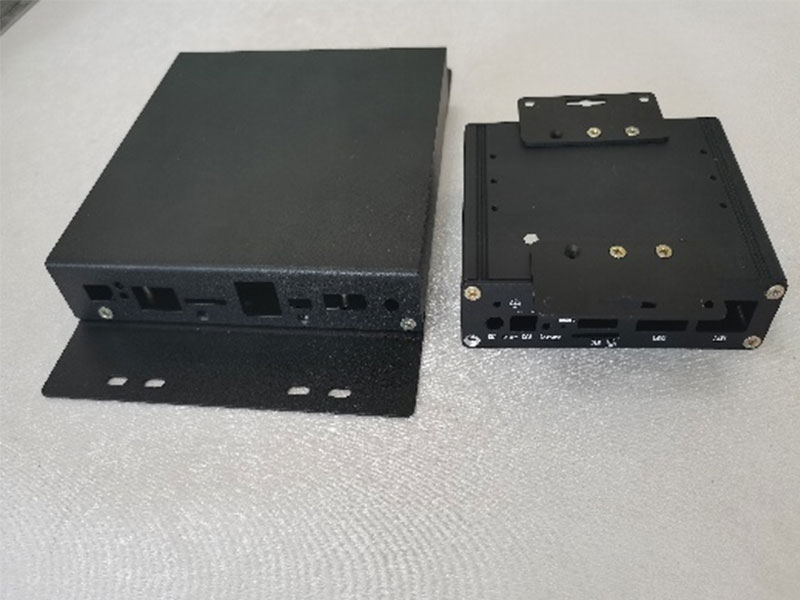
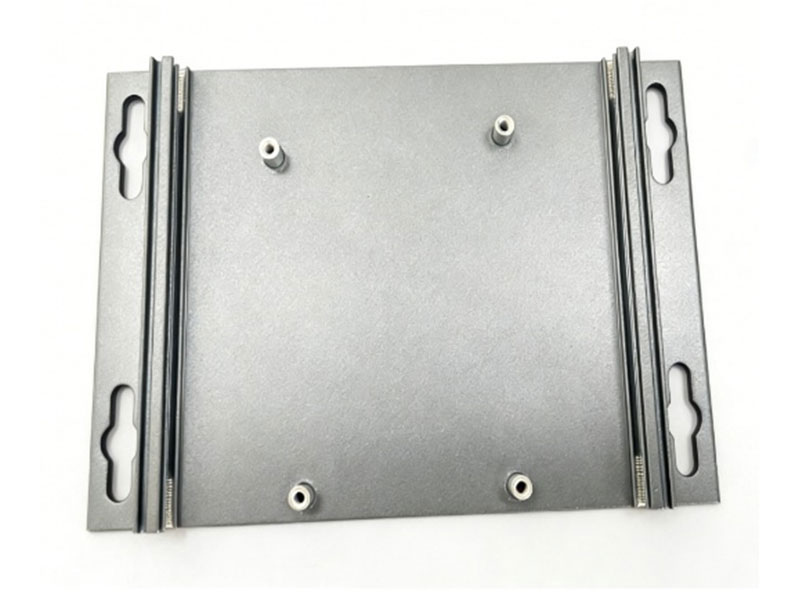
Powder coated sheet metal enclosures are used across medical equipment, security inspection equipment, industrial control cabinets, communication boxes, semiconductor equipment frames, electrical panels, agricultural machinery covers, and new energy equipment parts.
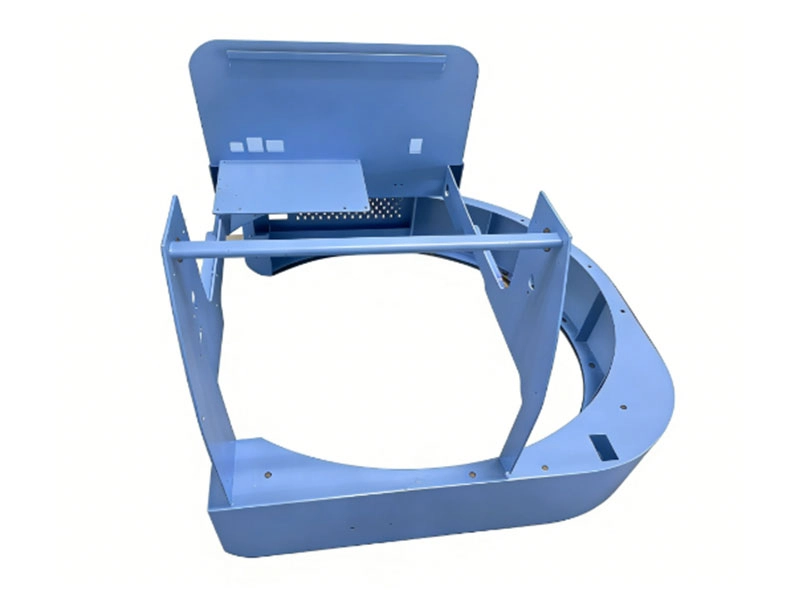
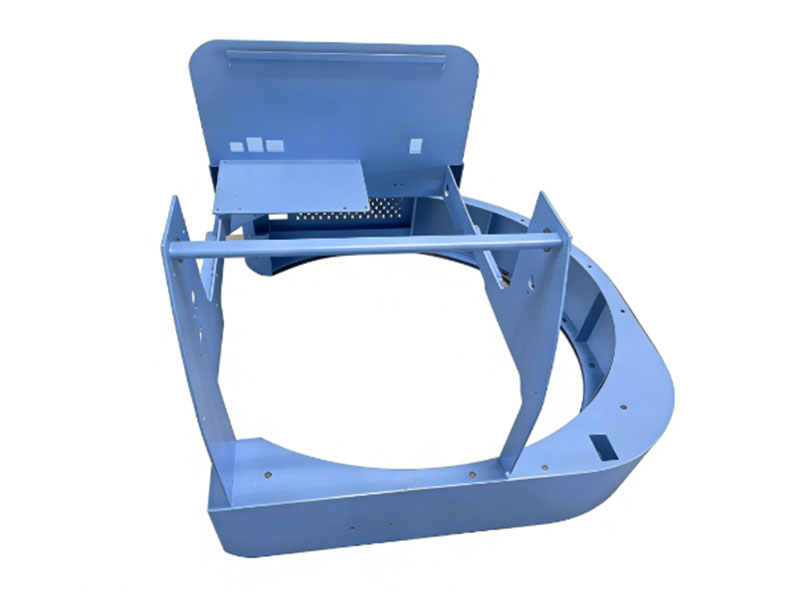
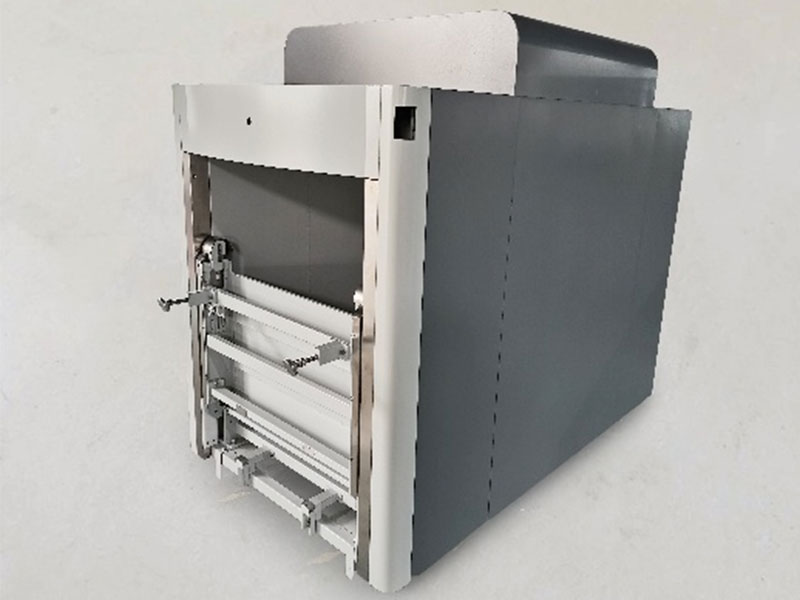
A medical equipment enclosure may require smooth curved forming, cleanable surfaces, integrated ventilation slots, and a stable light-colored finish. A security inspection chassis usually places more attention on strength, internal assembly, and surface durability. A semiconductor equipment frame may need a clean surface, stable geometry, and protection against corrosion during handling and installation.
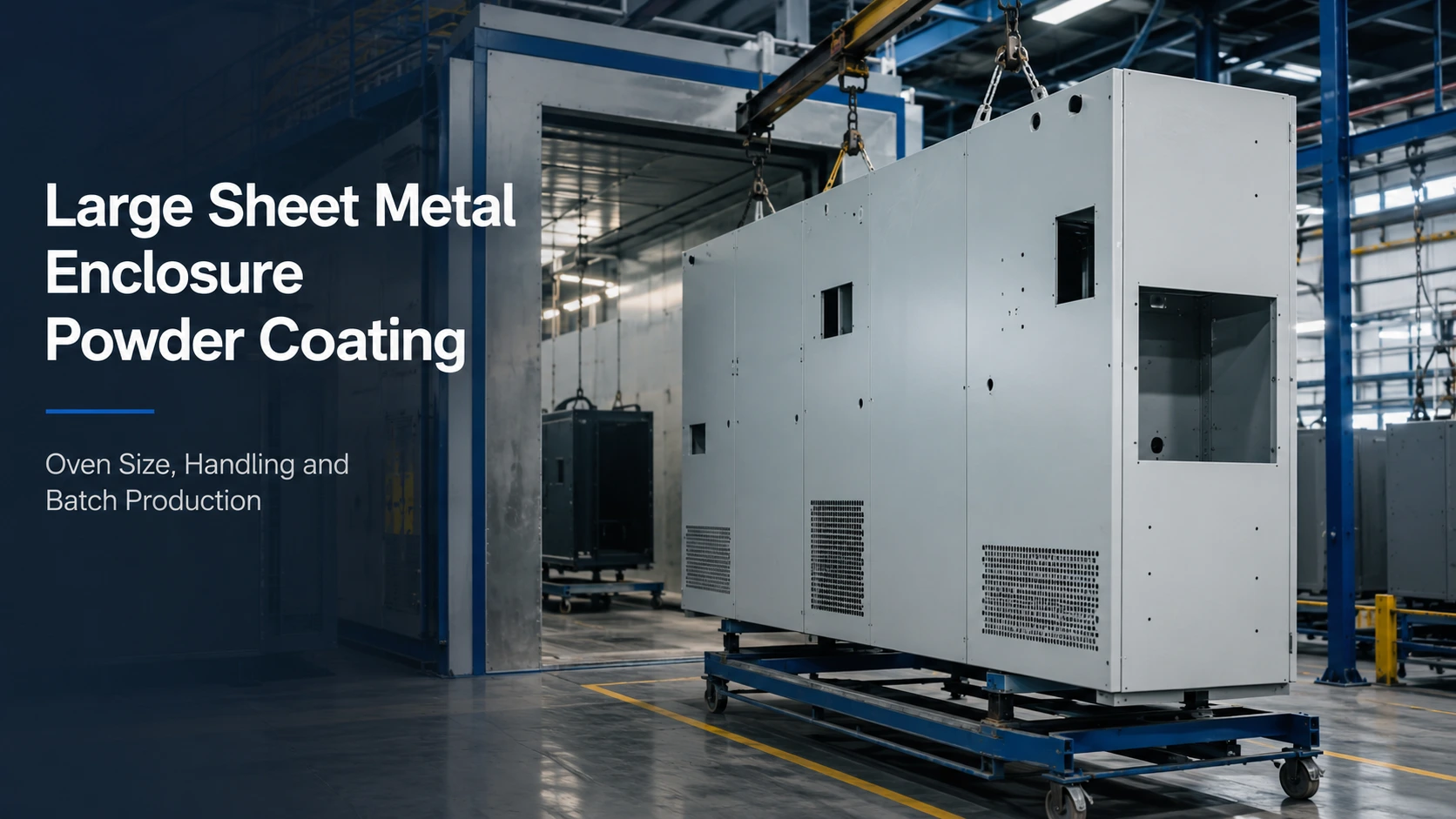
For large sheet metal enclosure powder coating, part size and weight become major purchasing questions. Buyers should ask whether the supplier can handle large boxes, frames, and covers without damaging edges or creating uneven film build-up.
Powder Coating vs Painting for OEM Metal Finishing
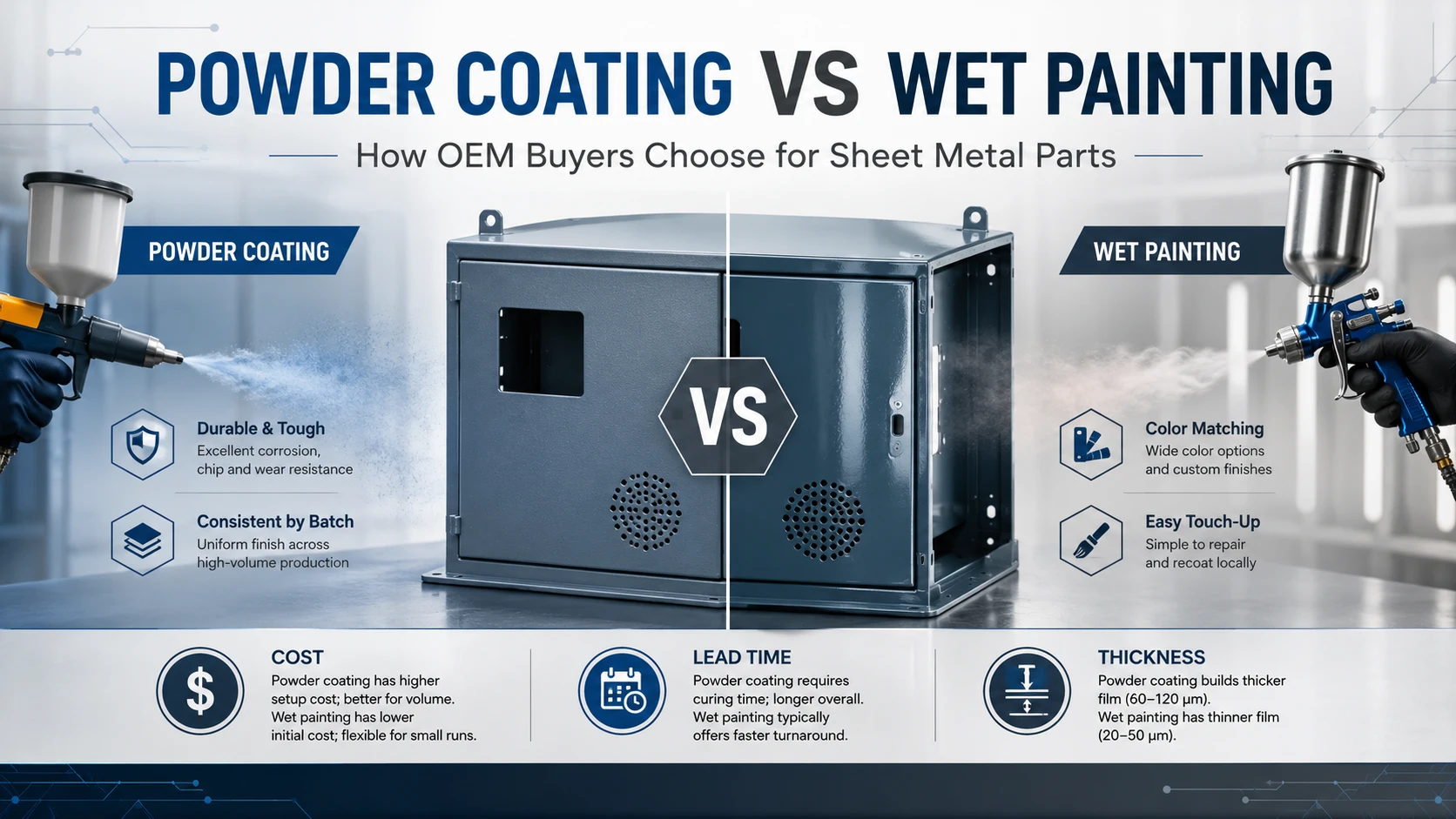
Powder coating vs painting is a common decision for OEM metal finishing. Powder coating is often used for repeat production, durable surfaces, consistent appearance, and efficient batch processing. Wet painting may be considered for special color effects, very large parts, thin-film requirements, or cases where heat exposure must be limited.
The better choice depends on material, part size, function, color standard, finish texture, corrosion target, and annual volume. A practical RFQ should not simply say “black coating.” It should describe the color reference, gloss, texture, masking zones, cosmetic surface, coating thickness for sheet metal, salt spray expectation if required, packing method, and application environment.
Choosing a Sheet Metal Fabrication and Powder Coating Supplier
For buyers sourcing custom powder coated sheet metal parts in bulk, supplier capability is just as important as the powder itself. A qualified OEM sheet metal manufacturer should understand cutting, bending, welding, grinding, riveting, powder coating, painting, inspection, and packing as one connected workflow.
This is where Zhejiang Chuangkai Mechanical and Electrical Technology Co., Ltd. can support buyers looking for sheet metal fabrication and powder coating for equipment parts and enclosures. The company was established in 2003 and operates a standardized factory of about 13,500 square meters. Its manufacturing capability covers precision sheet metal processing, metal stamping, machining, surface painting, powder coating, and assembly.
The company’s powder coating and painting setup includes an automatic powder coating line, a manual powder coating line for large parts and large boxes, a manual painting line, and an automatic powder coating and painting hybrid line under construction. Its product experience includes medical equipment curved sheet metal enclosure, security inspection equipment chassis, communication box components, and equipment frames. Buyers can also learn more through precision metal manufacturing and assembly solutions or review about Zhejiang Chuangkai Mechanical and Electrical Technology Co., Ltd. before sending drawings.
Quality control is also part of supplier selection. Zhejiang Chuangkai Mechanical and Electrical Technology Co., Ltd. uses inspection equipment such as CMM, 2.5D measuring equipment, metallographic inspection, and hardness testing, with quality practices covering process control, APQP, PPAP, PFMEA, 8D, and MES-based production management.
Conclusion
Powder coating works best when it is treated as part of the full OEM manufacturing route, not as a final decorative step. Buyers should review material, surface preparation, masking, coating type, thickness control, curing, inspection, and packaging before confirming production. For OEM projects involving enclosures, chassis, brackets, covers, and equipment frames, Zhejiang Chuangkai Mechanical and Electrical Technology Co., Ltd. provides integrated support from fabrication to finishing and assembly. To review drawings, coating requirements, samples, or RFQ details, buyers may contact the engineering team for practical manufacturing advice.
FAQs
Q1: What causes powder coating to peel off sheet metal parts?
A1: The powder coating can peel due to contamination of the metal part by grease, rust, oxide, welding residues, or insufficient pretreatment. Incomplete cure and incompatible coating material system with respect to the base material can also cause peeling of the coating from the metal surface. Surface preparation prior to powder coating is one of the first areas that need to be checked.
Q2: What should be included in my powder coating specifications for sheet metal enclosures?
A2: When specifying powder coating you will have to define material, drawing revision, color, gloss, texture, thickness of coating, masked areas, cosmetic areas, corrosion protection level, quantity, and packaging method. Marking of threads, grounding, and assembly surfaces is also important for powder coating of sheet metal enclosures.
Q3: Which process is better – powder coating or painting of custom metal parts?
A3: Powder coating is preferable to painting of custom metal parts if durability, repeatability, high volume production of parts is desired. Painting can be the better option if unusual finishes, very large parts, or thin film coating is required.
Q4: What materials can be used for powder coated sheet metal parts?
A4: Common materials include cold-rolled steel, carbon steel, aluminum, stainless steel, galvanized sheet, and aluminum-zinc coated sheet. Each material has different forming, welding, corrosion, and coating behavior. For OEM metal finishing, buyers should choose materials based on function, environment, appearance, and cost target.
Q5: How can buyers reduce coating problems before mass production?
A5: Buyers can reduce coating problems by providing complete drawings, marking masking zones, confirming coating thickness, checking sample parts before batch production, and selecting a supplier that understands both fabrication and finishing. Early review helps prevent blocked holes, poor adhesion, color mismatch, and assembly interference.
Leave a reply