







2nd July 2026
New Energy Equipment Metal Parts Manufacturer: Sheet Metal Fabrication & Powder Coating Guide
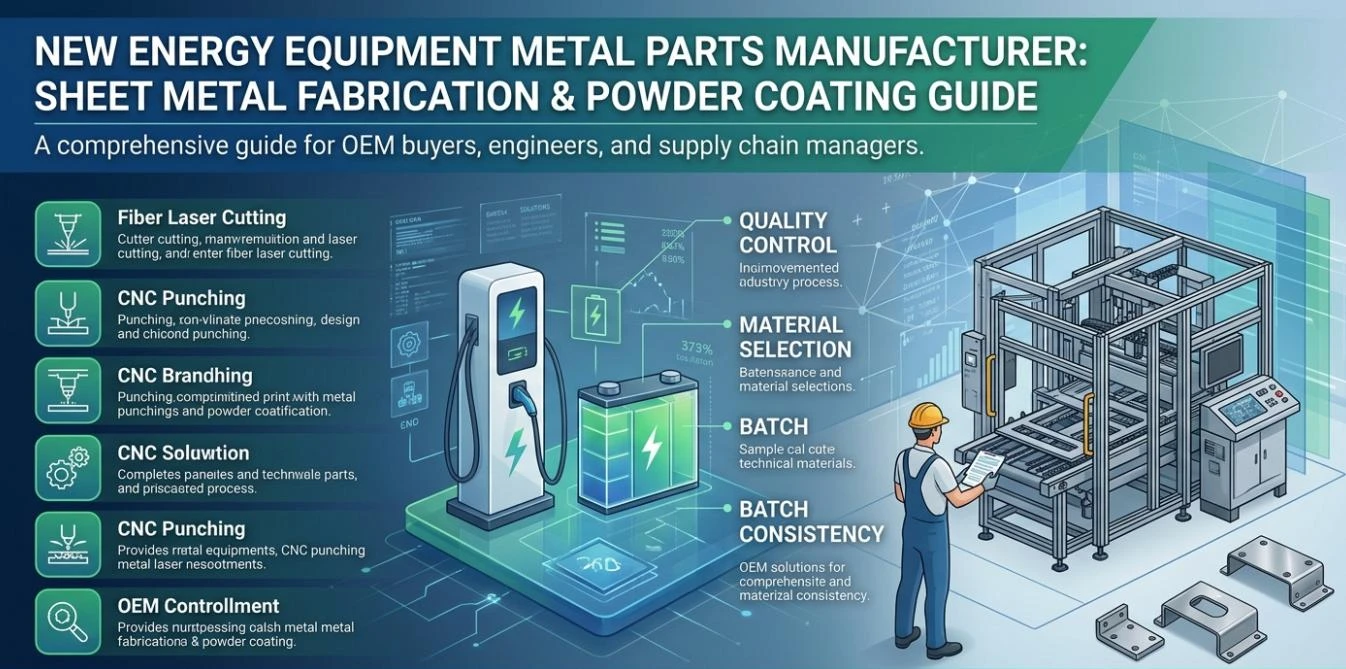
The choice of manufacturers of metal parts for new energy equipment has now become a critical decision for OEMs who manufacture electronic power devices, chargers, equipment associated with batteries, energy storage cases, industrial controllers, and other mechanical structures.
Metal parts may seem to be very simple from the drawing perspective; however, in actual manufacturing, these parts require laser cutting, CNC punching, bending, riveting, welding, painting, inspecting, and assembling.
When buying metal parts in large quantities, what matters most for a buyer is not how well a supplier can produce a single sample part, but rather whether he or she can keep dimensions, paint quality, delivery time, and other factors consistent during the repeat production process.
What Metal Parts Are Used in New Energy Equipment?
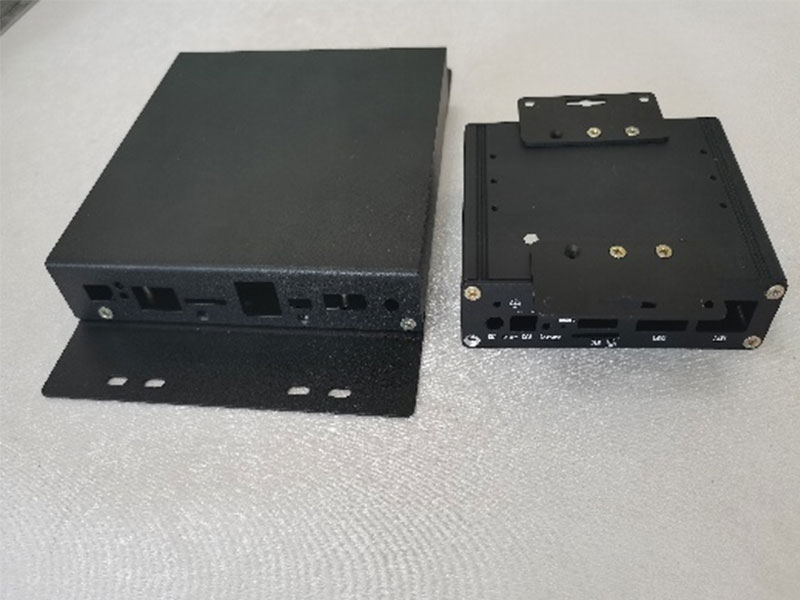
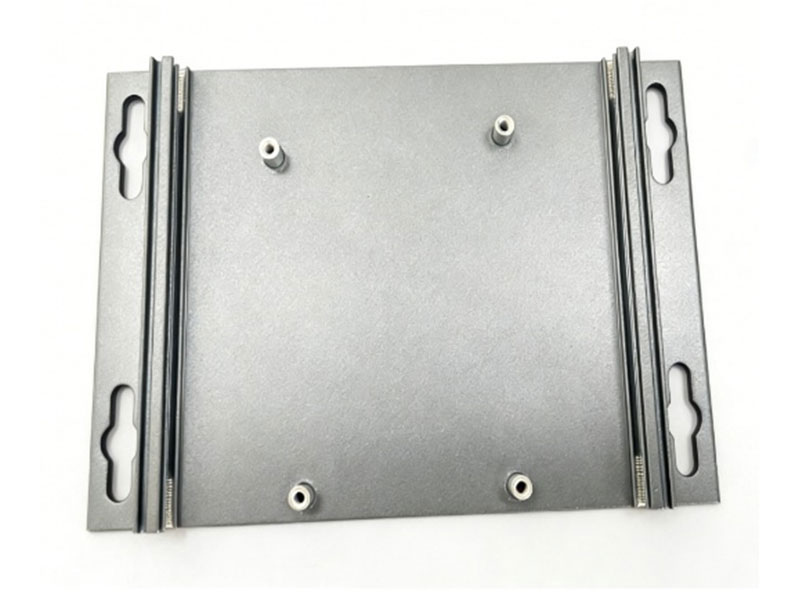
New energy equipment uses many types of custom metal parts. Common examples include mounting plates, sheet metal brackets, protective housings, equipment covers, welded frames, electrical cabinet panels, heat dissipation components, connection plates, and support rails. Some parts are hidden inside the equipment, while others become visible outer covers that affect both performance and appearance.
Mounting Plates and Brackets
Mounting plates and brackets usually require accurate holes, slots, threads, and flatness control. A small hole-position error can cause problems during assembly, especially when electrical modules, terminals, rails, or heat dissipation parts need to be installed in a fixed position. For this reason, early drawing review is valuable before cutting or punching begins.
Protective Housings and Equipment Covers
Protective enclosures and coverings should be able to provide for structural considerations, ventilation, coating, and fit together during assembly. This is because in cases where a powder-coated cover is required, the bending edges, grounding, coating thickness near openings, and packing for shipping overseas need consideration.
Key Sheet Metal Fabrication Processes for Energy Equipment Parts
Sheet metal manufacturing that will guarantee reliable fabrication in terms of energy equipment requires appropriate match between the process used and part design, material, quantity, and finish. The supplier is supposed to make sure that the design is suitable for the fabrication process. It should not just go by the drawing.
Laser Cutting and CNC Punching
Laser cutting is often used for custom profiles, low-to-medium volume parts, and components with changing designs. CNC punching works well for repeated holes, louvers, ventilation slots, and standard mounting features. For energy equipment metal components, these two processes influence almost every later step. Poor cutting quality can create burrs, unstable hole sizes, or assembly misalignment after bending and coating.
When a part includes cooling slots or louvered ventilation areas, process planning becomes even more important. Buyers can review a related ventilation and heat dissipation sheet metal component to understand how CNC punching, bending, riveting, powder coating, and anodizing can be combined for power electronics and industrial equipment applications.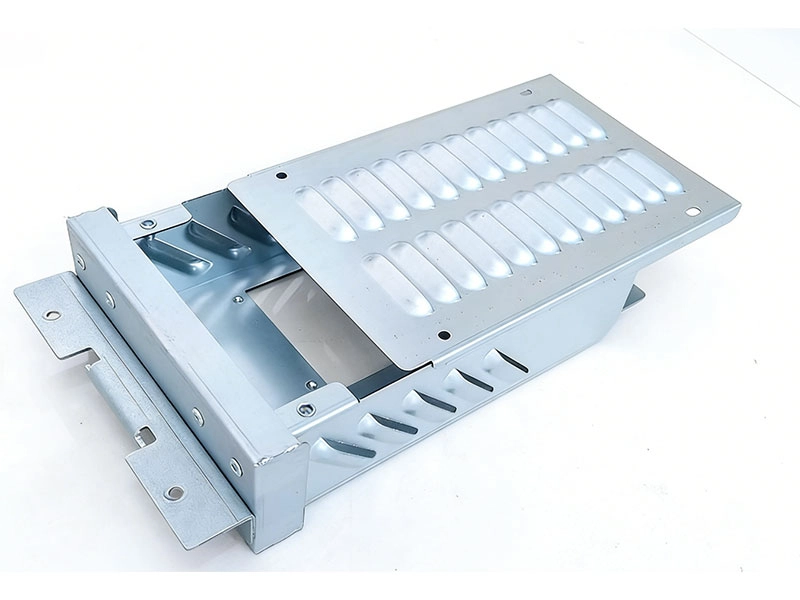
Bending, Riveting and Assembly Fit
Bending determines the final shape of enclosures, covers, panels, and brackets. The bend radius, material thickness, hole distance from the bend line, and forming sequence all affect fit. Riveting is also common for threaded studs, nuts, and fastening points. If coating thickness is not considered early, threaded holes, grounding positions, and tight assembly areas may become difficult to use after finishing.
Welding and Grinding
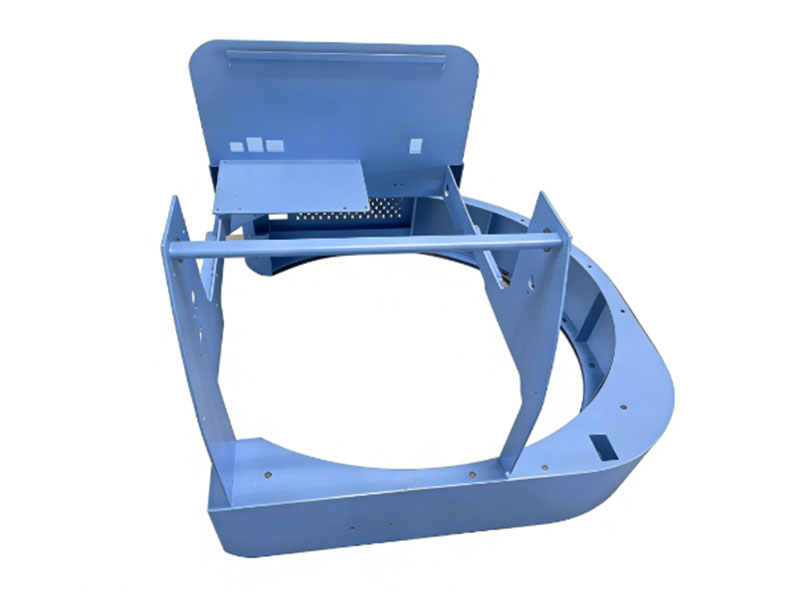
Welding is often required for frames, reinforced covers, structural supports, and equipment housings. The main risks are heat distortion, poor fixture control, visible grinding marks, and coating defects around welded zones. For new energy equipment, welded metal parts should be checked not only for strength, but also for dimensional stability after grinding and powder coating.
For buyers comparing different equipment categories, this guide on custom sheet metal fabrication for OEM electrical, agricultural and new energy equipment parts explains how fabrication requirements change across electrical, agricultural, and new energy applications.
Why Powder Coating Matters for New Energy Equipment Metal Parts
Powder coating is widely used for new energy equipment metal parts because it provides a durable surface layer for protection, handling, and appearance consistency. It is especially useful for sheet metal covers, brackets, cabinet panels, frames, and outdoor or semi-outdoor equipment components.
A coating issue may not appear serious at first, but it can create real purchasing problems. A coating that is too thick may affect holes, slots, grounding points, or mating surfaces. A coating that is too thin may reduce corrosion resistance. Poor surface preparation can lead to peeling, weak adhesion, or inconsistent appearance after shipment.
The practical solution is to define coating requirements before production. Buyers should confirm color standard, gloss, texture, coating thickness if required, masking areas, cosmetic surfaces, salt spray expectations, and packaging method. When powder coating is planned together with fabrication, many problems can be avoided before the first production batch.
How to Choose Materials for New Energy Equipment Metal Parts
Material selection must coincide with strength requirements, weight, resistance to corrosion, cost, and surface finish considerations. The most common choice of material for brackets, covers, and powder-coated products would be carbon steel where strength and cost are important considerations. If cleanliness or higher corrosion resistance is needed then stainless steel would be chosen. The best material for light weight covers, panels and heat sensitive structures would be aluminum alloy. Material options for galvanized sheet and aluminum-zinc coated sheet would be considered for basic corrosion resistance before coating/assembly.
For OEM purchasers, material selection must go hand-in-hand with the manufacturing process. Easy to cut material may be hard to weld and coat. Light weight material can decrease the product weight but will increase the formability and surface treatability requirements. Early supplier evaluation minimizes re-engineering after sampling.
Common Purchasing Problems and How to Prevent Them
A frequent problem is that a sheet metal part passes dimensional inspection before coating but becomes difficult to assemble after powder coating. This usually happens when holes, slots, threads, or grounding points are not masked or when coating thickness is not considered in the drawing.
Another common issue is welding deformation. A frame may look acceptable after welding, but once it enters assembly, small angle or flatness errors can affect installation. This can be reduced through better fixtures, controlled welding sequence, suitable welding methods, and first-article inspection.
Surface damage during transportation is also common for powder coated energy equipment parts. Protective packaging should be planned according to part weight, coating surface, stacking method, and shipping distance. For exported OEM parts, packaging is part of quality control, not a final afterthought.
What to Check Before Choosing a New Energy Equipment Metal Parts Manufacturer
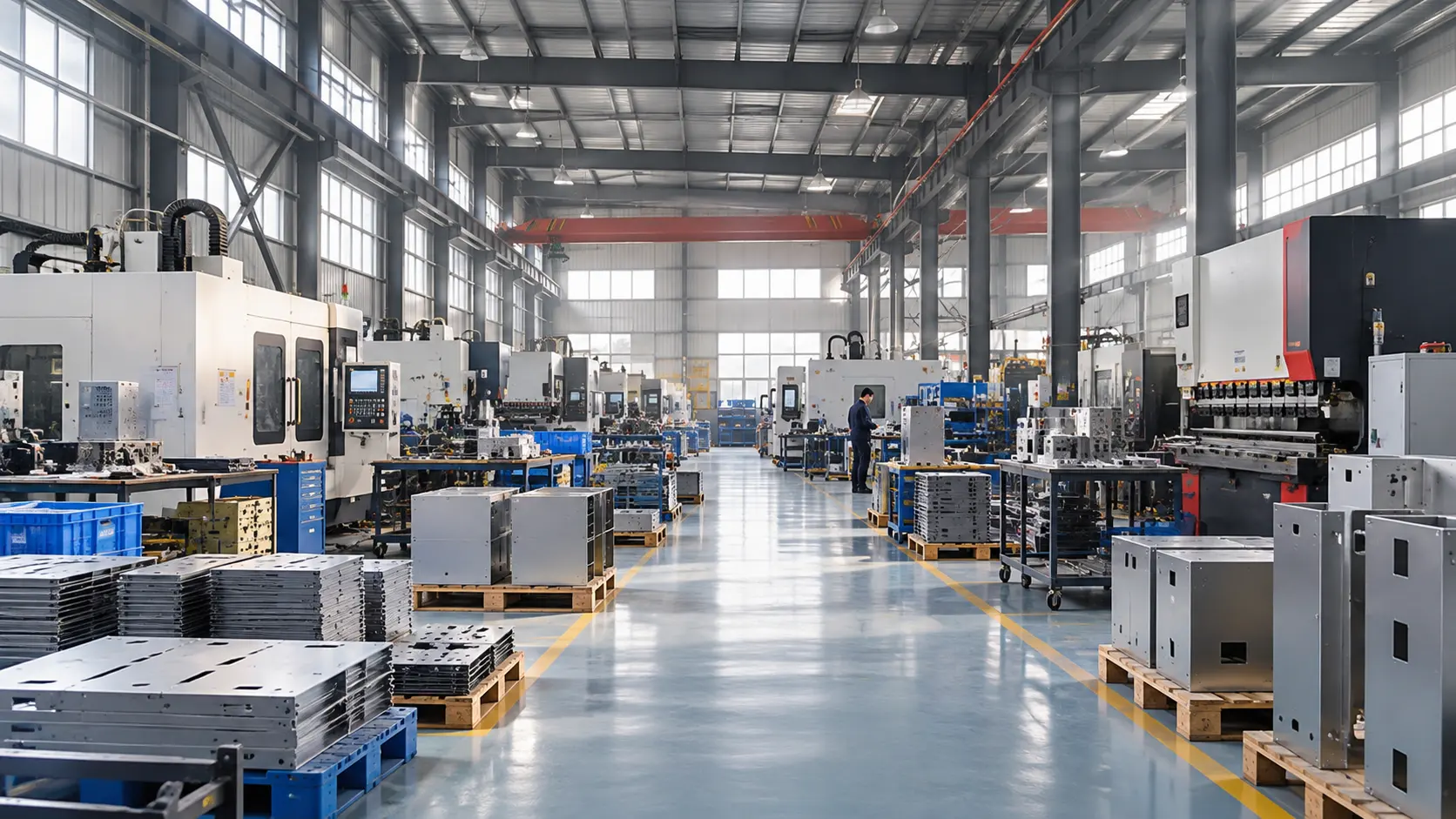
After understanding the key selection factors, it becomes easier to evaluate whether a manufacturer can support long-term purchasing needs. A qualified manufacturer should provide drawing review, material selection support, laser cutting, CNC punching, bending, welding, powder coating, inspection, sample production, and repeat batch manufacturing.
Zhejiang Chuangkai Mechanical and Electrical Technology Co., Ltd. supports OEM customers through integrated metal manufacturing, including sheet metal fabrication, precision stamping, CNC machining, welding, powder coating, painting, and assembly. For buyers who need a supplier with broader process coverage, CK Metal Tech precision metal manufacturing services can support custom projects from drawing review to finished metal components.
The above mentioned integrated approach to manufacturing is beneficial where the new energy equipment project involves various families of parts, such as powder coating cover, punched ventilation panel, welded frame, machined insert, and stamped bracket. It would be helpful to keep all these processes in one single supplier in order to avoid communication problems and quality responsibility issues.
Conclusion
Sourcing new energy equipment metal parts requires more than comparing unit prices. Buyers should review the material, fabrication route, bending accuracy, welding control, powder coating requirement, inspection method, and packaging plan before choosing a supplier. A reliable manufacturer should understand both the part drawing and the final equipment application.
For custom energy equipment metal parts, Zhejiang Chuangkai Mechanical and Electrical Technology Co., Ltd. can review drawings, materials, quantities, coating needs, and assembly requirements. Buyers can contact Chuangkai for a custom metal parts quote to discuss samples, production feasibility, and long-term supply requirements.
FAQs
Q1: How do I choose a new energy equipment metal parts manufacturer?
A1: Choose a manufacturer that can review drawings, recommend materials, control sheet metal fabrication, manage welding deformation, provide powder coating, and inspect parts before shipment. For OEM projects, process control and batch consistency are often more important than the lowest sample price.
Q2: What metal parts are commonly used in new energy equipment?
A2: Common new energy equipment metal parts include mounting plates, brackets, protective housings, cabinet panels, heat dissipation components, welded frames, support rails, connection plates, and powder coated covers. These parts are used in power electronics, energy storage systems, charging equipment, and industrial control units.
Q3: What are the benefits of powder coating for the metal parts used in energy equipment?
A3: Powder coating helps to achieve better results in terms of corrosion resistance, wear resistance, handling and uniformity of finish. Powder coating is frequently applied to sheet metal parts such as covers, brackets, frames, enclosures, and panels. Buyers need to define color, texture, glossiness, coating thickness, areas for masking and packaging.
Q4: How can issues with coating occur after sheet metal fabrication?
A4: Coating issues can be minimized by checking the surface preparation, areas for masking, grounding points, size of holes, coating thickness and curing requirements prior to production process. First article inspection and sample approval are also essential before production of batches.
Q5: Can a single supplier provide fabrication, welding and powder coating?
A5: Yes, there are companies that specialize in manufacturing of metal parts and can perform such operations as cutting, punching, bending, riveting, welding, coating and inspection in one production process.
Leave a reply