







17th July 2026
Shot Blasting Before Powder Coating: When OEM Metal Parts Need It
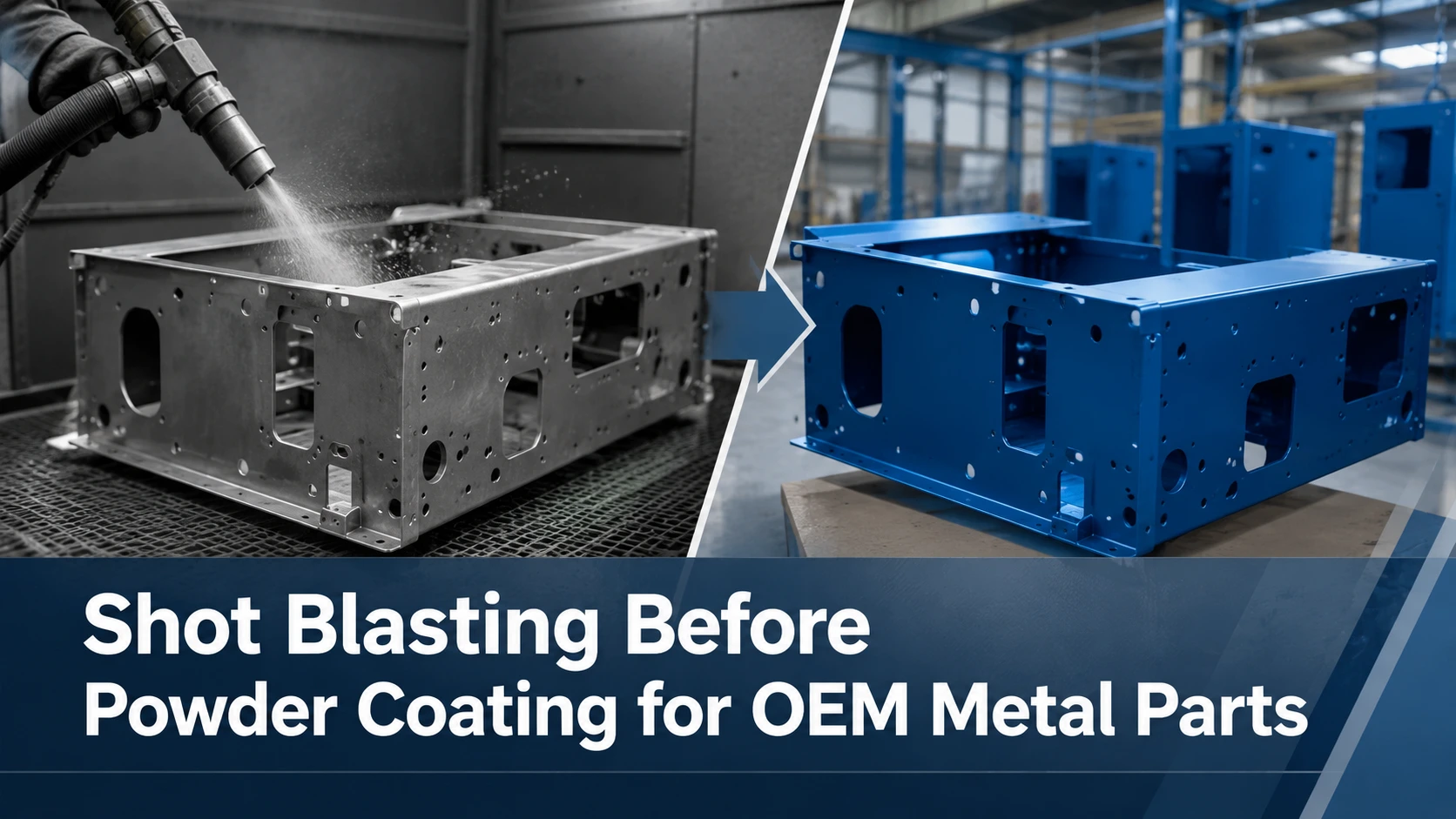
Preparation through shot blasting prior to powder coating is not always essential in all metal parts. The right response for OEM metal parts is contingent upon the metal part, its surface, weld residues, rust, mill scale, metal part thickness, appearance requirements, and final environment where the metal part would be utilized. In case the pretreatment procedure fails, then the powder coating process may peel, blister, and corrode. On the other hand, if the pretreatment procedure is too aggressive, it may damage sheet metal, aluminum parts, threads, mated surfaces, or panel areas before applying the coating process.
Is Shot Blasting Always Necessary Before Powder Coating?
Shot blasting is preferred where rusted, oxidized, old-coated, welding spattered and otherwise heavily contaminated fabricated steel components are involved. It could be useful to achieve a profile which will facilitate powder coating adhesion. Such a case would pertain to welded metal fabrications, machinery frames, industrial chassis and carbon steel structures which would later be lifted, transported, assembled or subjected to humid conditions.
But a freshly cleaned sheet metal might not require shot blasting at all. Where thin sections, aluminum sheet metal, galvanized steel, stainless steel or high appearance panels are concerned, cleaning, degreasing, mild abrasion or chemical pretreatment may be preferable options. The buyer must enquire about the problem that the supplier is trying to solve through pretreatment: rust removal, oxide removal, surface profiling, removal of old coating or adhesion enhancement.The answer should drive the pretreatment route.
Shot Blasting vs Sandblasting vs Chemical Pretreatment
Different suppliers may use terms such as shot blasting, sandblasting, media blasting, abrasive blasting, or powder coating pretreatment. These methods should be compared by material, part geometry, contamination level, surface profile, and coating performance target—not by name alone.
| Method | More Suitable For | Main Risk to Check |
| Shot blasting | Steel parts, welded fabrications, rust, mill scale, larger structural parts | Over-blasting thin panels, threads, or cosmetic faces |
| Sand/media blasting | Local cleaning, old coating removal, complex shapes | Wrong media may roughen or damage soft materials |
| Chemical pretreatment | Cleaner sheet metal, thin parts, aluminum or galvanized surfaces | May not remove heavy rust or mill scale alone |
| Combined process | Higher corrosion requirements or mixed surface conditions | Added cost if each step has no clear purpose |
For buyers who need broader background on cleaning, masking, spraying, curing, and material compatibility, see powder coating process for sheet metal parts and enclosures.
Material and Part Geometry Risks Before Blasting
Carbon steel and welded fabrications are the most common candidates for mechanical pretreatment. Weld zones, heat-affected areas, sharp burrs, corners, deep pockets, and grinding marks should be reviewed before blasting. A part that looks clean from a distance may still have welding residue or uneven surface texture that appears clearly after powder coating.
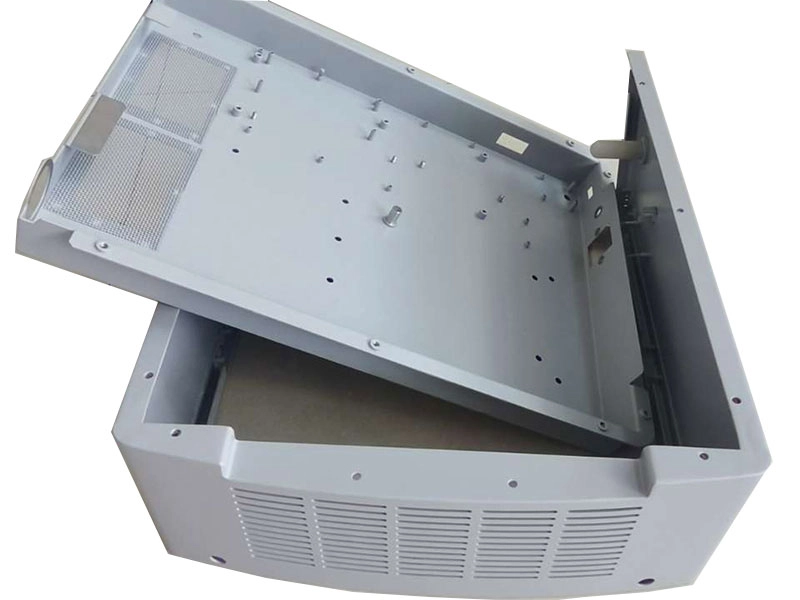
Thin sheet metal requires more caution. Large flat panels may warp if impact intensity, exposure time, or media choice is not suitable. Aluminum may need a gentler approach because excessive blasting can roughen the surface or affect appearance. Stainless steel should be protected from cross-contamination, and galvanized steel should not be heavily blasted without checking whether the zinc layer may be damaged.
Threads, PEM fasteners, grounding points, sliding rails, bearing faces, sealing surfaces, and mating edges should be marked on the drawing. These areas may need masking or protection before blasting and powder coating.
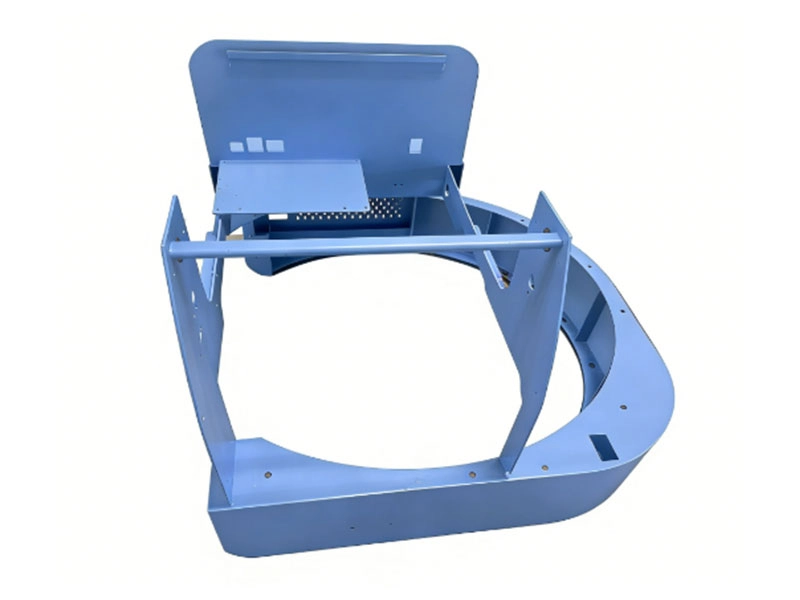
A practical product example is powder coated medical and industrial equipment chassis assembly, which uses SPCC cold-rolled steel with electrostatic powder coating and follows a CNC punching, bending, welding, powder coating, and assembly route for medical equipment, industrial testing, and communication equipment applications.
Why Powder Coating Can Still Fail After Shot Blasting
Shot blasting does not solve every coating problem. Powder coating can still peel after blasting if oil, dust, abrasive residue, fingerprints, flash rust, moisture, or incompatible pretreatment remains on the surface. Blistering may point to trapped contamination or moisture. Rust under the coating may suggest poor surface protection after blasting, exposed edges, or a coating system that does not match the operating environment.
A rough finish can also come from incorrect media selection or excessive surface profile. If the profile is too deep for the coating system, the finished part may show visible texture variation or weak coverage at peaks and edges. For cosmetic surfaces, buyers should define acceptable appearance, visible faces, sample approval requirements, and inspection points before production.
What Buyers Should Specify in an OEM Powder Coating RFQ
A clear RFQ should describe the incoming part condition and expected finished performance. Avoid writing only “shot blast and powder coat.” Include:
- Base material, grade, thickness, and part size
- Rust, mill scale, welding residue, oil, or old coating condition
- Cosmetic and non-cosmetic surfaces
- Areas that must not be blasted or coated
- Threads, grounding points, mating surfaces, and fitted areas
- Required powder coating system, color, gloss, and texture
- Indoor, outdoor, humid, or corrosive operating environment
- Sample approval, inspection, packaging, and batch quantity
This helps different shot blasting and powder coating suppliers quote against the same requirements.
How to Choose a Shot Blasting and Powder Coating Supplier
A qualified OEM metal finishing supplier should review fabrication, welding, surface preparation, powder coating, inspection, and assembly as one connected workflow. Cutting burrs, weld spatter, grinding marks, blasting media, coating thickness, and packaging can all affect the final part.
Zhejiang Chuangkai Mechanical and Electrical Technology Co., Ltd. supports precision sheet metal processing, metal stamping, precision machining, surface painting, powder coating, and assembly; its About page describes the company as a one-stop solution provider for multiple metal component processes. Buyers can review about Zhejiang Chuangkai Mechanical and Electrical Technology Co., Ltd. when checking supplier background.
CK Metal Tech’s homepage lists sheet metal processing equipment for cutting, punching, bending, riveting, welding, grinding, and related operations, along with automatic and manual powder coating and painting lines. For projects requiring coordinated fabrication and coating review, CK Metal Tech precision metal manufacturing services can be used as the main company entry point.
Conclusion: Specify the Surface Condition, Not Just the Finish
Shot blasting before powder coating should be specified only when it fits the material, part condition, geometry, appearance target, and operating environment. Buyers should define the problem to be solved, protected areas, coating requirements, inspection method, and packaging expectations before quotation.
For a project review, buyers can contact Chuangkai for a custom metal parts quote with drawings, material, thickness, part photos, current surface condition, target quantity, application environment, and any coating failure or assembly issue photos.
FAQs
Q1: Is shot blasting required before powder coating new steel?
A: Not always. Clean new steel may only need cleaning, degreasing, sanding, or chemical pretreatment. Shot blasting is more likely needed when there is rust, mill scale, welding residue, old coating, or heavy surface contamination.
Q2: Can thin sheet metal warp during shot blasting?
A: Yes, it may. The risk depends on sheet thickness, panel size, structural rigidity, blast media, impact intensity, and exposure time. Thin panels or visible covers should be tested with samples before batch production.
Q3: Why does powder coating peel even after the part was blasted?
A: Peeling may come from dust, oil, abrasive residue, flash rust, moisture, poor handling after blasting, incompatible pretreatment, or curing problems. Blasting is only one part of the powder coating pretreatment process.
Q4: How soon should steel be powder coated after blasting?
A: The waiting time should be kept as short as practical and controlled by humidity, handling method, storage condition, and contamination risk. Bare blasted steel should not be left exposed without process control.
Q5: Should galvanized steel be shot blasted before powder coating?
A: Heavy blasting should not be assumed. Galvanized steel may need a gentler surface preparation method depending on zinc layer condition, adhesion requirements, coating system, and final environment.
Leave a reply