




23rd July 2026
Large Sheet Metal Enclosure Powder Coating: Oven Size, Handling and Batch Production
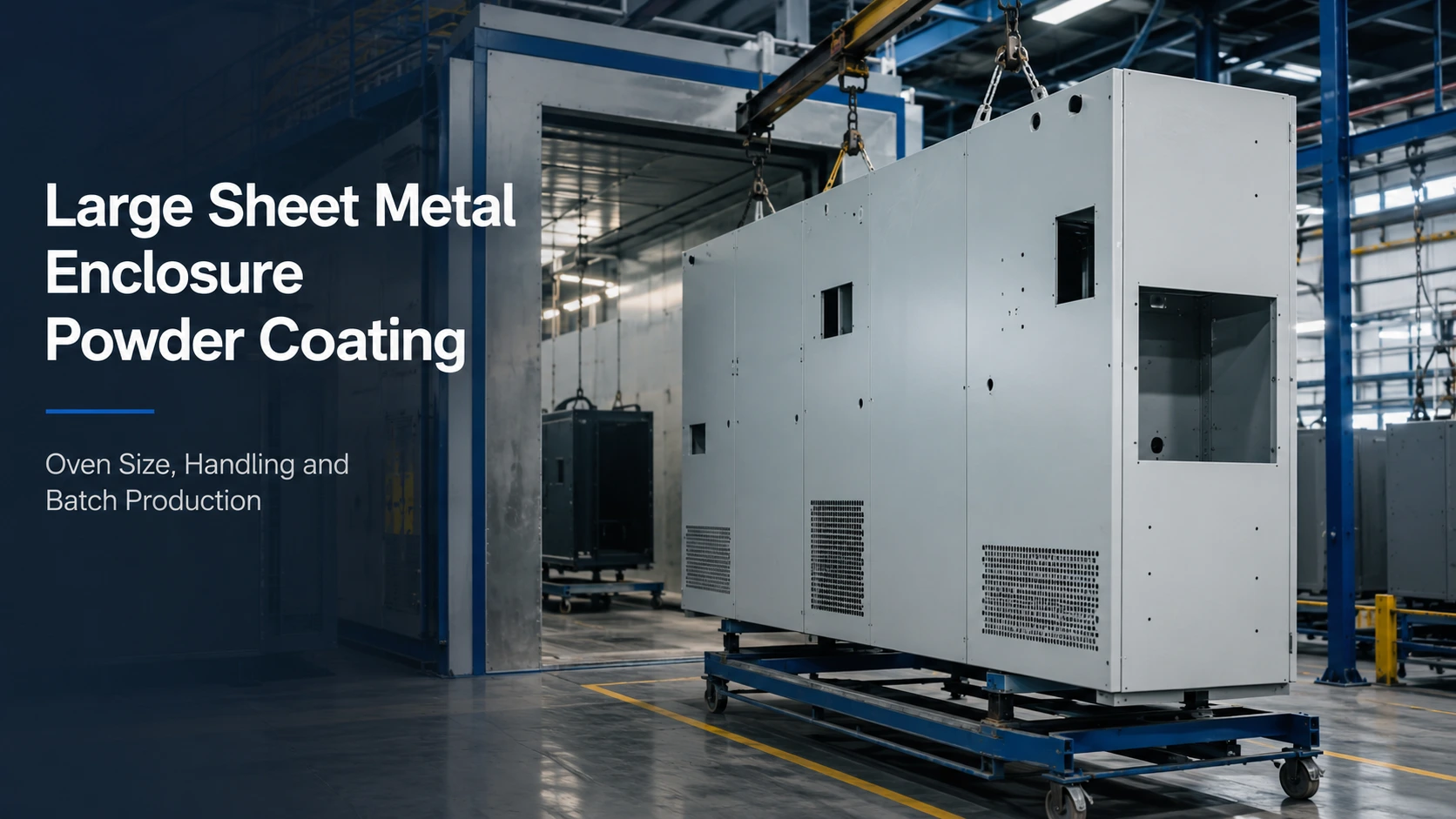
Large sheet metal enclosure powder coating is not only a finishing question. For OEM buyers, the real concern is whether a supplier can safely handle the part size, cure the coating consistently, protect cosmetic surfaces, and repeat the process during batch production. A large enclosure, cabinet, chassis, or equipment housing may look simple on a drawing, but coating problems often appear after welding, grinding, masking, hanging, curing, or packaging.
Powder coating can be a good choice for large metal enclosures when durability, batch consistency, and a clean industrial appearance matter. However, the decision should be verified against the actual enclosure size, material, weight, geometry, coating specification, and assembly requirements.
Can Large Sheet Metal Enclosures Be Powder Coated?
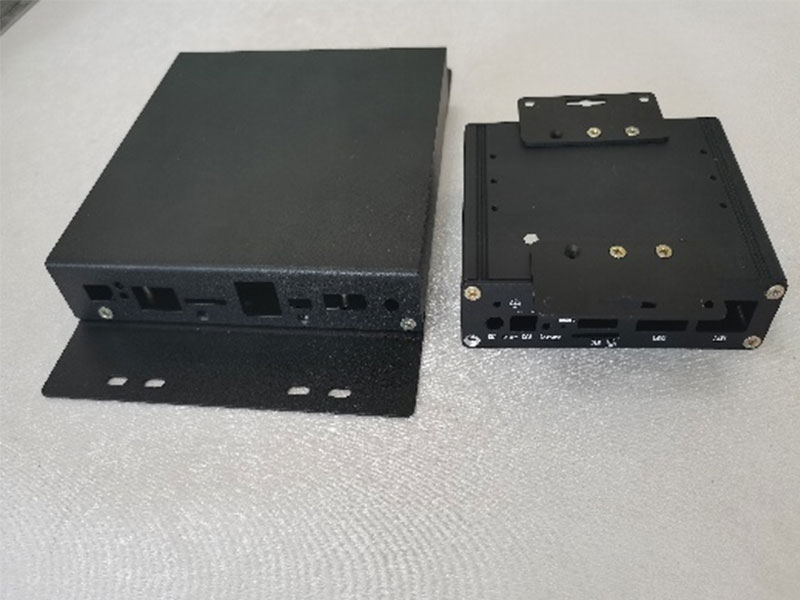
Large sheet metal enclosures can be powder coated when the part can be cleaned, grounded, sprayed, moved, cured, inspected, and packaged without damaging the surface or affecting assembly. This applies to many equipment enclosures, electrical cabinets, communication boxes, industrial control housings, chassis assemblies, and medical or inspection equipment structures.
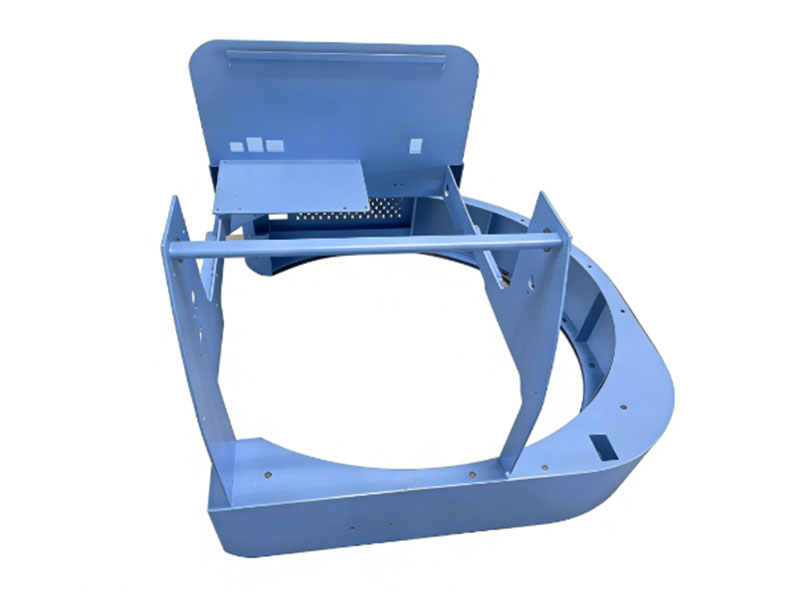
The first mistake is assuming that “large” only means length, width, and height. For powder coating large metal enclosures, buyers also need to consider diagonal size, door opening clearance, lifting method, hanging direction, deep internal corners, vents, weld seams, masked holes, and cosmetic A-surfaces. If a housing is close to the supplier’s oven limit, the coating plan may need adjustment before quoting.
Powder coating works well when the enclosure is designed for repeat production and the finish needs to withstand handling, assembly, export packaging, and service conditions. It becomes risky when the enclosure is too large to hang safely, too thin to resist heat-related distortion, already assembled with heat-sensitive components, or full of narrow recesses that are difficult to coat evenly.
Oven Size Is Only the First Capacity Check
When buyers search for powder coating oven size for large parts, they usually want a simple answer: “Will this enclosure fit?” That answer depends on usable oven space, not just the nominal oven size. A supplier must account for racks, hooks, hanging height, part rotation, airflow clearance, door clearance, and safe loading space.
Usable Oven Space, Clearance, and Hanging Orientation
A large enclosure that fits on paper may still be difficult to coat in production. If it must be hung at an angle, the effective size becomes larger. If lifting tabs, flanges, handles, or welded brackets protrude from the main body, they may reduce usable clearance. If the part has a large open side, the hanging direction may affect how powder enters internal surfaces.
Buyers should send drawings or 3D files that clearly show overall size, maximum diagonal, weight, lifting points, and the required cosmetic surfaces. The RFQ should also state whether the enclosure will be coated before or after assembly. This matters because assembled parts may include inserts, seals, labels, rubber parts, or electrical items that may not tolerate powder coating cure conditions.
Curing consistency is another capacity issue. Industrial batch powder ovens are designed around temperature distribution, heat-up, and recovery, and GFS describes batch powder ovens as equipment used for batch powder coating applications where heat distribution and throughput affect coating results. For large boxes and cabinets, buyers should confirm that the supplier can cure the full part consistently, not only coat the visible outer surface.
Handling, Racking, and Masking Risks Before Powder Coating
Large enclosures are more likely to be damaged during movement than small brackets or panels. Before coating, unfinished sheet metal can be scratched, bent, contaminated, or touched on cosmetic surfaces. After coating, the risk changes: edges, corners, wide flat panels, and visible doors can be damaged during unloading, inspection, packaging, or assembly.
Handling, Racking, Holes, Threads, and Grounding Areas
Handling large parts during powder coating requires more than strong racks. The supplier should decide where the enclosure can be lifted, where hooks can contact the part, which surfaces must remain mark-free, and how the part will move between fabrication, cleaning, spraying, curing, and packing. Poor racking can leave contact marks, bare spots, thin edge coverage, or visible hanging points.
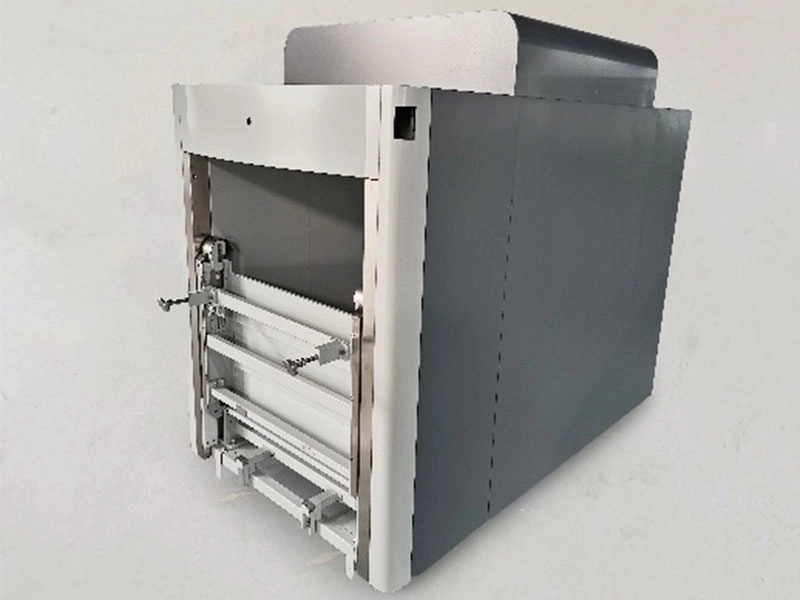
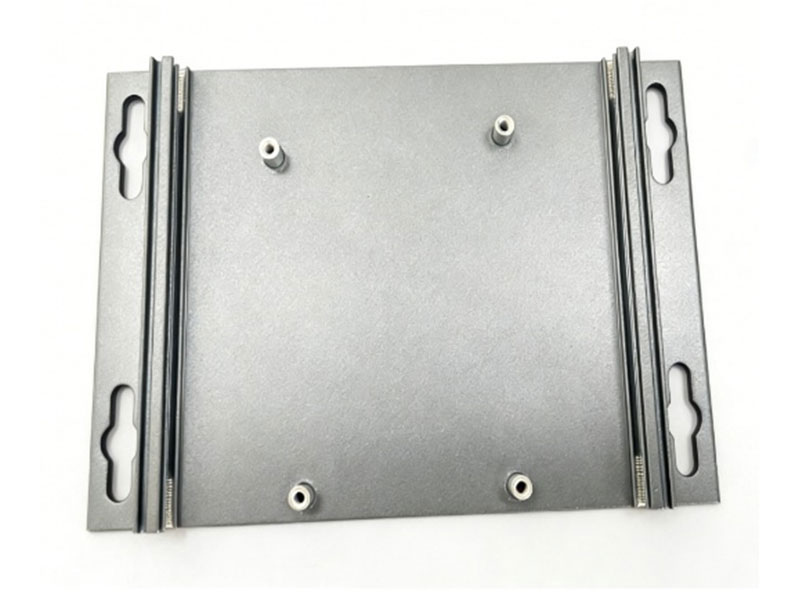
Masking should be reviewed before production. Large sheet metal enclosures often include threaded holes, PEM fasteners, grounding areas, sliding surfaces, hinge points, mounting holes, vent openings, and assembly faces. If these areas are not masked correctly, coating buildup may cause assembly problems. If too much masking is used, the finished part may lose protection in areas that still require coverage.
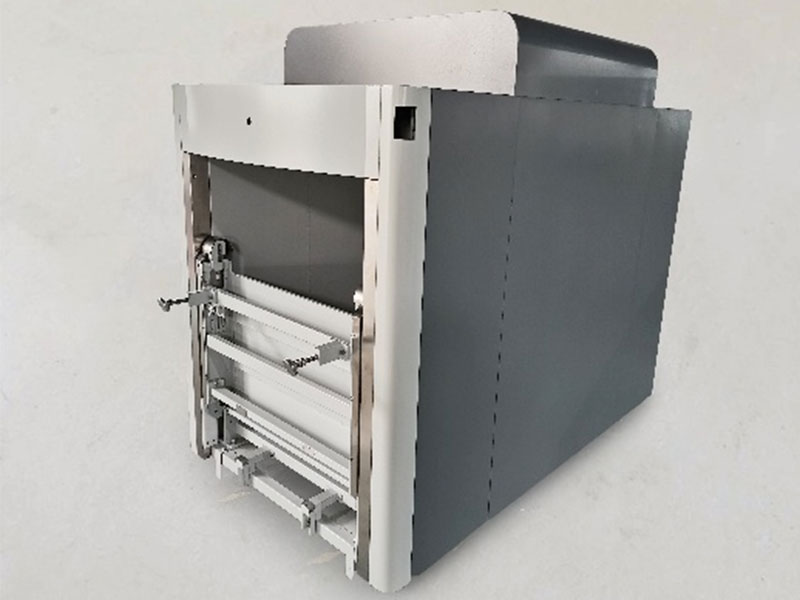
A practical drawing should mark masked holes, uncoated grounding zones, critical mating faces, cosmetic surfaces, and coating thickness expectations. This is especially important for a security inspection equipment chassis assembly, where structural strength, internal assembly, access openings, coated surfaces, and final fit may all affect the finished equipment.
Batch Production: How Large Enclosures Affect Cost and Lead Time
Batch powder coating for large enclosures is often different from coating small parts on a dense rack. A large cabinet may occupy the space of many smaller parts, which can reduce rack density and change the cost per piece. Color changes, masking time, loading method, curing time, and inspection requirements may also affect scheduling.
For large enclosure powder coating, the buyer should not only ask for a unit price. It is better to ask how many parts can be coated in one batch, whether the same rack setup can be repeated, how color and texture changes are managed, and whether the coating route is suitable for the expected annual volume.
Batch production can be suitable for large sheet metal cabinets, welded frames, large covers, and custom equipment boxes because it allows more flexible racking and handling. However, it may not be the most efficient option if the part design changes frequently, if the color changes for every small order, or if masking is too complex for stable repeat production. Clear volume forecasts help the supplier plan whether sample approval, first article inspection, and batch loading can be controlled consistently.
Design and Surface Preparation Risks That Affect Finish Quality
Large powder coated sheet metal enclosures expose design and surface preparation issues more clearly than small hidden components. Wide panels show grinding marks. Corners reveal thin coverage. Welded seams may telegraph through the finish. Vents and deep recesses may receive less powder than flat outside surfaces.
Deep Corners, Welded Seams, and Large Cosmetic Surfaces
Complex geometry can create coating challenges in recessed areas and tight corners. In powder coating, the Faraday cage effect can make it harder for charged powder to reach inside corners and narrow recesses; industry discussions commonly link this issue to thin or uneven coverage in corners and complex geometries. For large metal boxes, this risk may appear around vent slots, folded channels, internal corners, louvers, and welded pockets.
Surface preparation also matters. Oil, rust, oxide, burrs, welding residue, uneven grinding, and sharp edges can affect coating appearance or adhesion. Before approving batch production, buyers should check sample parts for edge coverage, hole buildup, weld areas, panel flatness, cosmetic surface quality, and packaging protection. If an enclosure has a large front door or outer cover, the cosmetic acceptance standard should be agreed before production, not after shipment.
RFQ Checklist for Large Powder Coated Sheet Metal Enclosures
A useful RFQ for large powder coated enclosures should give the supplier enough information to review manufacturing feasibility, not just quote a finish color.
| RFQ Item | Why It Matters |
| Overall size and maximum diagonal | Confirms usable oven space, door clearance, and hanging direction |
| Weight and lifting points | Helps plan racking, loading, and safe handling |
| Material and thickness | Affects forming, welding, heat exposure, and surface preparation |
| Drawing revision and 3D model | Reduces misunderstanding around holes, bends, and assembly faces |
| Color, gloss, and texture | Prevents finish mismatch between batches |
| Coating thickness requirement | Affects durability, holes, tolerances, and fit |
| Masked holes, threads, and grounding areas | Prevents blocked holes, poor grounding, and assembly interference |
| Cosmetic surfaces | Defines visible areas and inspection expectations |
| Batch quantity and annual volume | Supports cost, scheduling, and repeat production planning |
| Packaging requirement | Protects coated edges, panels, and corners during transport |
How to Choose a Supplier for Large Sheet Metal Enclosure Powder Coating
For OEM buyers, a qualified supplier should understand the entire route: cutting, punching, bending, welding, grinding, powder coating, inspection, packaging, and assembly. Large enclosure finishing should not be treated as a final decoration step. It should be planned together with fabrication.
Why Fabrication, Welding, and Powder Coating Should Be Planned Together
When fabrication and coating are managed separately, problems may appear late: warped panels, unmasked threads, coating buildup on mating surfaces, visible grinding marks, or packaging damage after finishing. A supplier that reviews fabrication and finishing together can identify these risks earlier.
Zhejiang Chuangkai Mechanical and Electrical Technology Co., Ltd. supports OEM metal parts through precision metal manufacturing and assembly solutions, including precision sheet metal processing, surface painting, powder coating, and assembly. Its powder coating and painting setup includes an automatic powder coating line, a manual powder coating line for large parts and large boxes, a manual painting line for large parts and large boxes, and an automatic powder coating and painting hybrid line under construction. Buyers can also review about Zhejiang Chuangkai Mechanical and Electrical Technology Co., Ltd. when evaluating company background and manufacturing scope.
Supplier questions before sending drawings should include:
- What is the usable oven space for this enclosure size?
- How will the part be lifted, racked, grounded, and protected?
- Which holes, threads, grounding areas, and cosmetic surfaces should be masked?
- How many large enclosures can be coated in one batch?
- How will coating thickness, appearance, and packaging be checked?
Conclusion
Large sheet metal enclosure powder coating should be evaluated through oven size, usable clearance, handling, racking, masking, curing consistency, batch loading, inspection, and packaging. The better supplier is not simply the one that can spray powder onto a large box, but the one that can review the full manufacturing route and reduce risks before batch production.
For projects involving large enclosures, equipment cabinets, chassis assemblies, or powder coated sheet metal structures, buyers can prepare drawings, material requirements, size, weight, coating color, masking notes, target quantity, application environment, and packaging expectations before requesting a quote. To discuss production feasibility or RFQ details, buyers may contact CK Metal Tech with drawings, samples, or project requirements.
FAQs
Q1: How big can a sheet metal enclosure be for powder coating?
A: It depends on the supplier’s usable oven space, door clearance, hanging method, part weight, and airflow clearance. Buyers should provide overall dimensions, maximum diagonal, weight, and 3D drawings for review.
Q2: Does powder coating large enclosures affect lead time?
A: Yes, it may affect lead time because large parts reduce rack density, require more careful handling, and may need longer scheduling around curing, masking, inspection, and packaging.
Q3: What causes uneven powder coating on large metal boxes?
A: Common causes include deep corners, recessed areas, vent slots, poor grounding, difficult spray angles, surface contamination, welded seams, and inconsistent curing.
Q4: What should be included in an RFQ for large powder coated enclosures?
A: Include size, weight, material, drawing revision, coating color, gloss, texture, thickness, masked areas, cosmetic surfaces, batch quantity, annual volume, application environment, and packaging requirements.
Leave a reply