







30th July 2026
CNC Machining vs Metal Stamping: When Does Stamping Tooling Pay Off?
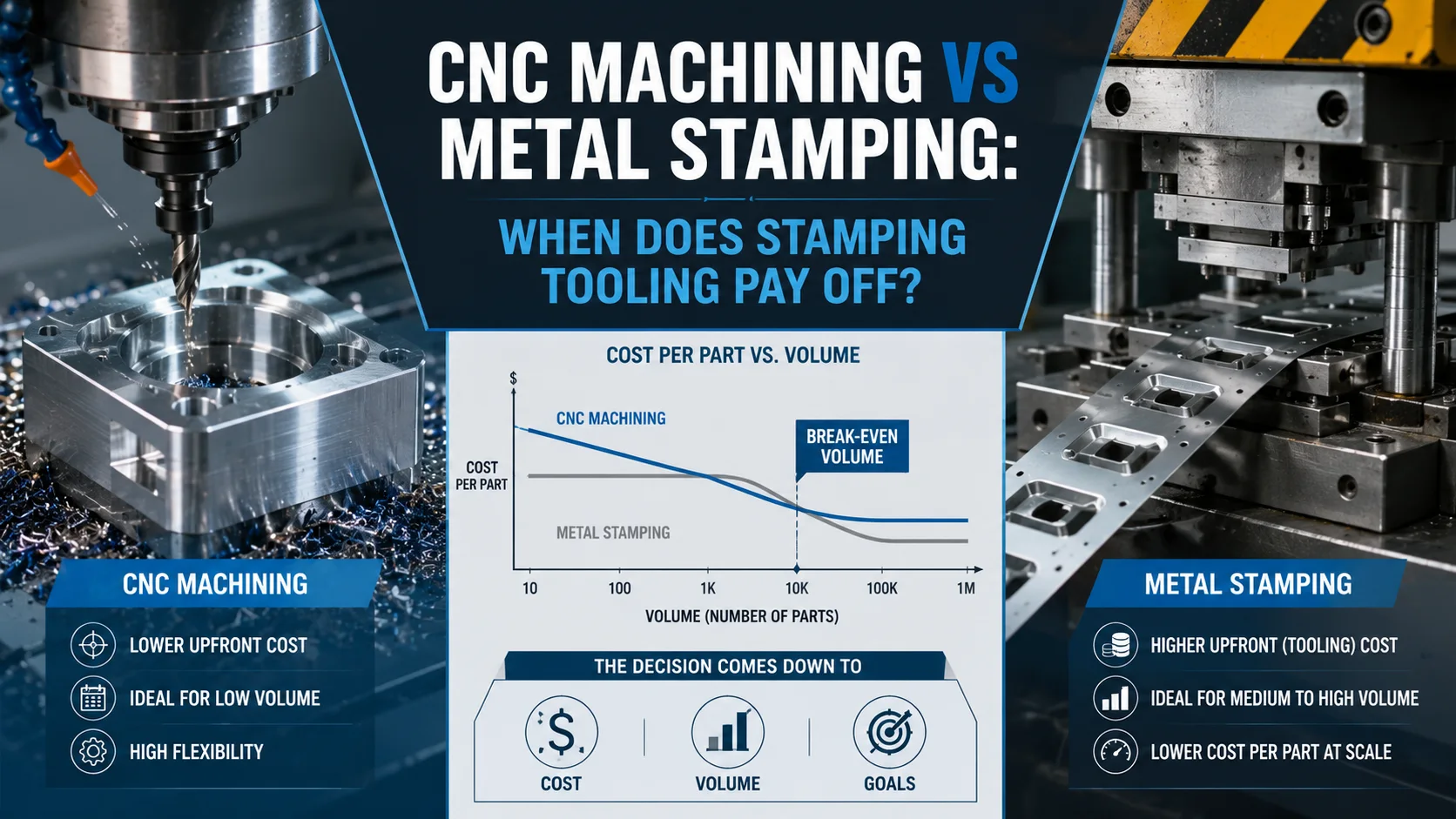
Choosing between CNC machining and metal stamping is not simply a unit-price decision. The real question is whether a part’s geometry, design maturity, expected volume, and lifetime demand justify a dedicated stamping die. CNC machining is often safer for prototypes, uncertain demand, solid bar or block geometry, and parts likely to change. Metal stamping becomes more attractive when a stable sheet-metal design will repeat long enough to spread tooling investment across finished parts. In some cases, the lowest-risk answer is a hybrid route: stamp the base geometry, then machine only the critical features.
CNC Machining, Metal Stamping, or a Hybrid Process?
| Project condition | CNC machining | Metal stamping | Hybrid route |
|---|---|---|---|
| Design changes likely | Strong fit | High tooling risk | Possible after partial design freeze |
| Demand uncertain | Strong fit | Difficult to justify | Useful for bridge production |
| Stable repeat volume | Review lifecycle cost | Strong candidate | Strong candidate |
| Solid bar or block geometry | Strong fit | Usually unsuitable | Limited |
| Sheet or coil geometry | Possible | Strong candidate | Strong candidate |
| Precision bores, threads, or datum faces | Strong fit | May need secondary work | Often practical |
Keep CNC Machining When Volume or Design Is Uncertain
CNC machining is usually appropriate while a project is proving function, fit, demand, or final geometry. It accepts revisions without a dedicated production die and can create complex features from plate, bar, or block stock. This makes precision CNC machining services relevant for prototypes, pilot runs, replacement parts, and repeat orders whose volumes do not yet support tooling amortization.
Confirm programming, fixtures, material yield, batch pricing, inspection, and revision costs. Machining may become expensive when every part requires long cycle time or removes much of the starting material. However, it may remain correct when the geometry cannot be formed from sheet, regardless of volume.
Invest in Stamping Tooling When Geometry, Demand, and Design Are Stable
Production tooling becomes practical when a component can be blanked, pierced, bent, formed, or drawn from flat stock and is unlikely to change. Dies carry an upfront cost, but repeat production can spread that investment across the program. Material behavior, tolerances, and expected wear affect the business case. Late design changes may require substantial die rework, so functional testing and drawing approval should precede tooling release.
Before approving precision metal stamping and tooling services, request a manufacturability review covering material, thickness, forming feasibility, critical dimensions, secondary operations, lifetime quantity, and revision status. No universal production threshold proves that stamping will pay off.
Use a Hybrid Process When Only Critical Features Need Machining
The processes are not always competing choices. A stamped blank may create the outer profile, bends, and formed features, while tapping, reaming, grinding, or milling completes a critical interface.
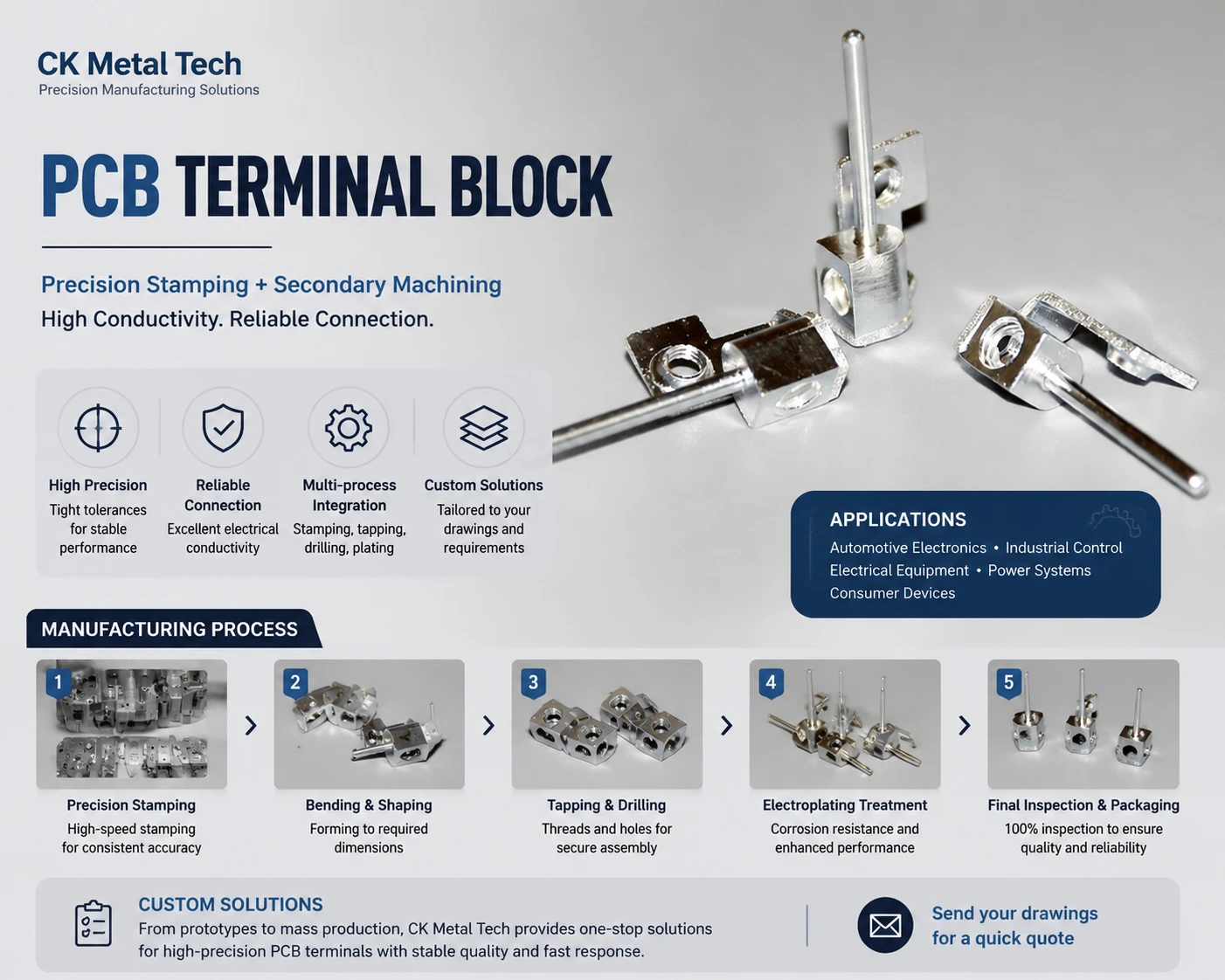
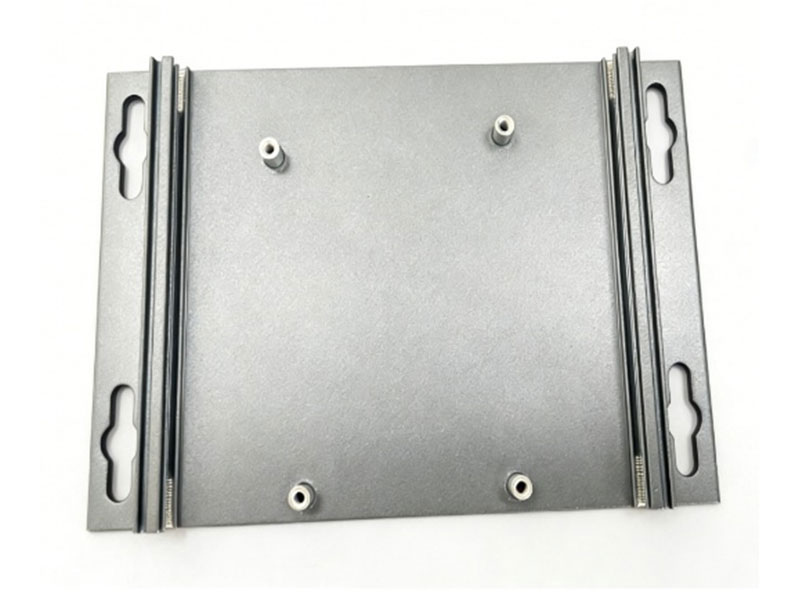
The route works best when the stamped part provides repeatable locating datums and the secondary cycle is short. It is less attractive when forming distortion makes fixturing unstable or most features still require machining. A stamped PCB terminal block with secondary machining demonstrates the principle: its published route combines precision stamping, bending, tapping, drilling, and electroplating.
Why Stamping Tooling Does Not Always Pay Off
Account for Lifetime Demand, Changes, and Hidden Operations
A short product lifecycle, frequent customer revisions, or uncertain demand may not consume enough parts to recover the die investment. Model low, expected, and high lifetime quantities instead of relying on one optimistic annual forecast.
The stamped part’s completed cost must include deburring, tapping, machining, cleaning, plating, coating, inspection, assembly, packaging, tool maintenance, and possible modification. The quotation should state whether trials, sample inspection, revision rounds, sharpening, spares, storage, and maintenance are included. Changes after die construction begins can add cost and delay, making formal tooling release an essential control.
How to Calculate the Stamping Tooling Break-Even Point
Compare two fully defined manufacturing routes:
Break-even quantity = tooling investment ÷ (completed CNC unit cost − completed stamping unit cost)
“Completed” matters. CNC cost should include material, setup, machining, tools, inspection, finishing, and packaging. Stamping cost should include die design, trials, press production, material utilization, maintenance, secondary operations, inspection, finishing, and packaging.
If a stamped blank still needs CNC bores and threads, use the finished hybrid-part cost, not the press-only price. Test several volume scenarios. A small unit-cost difference creates a long payback period; a larger difference may justify tooling sooner.
Ask every bidder to quote the same drawing revision, material, quantity bands, inspection scope, finish, packaging, and tool ownership terms. Otherwise, quotations may cover different work. The right answer to “What production volume justifies stamping tooling?” is a project-specific break-even range, not an industry-wide number.
Is the CNC-Machined Part Suitable for Metal Stamping?
First determine whether the geometry can be produced from sheet or coil. Stamping cuts and forms flat stock, while machining removes material from a solid workpiece. Thick sections, enclosed features, or complex multi-plane geometry may not convert directly.
Separate Stampable Features From Critical Machined Features
Start with the stock form. Could the function use consistent sheet thickness? Review bends, draw depth, hole-to-edge relationships, springback, and burr-sensitive surfaces.
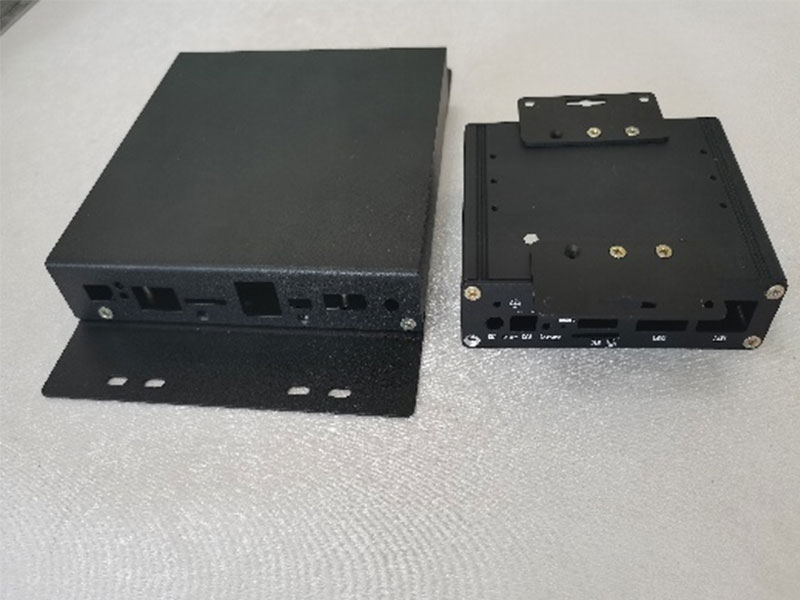
Classify drawing features into three groups: suitable for stamping, possible after a design or tolerance change, and still requiring machining. Precision bores, deep threads, sealing faces, bearing locations, and datum surfaces may remain secondary operations. Confirm locating datums, machining allowance, and how forming variation will affect the final setup. Secondary CNC machining is commonly used for high-precision bores and mounting faces on stamped components.
How to Move From a CNC Prototype to Stamped Production
A CNC prototype validates function, but not necessarily stampability. Its drawing may contain sharp corners, variable thickness, or tight tolerances created around machining rather than forming.
Freeze Requirements, Then Use DFM and First-Article Approval
Before hard tooling, confirm material, thickness, interfaces, critical dimensions, finish, and drawing revision. Projects still undergoing functional or customer-interface changes should remain in a flexible process until major risks are resolved.
A controlled transition follows this sequence: prototype validation, stamping DFM, production drawing revision, tool design, tool trial, sample inspection, correction, first-article approval, pilot run, and production release. Sample review should include burrs, cracks, wrinkles, springback, plating condition, appearance, and assembly performance, not dimensions alone.
What Buyers Should Include in a CNC-to-Stamping RFQ
An accurate quotation requires the current 2D drawing and STEP file, material and stock form, thickness, annual and lifetime quantities, current process, critical tolerances, finishing, secondary machining, inspection, packaging, and known changes.
Also compare tool ownership, storage, maintenance, sharpening, spare inserts, modification charges, transfer rights, and end-of-program handling. A low die price may create later cost if engineering changes or production support are excluded.
Choosing a Supplier for the CNC-to-Stamping Transition
A qualified supplier should evaluate both routes. Verify whether tooling is built internally, whether trial and production teams share responsibility, whether secondary work can be coordinated, and how first articles, revisions, tool wear, and corrective actions are controlled.
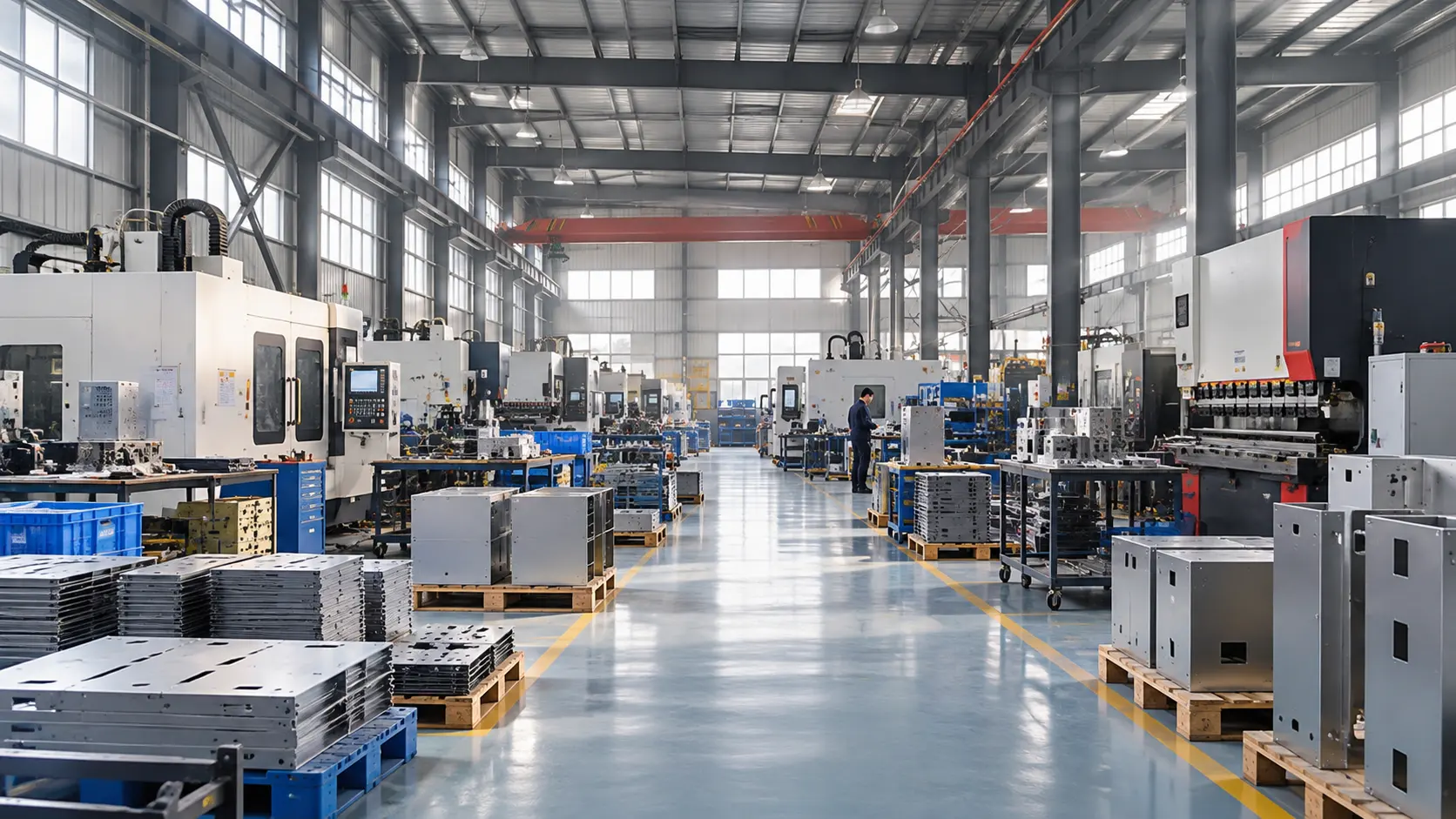
Zhejiang Chuangkai Mechanical and Electrical Technology Co., Ltd., also known as CK Metal Tech, combines tooling, metal stamping, CNC machining, surface treatment, inspection, and assembly within its integrated precision metal manufacturing scope. Its confirmed resources include 8 four-axis CNC machines, 18 precision CNC lathes, and Swiss-type machining capability. CK Metal Tech also produces progressive, drawing, and compound tooling and holds IATF 16949 certification. This supports full-CNC, full-stamping, and hybrid route reviews.
Conclusion
Stamping tooling pays off when the part is genuinely stampable, the design is stable, and lifetime savings exceed tooling, maintenance, validation, secondary processing, and revision risk. CNC machining remains useful for prototypes, changing designs, solid geometries, and precision features. A hybrid process may be the most balanced route when the base shape can be stamped but functional interfaces still require machining.
For a project review, prepare the latest drawing, STEP file, material, target quantity, program life, critical dimensions, secondary operations, and quality requirements. Those details allow CK Metal Tech to request a CNC-to-stamping DFM review and compare feasible routes without requiring an immediate tooling commitment.
FAQs
What production volume makes metal stamping cheaper than CNC machining?
There is no universal quantity. Calculate break-even from the actual tooling investment and the difference between completed CNC and stamping unit costs, including maintenance, secondary work, finishing, inspection, and design-change risk.
Can a CNC-machined part be converted directly to metal stamping?
Sometimes, but usually not without DFM. Solid sections, variable thickness, deep features, or tight tolerances may require redesign before tooling begins.
Do stamped parts still need CNC machining?
They may. Threads, precision bores, bearing fits, sealing faces, datum surfaces, or tight mounting features can require secondary machining, drilling, tapping, reaming, or grinding.
How can a buyer tell whether stamping tooling will pay off?
Confirm stampability, then compare completed lifecycle costs under low, expected, and high demand scenarios. The case is stronger when the design is frozen and hidden operations are included in both quotations.
What should be checked when choosing a stamping tooling manufacturer?
Check in-house tool design, DFM support, trials, first-article procedures, revision control, secondary machining, inspection, tool maintenance, ownership terms, and production quality management.
Leave a reply