







31st July 2026
Swiss Machining vs CNC Turning: How to Choose for Small Shafts, Pins, and Slender Parts
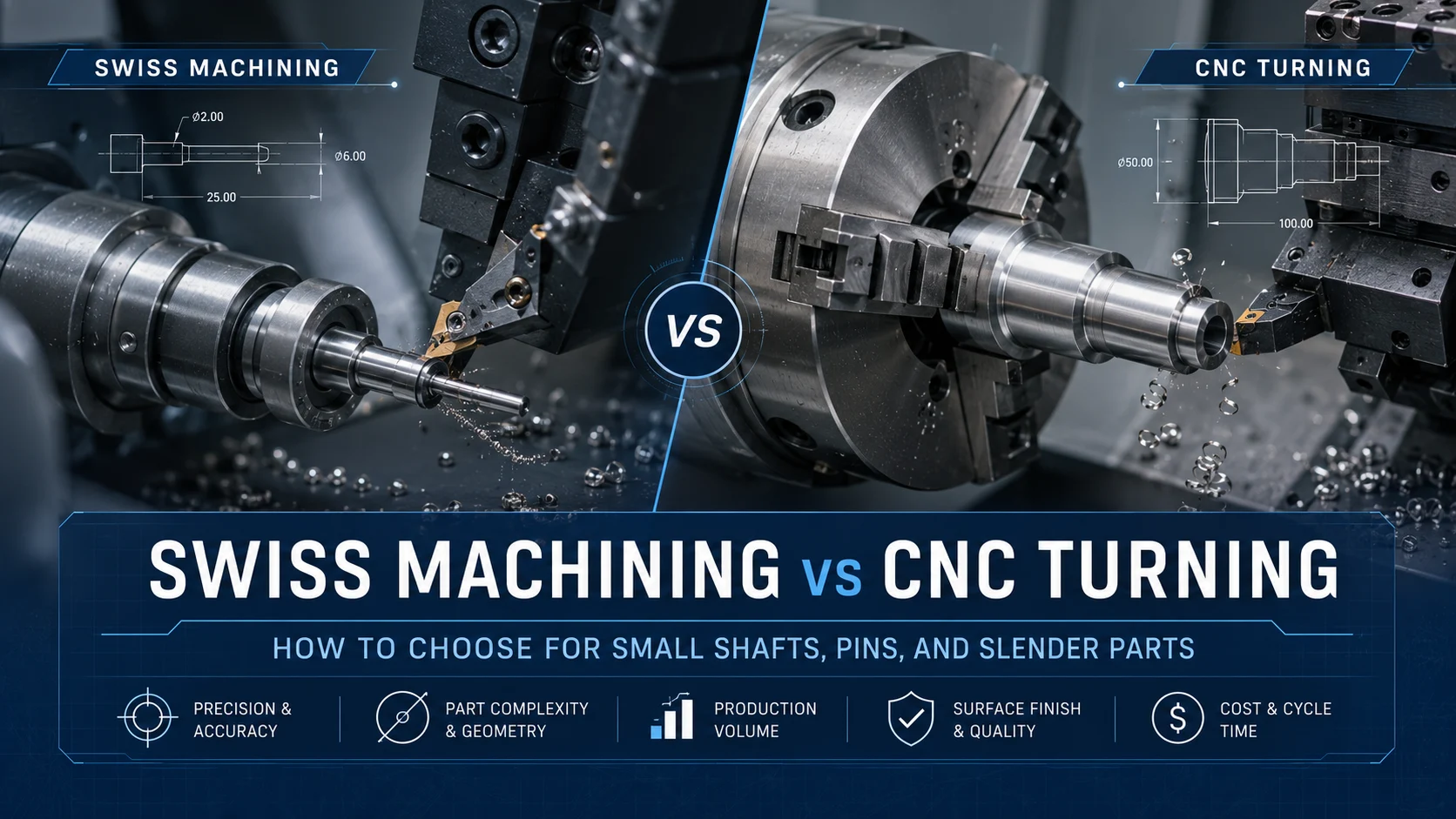
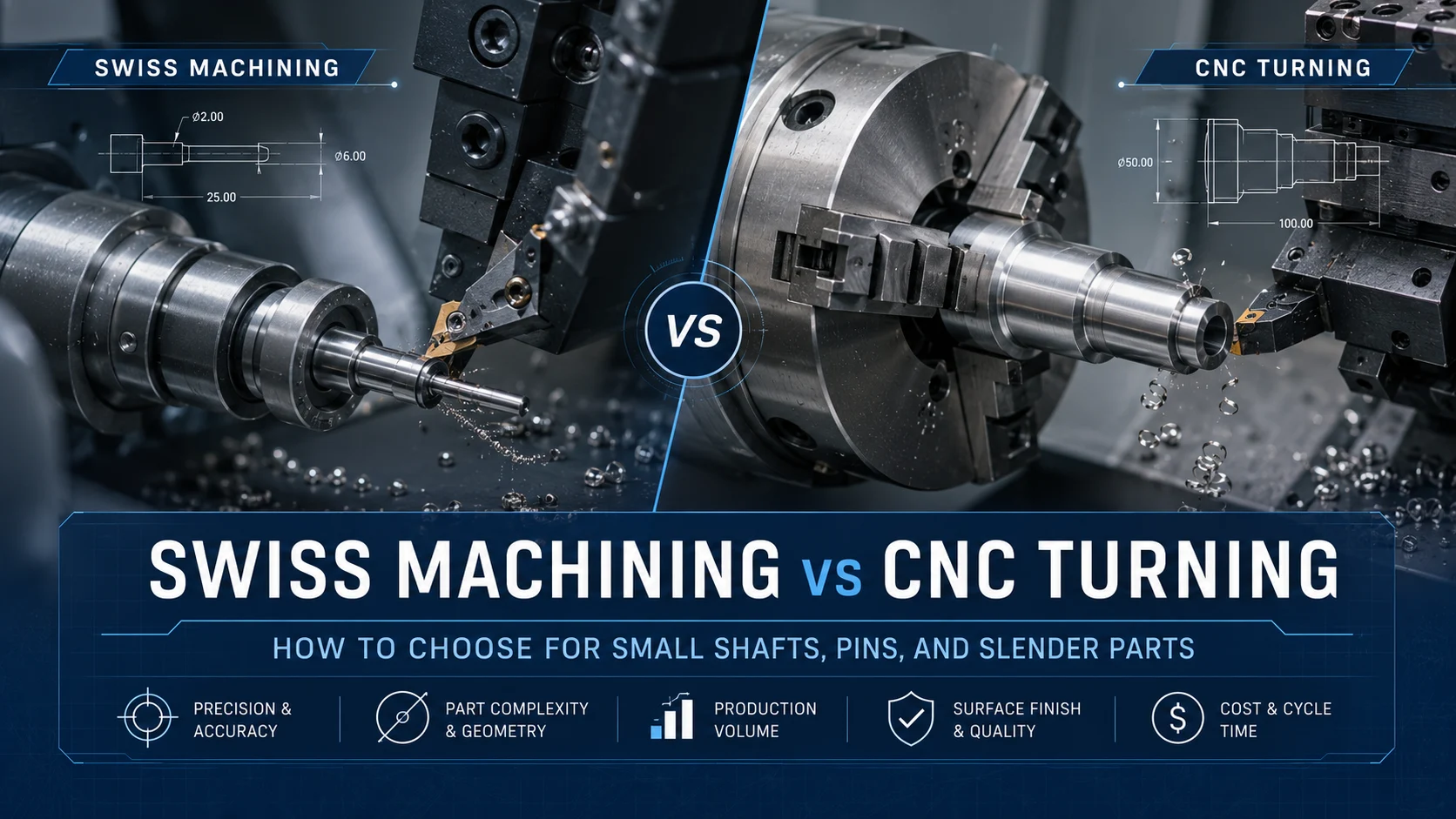
Choosing between Swiss machining and conventional CNC turning becomes difficult when a drawing contains a small diameter, a long unsupported section, tight runout requirements, or secondary features. The route depends on support, cutting length, stock condition, feature complexity, tolerance, and quantity. This guide helps engineers and sourcing teams evaluate shafts, pins, sleeves, connectors, and other slender parts without relying on a fixed rule.
Swiss Machining or CNC Turning? Quick Selection Guide
The first decision should come from geometry and process risk, not the assumption that a Swiss-type machine is more accurate. Buyers can review CK Metal Tech’s precision CNC turning and Swiss machining capabilities when both routes need evaluation.
| Project condition | Swiss machining is often suitable | Conventional CNC turning is often suitable |
| Small diameter with a long slender section | Support can remain close to the cutting zone | Possible if workholding and cutting strategy control deflection |
| Short, rigid, simple part | May add unnecessary setup | Often the more direct route |
| Cross holes, flats, grooves, or back working | Useful when the machine combines operations | Practical when secondary work remains economical |
| Low or uncertain volume | Depends on setup and features | Often easier to justify |
| Stable repeat production | Can reduce handling between operations | Competitive for simpler geometry |
| Variable bar straightness or diameter | Stock must suit the guide bushing | May be less sensitive, depending on workholding |
Choose Swiss Machining for Small-Diameter, Slender, Multi-Feature Parts
Swiss machining is commonly considered when a component bends or vibrates as the tool moves away from the main clamping point. In guide-bushing operation, the bar is supported close to the cutting area while the headstock feeds material through the guide. This can reduce unsupported length during cutting and suit long precision pins, narrow stepped shafts, and delicate sections.
It is also useful when turning, cross drilling, milling, threading, or back working can be combined. Buyers must verify the actual machine configuration. A Swiss-type lathe may run with or without a guide bushing, while live tooling, sub-spindle functions, and usable bar sizes vary. Published specifications confirm that convertible Swiss lathes can support both guide-bushing and chucker-style operation.
Choose Conventional CNC Turning for Shorter, Larger, or Simpler Parts
Conventional CNC turning remains practical for rigid parts, simple outside profiles, larger diameters, lower quantities, or drawings likely to change. A short pin with one diameter and a basic thread may not justify Swiss setup.
A fixed-headstock lathe can also produce slender parts using tailstock support, steady rests, staged cutting, and low-force tooling. The question is whether those measures create stable parts. Repeated corrections, several setups, or inconsistent runout justify reviewing Swiss machining. If the part remains stable, changing equipment may add cost without improving it.
Why Workpiece Support Changes Accuracy on Slender Parts
Guide-Bushing Support vs Fixed-Headstock Workholding
A slender shaft deflects when radial cutting force acts on an unsupported section. The result can be taper, chatter, changing diameter, poor straightness, or an inconsistent surface. Risk increases when the weakest section is far from the chuck or contains residual stress.
A guide bushing reduces the distance between tool and support, but it does not remove tool wear, heat, stock variation, clearance, or sequence problems. Conventional turning may remain suitable when a tailstock or steady rest supports the part without blocking features. Buyers should ask how the workpiece will be held and whether production uses the same setup.
Bar Stock Straightness, Diameter Variation, and Guide-Bushing Fit
In guide-bushing machining, bar diameter, roundness, straightness, and surface condition affect feeding and contact. Excessive clearance can weaken support; insufficient clearance can cause friction, feed problems, or surface marks.
Stock requirements depend on the machine, material, geometry, and operating mode. Some convertible Swiss lathes can run without a guide bushing and use drawn bar for shorter parts, while guide-bushing work may need more controlled stock. Tsugami’s SS20 information distinguishes traditional guide-bushing operation from optional chucker operation, showing why an RFQ should state material condition rather than only the alloy grade.
How Part Geometry and Tolerances Determine the Right Turning Process
Evaluate Diameter, Effective Length, and Length-to-Diameter Ratio Together
Length-to-diameter ratio is useful, but no universal cutoff fits every part. The critical length may be the machined section rather than overall length. On a stepped shaft, the smallest diameter or longest weak section may govern deflection.
Review minimum diameter, unsupported cutting length, transition radii, wall thickness, material stiffness, and tool access together. A hollow sleeve can behave differently from a solid pin with the same external dimensions. Mark datums and sections where bending or taper would affect assembly, then compare support, cutting sequence, and possible grinding.
Review Runout, Straightness, and Surface Finish
A diameter tolerance does not fully define shaft performance. Runout affects rotating interfaces, straightness affects alignment, and surface condition can influence bearings, seals, or sliding contact.
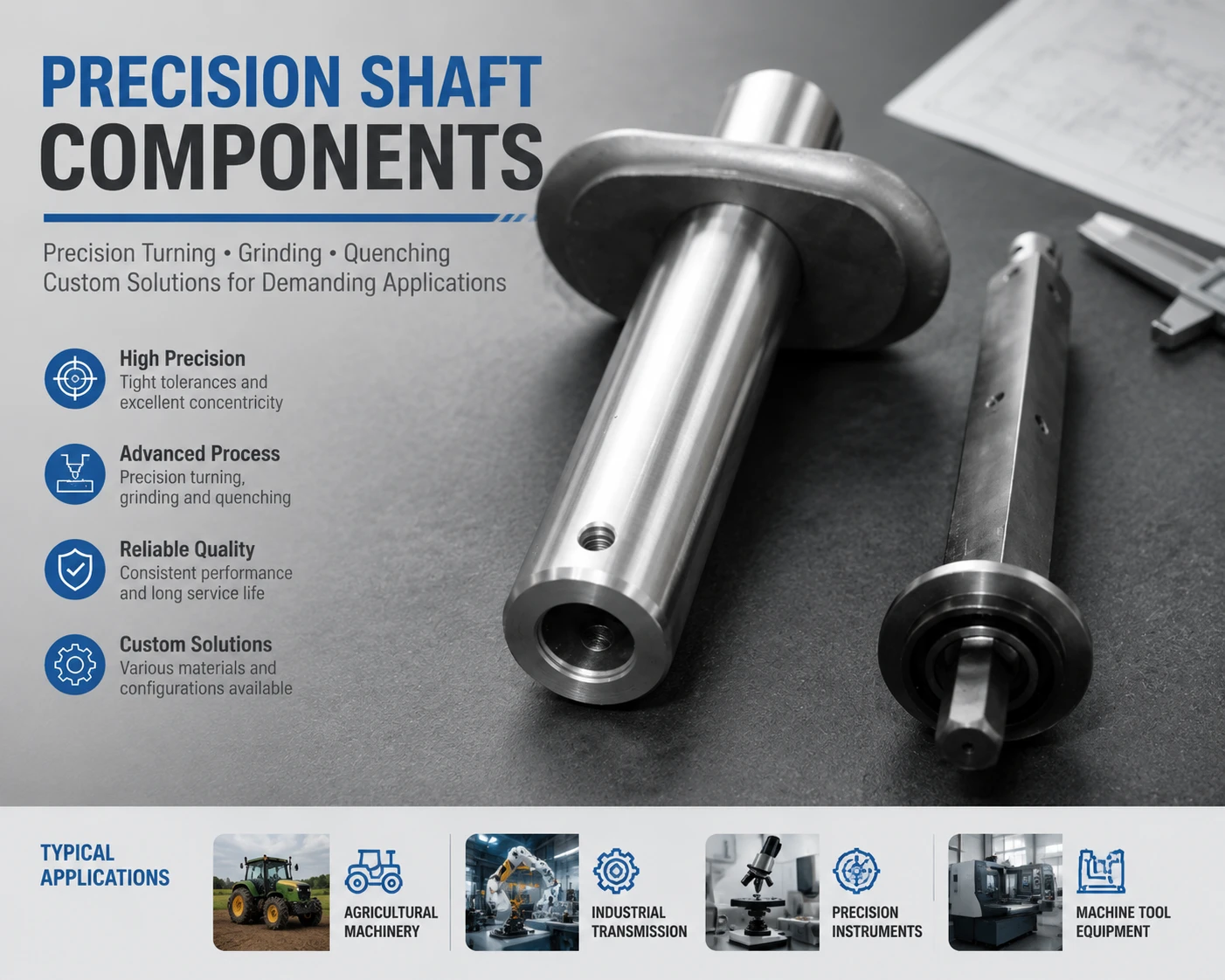
Tie each requirement to function and state how it should be measured. Turning may create the finished feature directly, but some components require cylindrical or centerless grinding after turning or heat treatment. CK Metal Tech’s precision-turned shaft components with grinding illustrate a route combining precision turning, grinding, and quenching for custom shaft designs used in machinery and transmission applications.
Check Cross Holes, Flats, Grooves, Threads, and Back Working
Small parts often become expensive because they need several operations. Cross holes, flats, slots, threads, end drilling, and cutoff-side features may require secondary handling.
A suitably configured Swiss machine may complete several features in one cycle using live tools and a sub-spindle. That can reduce transfers and datum changes, but deburring, grinding, or heat treatment may still control cost. Ask the supplier to identify each operation, datum, and inspection stage. Compare completed-part routes, not cycle times alone.
Swiss Machining vs CNC Turning Cost and Production Volume
Compare Setup Cost With Completed-Part Cost
Swiss machining may require bar preparation, guide-bushing selection, more tools, and detailed programming. Conventional turning may have lower setup cost but require separate drilling, milling, deburring, or back working.
A fair comparison includes material, setup, cycle time, tooling, remnant loss, secondary work, grinding, heat treatment, finishing, inspection, and packaging. Confirm whether samples and production use the same process. A low prototype price offers little value if production later requires a new route.
Choose the Process Across Prototype, Pilot, and Repeat Production
A prototype may use conventional turning while the design changes. After geometry and demand stabilize, Swiss machining may become attractive if it combines operations and reduces handling. A complex Swiss setup may still be uneconomical for low repeat demand.
Compare low, expected, and high quantity scenarios, separating one-time from recurring costs. Consider whether changing the process affects burr location, tool marks, datums, or capability. A staged plan—design validation, process review, pilot batch, then production approval—reduces risk.
Common Turning Problems and How to Prevent Them
Taper, Chatter, Deflection, and Poor Straightness
These defects do not prove that the wrong machine was selected. Taper may result from deflection, wear, heat, or alignment. Chatter may come from insufficient rigidity, unsuitable tooling, aggressive parameters, or excessive unsupported length. Poor straightness may begin in the bar, residual stress, heat treatment, or cutting sequence.
Give the supplier measurements showing where deviation occurs, the inspection datum, batch information, material lot, and whether the issue appears gradually or randomly. Persistent instability after support, tooling, and parameters are reviewed may justify Swiss machining or grinding.
Guide-Bushing Marks, Bar Variation, Burrs, and Remnant Waste
Swiss machining has its own risks. Bushing contact may mark unsuitable bar surfaces, cross holes may leave assembly-sensitive burrs, and remnants can affect short-run cost.
Before approval, define cosmetic surfaces, burr limits, edge breaks, cutoff condition, and packaging. Confirm who supplies the bar and which stock condition is required. These details prevent a dimensionally acceptable part from failing assembly or handling requirements.
RFQ Checklist for Small Shafts, Pins, and Slender Parts
A useful quotation includes the current 2D drawing and STEP file, material and condition, total and effective cutting lengths, maximum and minimum diameters, dimensional and geometric tolerances, surface requirements, features, heat treatment, finish, and quantities.
Also define inspection records, sample quantity, annual demand, application, and packaging. Long parts may need protection against bending in transport. Ask whether grinding, thread rolling, deburring, heat treatment, and finishing are included, and identify assumptions about stock or outsourced operations.
How to Choose a Swiss Machining and CNC Turning Supplier
A supplier should explain why the process fits. Ask about machine range, operating mode, workholding, live tooling, back working, secondary processes, inspection, and controls for tool wear and stock variation. Do not select a supplier solely because “Swiss machining” appears on a capability list.
Zhejiang Chuangkai Mechanical and Electrical Technology Co., Ltd. supports turned-part projects with one five-axis Swiss-type lathe, 18 precision CNC lathes, internal and external cylindrical grinding, centerless grinding, thread rolling, tapping, and drilling resources. Its integrated precision metal manufacturing capabilities cover connected manufacturing and assembly processes. Buyers can also review about Zhejiang Chuangkai Mechanical and Electrical Technology Co., Ltd. when evaluating its background. CK Metal Tech lists CNC turning and Swiss machining among its services and holds IATF 16949 certification.
Conclusion
Swiss machining is often suitable for small-diameter, slender, multi-feature parts when support near the cutting zone and combined operations reduce quality and handling risk. Conventional CNC turning remains practical for shorter, rigid, simpler, or lower-volume parts. The choice should follow the completed manufacturing route, not a fixed diameter, ratio, or quantity.
For a process review, submit the drawing, material, diameters, effective length, critical tolerances, features, heat treatment, target quantity, application, and any defect photographs or samples. Buyers can request a shaft and pin machining review from CK Metal Tech.
Frequently Asked Questions
What is the main difference between Swiss machining and CNC turning?
Swiss machining can support bar stock close to the cutting point with a guide bushing, while conventional turning typically holds the workpiece from a fixed headstock. Some Swiss-type machines can also run without a guide bushing.
When should Swiss machining be used for a slender shaft?
Consider it when deflection, chatter, taper, or several secondary features make conventional turning unstable or costly. Review minimum diameter, effective length, material, tolerances, features, and quantity instead of relying on one ratio.
Is Swiss machining more expensive than conventional CNC turning?
Setup may be more involved, but combining turning, drilling, milling, and back working can lower completed-part cost in repeat production. Simple or low-volume parts may remain less expensive on a conventional lathe.
Can a conventional CNC lathe machine long precision pins?
Yes, depending on diameter, material, tolerance, support, tooling, and cutting strategy. Persistent deflection or excessive secondary handling may favor Swiss machining.
What information is needed for a Swiss machining quote?
Provide drawings, material and condition, diameters, effective length, tolerances, runout, straightness, surface requirements, features, heat treatment, finish, inspection scope, packaging, and quantities.
Leave a reply