







Medical Equipment Enclosures: Powder Coating & Cleanability
18
9月
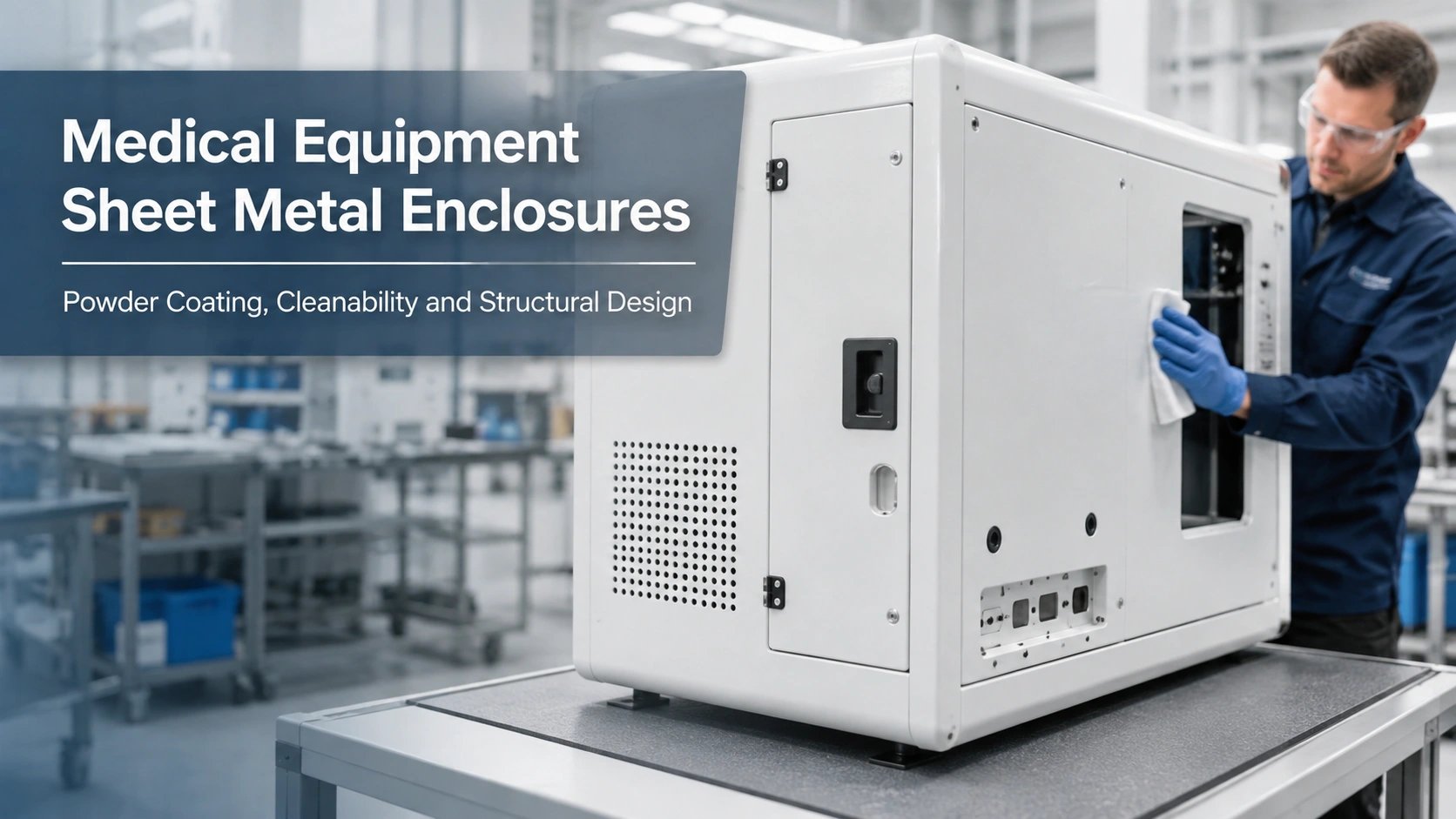
Medical equipment sheet metal enclosures have to do more than cover electronics. They must support cleaning routines, protect internal components, hold panels and interfaces in alignment, and remain practical to fabricate and service. Powder coating can provide a durable, attractive surface, but it is not a substitute for a validated cleaning protocol, material compatibility review, or medical-device quality plan.
Good design connects cleaning access, structural loads, and repeatable fabrication from the start. Treating them as one problem reduces late changes between engineering, manufacturing, and quality teams.
Start With the Enclosure’s Cleaning and Use Environment
Separate patient-contact risk from equipment-housing needs
Diagnostic cabinets, imaging covers, rehabilitation shells, laboratory panels, and support structures often sit outside the patient-contact path. Their requirements differ from parts touching tissue, fluids, or sterile fields. The device team should define risk classification, cleaning agents, wipe frequency, and disinfectant exposure; “medical” alone is not a specification. For a non-patient-contact housing, focus on an intact wipeable surface, chemical resistance, and protected seams. Sterile or controlled workflows may need additional validation, which remains the device manufacturer’s responsibility.
Map where soil and fluid can collect
Geometry drives cleanability. Deep pockets, narrow ledges, exposed fastener recesses, rough weld transitions, open seams, and sharp corners can retain residue. Mark high-touch areas, wipe paths, openings, removable panels, hinges, handles, and cable interfaces before release. Rounded transitions help, but the key is showing how a technician reaches required surfaces and how residue exits instead of migrating into sensitive areas.
How Powder Coating Supports Cleanable Medical Housings
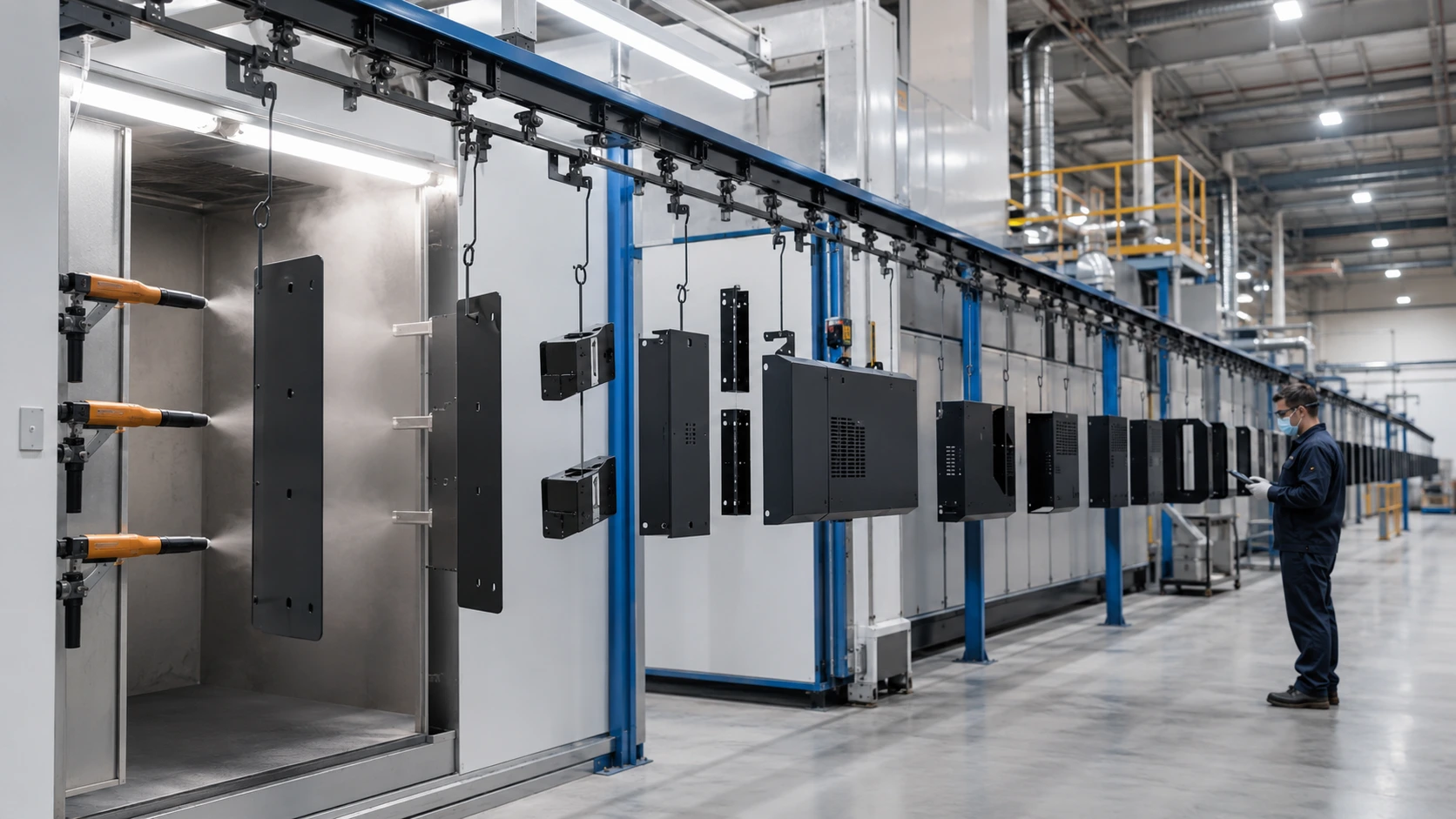
Powder coating is a dry finishing process in which charged powder is deposited on a grounded metal part and then cured. On suitable sheet metal, a well-prepared and intact coating can create a continuous protective surface that is easier to wipe than bare steel with exposed grinding marks or oxidation. The finish can also protect edges and broad panels during handling, shipping, and routine service.
Specify the surface instead of writing only “medical coating”
An RFQ should state color reference, gloss or texture, visible surfaces, coating thickness if controlled, masked areas, approved cleaning chemicals, wipe frequency, and appearance limits. “Medical-grade” is not a complete requirement; powder chemistry, substrate preparation, cure schedule, and finished-part validation must match the application.
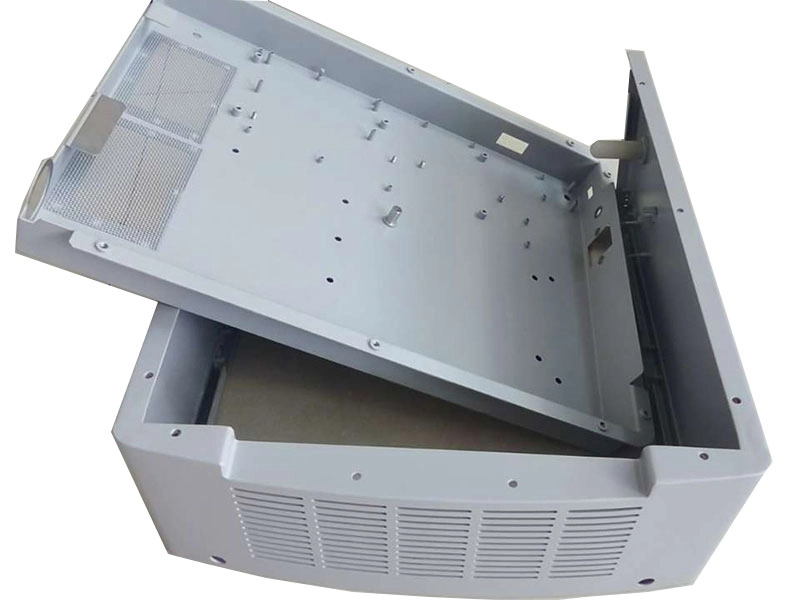
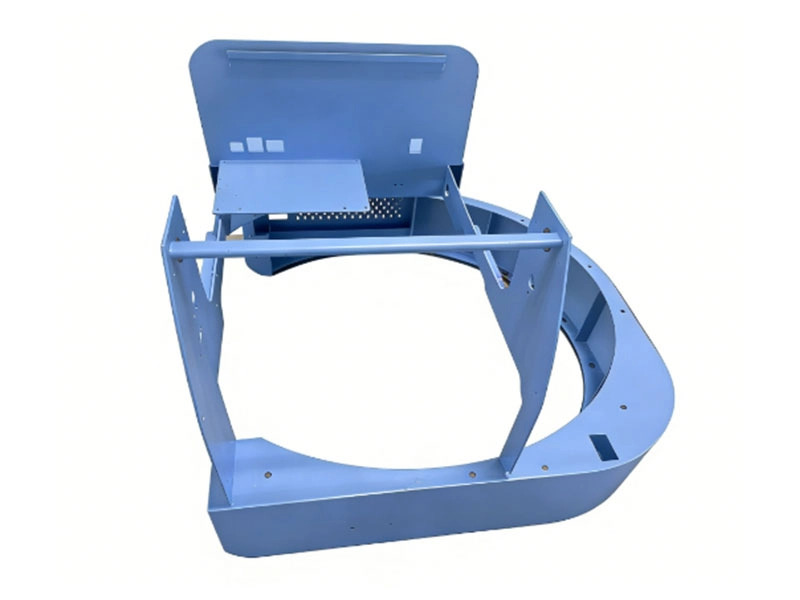
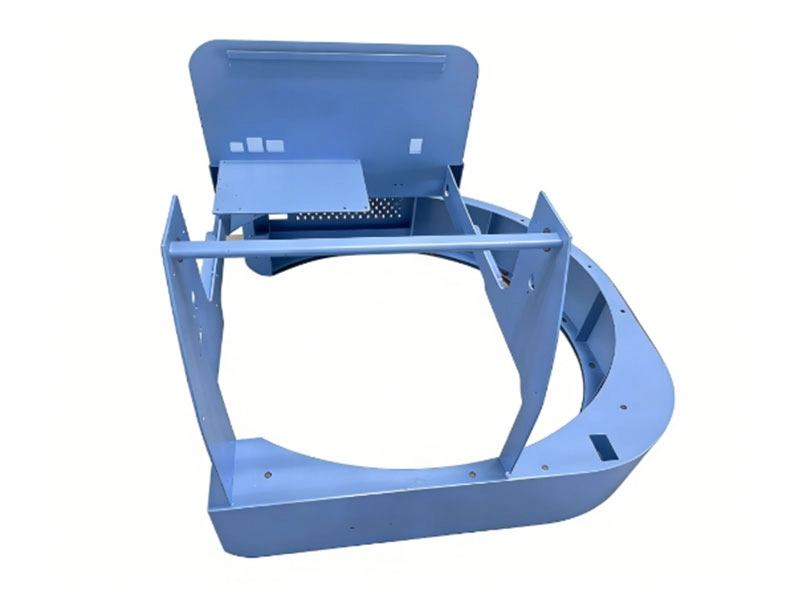
Do not infer antibacterial or disinfectant performance from a generic powder specification. CK Metal Tech’s 医療機器用湾曲板金筐体 is described with an antibacterial, easy-to-clean surface, but the test method, chemical list, exposure time, and acceptance criteria must be confirmed for each device program.
Protect functional contact areas from coating buildup
Threads, grounding points, hinge pins, sliding faces, gasket lands, connector panels, and tight interfaces may need masking. Identify them on the drawing and balance fit against exposed substrate. Check the approved sample after coating for panel fit, fastener engagement, grounding continuity, connector alignment, ventilation openings, and visible-face appearance. See powder coating for sheet metal enclosures for broader masking context.
Structural Design Priorities for Medical Equipment Enclosures
Choose material and thickness around loads, not appearance
Cold-rolled steel, stainless steel, and aluminum are common options. Select among them for stiffness, weight, corrosion exposure, forming, grounding, and finish, not appearance alone. Define unsupported spans, mounting method, fasteners, impact or vibration, and internal-module alignment. Local reinforcement for a display, fan, or pump may matter more than nominal wall thickness.
Control weld distortion and panel alignment
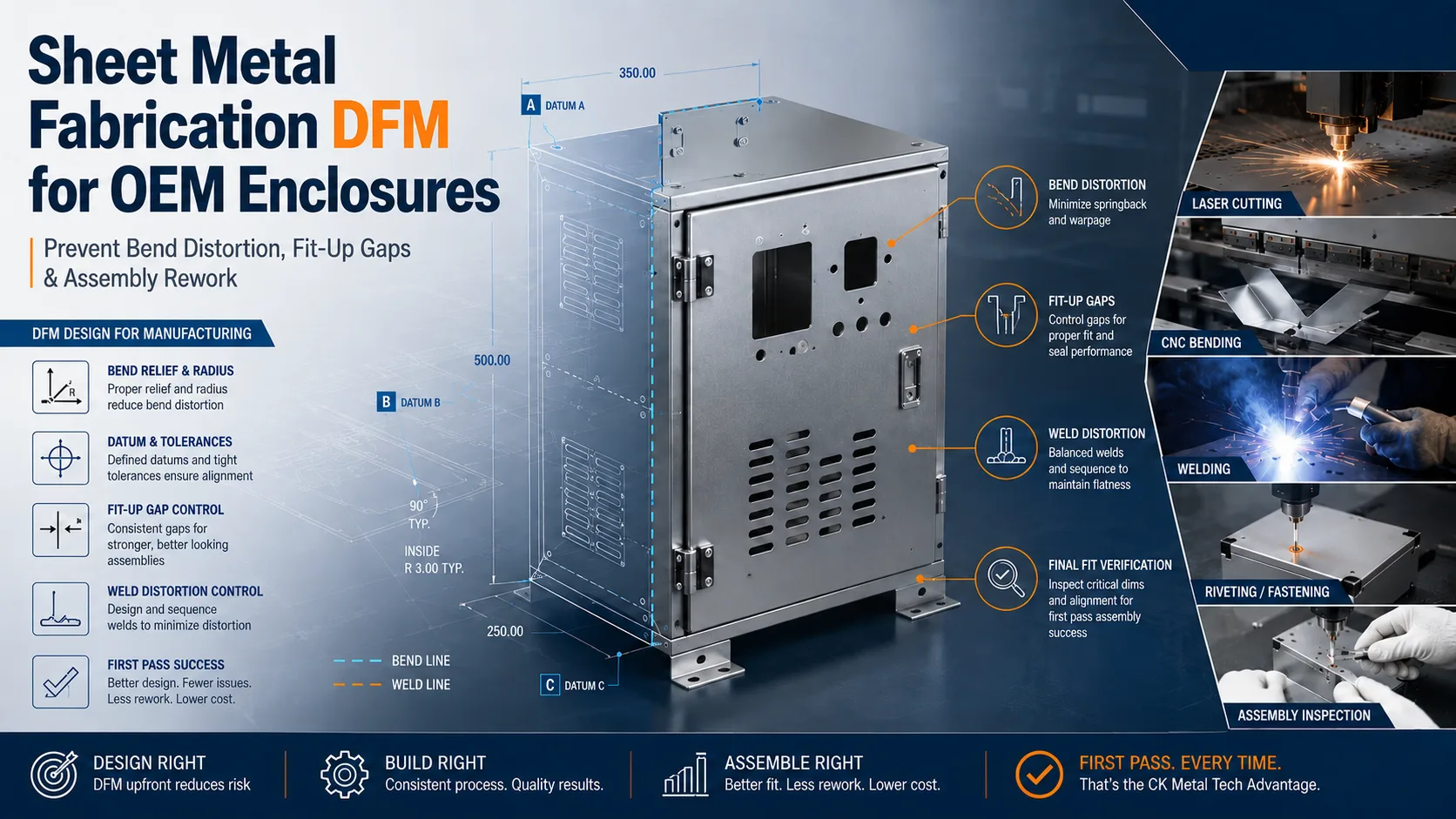
Welded housings combine panels, formed corners, brackets, doors, and frames. Heat input and weld sequence can shift flange flatness, gaps, holes, or cosmetic faces; excessive grinding can thin edges or show through powder. Use functional datums for doors, hinges, cutouts, connectors, openings, and feet, and define post-weld inspection points. A DFM review before fixture release is easier than correcting misalignment after coating.
Keep access, ventilation, and serviceability visible in the design
Ventilation slots, interface panels, removable covers, and cable routes must meet thermal and electrical needs without inaccessible ledges or sharp wipe traps. Specify hinge, latch, handle, edge, and coating details together when access is frequent. Check burr removal, edge protection, and whether technicians can clean around openings without pushing debris inside.
A Practical Design-to-Production Review
Before prototype approval, ask the supplier to review five connected areas:
- Cleaning path: Which surfaces are wiped, with which agents, and how are ledges, seams, and openings reached?
- Structural path: Where do loads enter the shell, and which panels or brackets need reinforcement?
- Process path: Can cutting, bending, welding, grinding, masking, coating, and inspection be repeated with the current drawing revision?
- Assembly path: Do coated holes, threads, grounding zones, seals, hinges, and interfaces fit after finishing?
- Evidence path: Which first-article measurements, finish checks, cleaning tests, or device-level validations will be recorded?
This review should include a marked-up drawing, not only a 3D render. Mark cosmetic faces, no-coat zones, datums, weld symbols, surface transitions, lifting points, and inspection locations. If cleaning chemistry or validation is still under development, label it as an open input so the supplier does not quietly choose an assumption.
Working With an Integrated Sheet Metal and Finishing Supplier
Cleanable enclosures are easier to manage when one supplier discusses fabrication and finishing together. CK Metal Tech lists laser cutting, CNC punching, bending, riveting, welding, and grinding for stainless steel, carbon steel, silicon steel, aluminum alloy, galvanized sheet, and aluminum-zinc plated sheet in its precision sheet metal manufacturing service. Its powder coating and painting capability includes an automatic line, manual coating for large parts, and manual painting.
Those capabilities are relevant to a medical enclosure route that combines formed panels, welded structures, cosmetic grinding, and a finished surface. They do not, by themselves, establish biocompatibility, sterilization resistance, antibacterial efficacy, or device regulatory compliance. The engineering team should confirm the actual substrate, dimensions, cleaning chemicals, coating system, masking, inspection, and validation requirements for each program.
What to Include in the Medical Enclosure RFQ
Send the current 2D drawing and 3D model, revision level, material and thickness, overall envelope, unsupported spans, mounting and lifting points, doors or removable panels, ventilation and cable openings, color and texture, cosmetic surfaces, masking zones, cleaning agents, expected exposure, quantity, and packaging requirements. For OEM buyers comparing sheet metal fabrication, sheet metal finishing, and related medical device machining, this shared information keeps quotes comparable.
Also state whether the enclosure is patient-contact, near-patient, laboratory, imaging, diagnostic, rehabilitation, or general equipment housing. Include the required structural checks, dimensional inspection points, coating acceptance criteria, and any device-level cleaning or environmental validation. A clear RFQ lets the supplier identify what is confirmed, what is conditional, and what still needs a test plan.
結論
Medical equipment sheet metal enclosures need coordinated decisions about cleanability, powder coating, structure, access, and manufacturing. A durable powder-coated surface can support wiping and protect fabricated panels, but only when the substrate, pretreatment, cure, masking, cleaning chemistry, and validation requirements are defined together. Structural reliability likewise depends on loads, datums, weld control, reinforcement, and service access rather than appearance alone.
For an engineering review, prepare the drawing revision, material, thickness, enclosure size, cleaning agents, finish, masked interfaces, structural loads, target quantities, and validation needs. You can contact CK Metal Tech for a medical enclosure fit review and ask the team to evaluate the proposed fabrication, coating, inspection, and assembly route.
よくある質問
Is powder coating automatically suitable for medical equipment enclosures?
No. Suitability depends on the enclosure’s use environment, cleaning chemistry, substrate, coating system, cure, masking, and device-level validation. Patient-contact or sterile applications may require additional evidence.
Does an easy-to-clean coating make an enclosure compliant?
No. Cleanability is one design input. The device manufacturer must define intended use, cleaning and disinfection requirements, risk controls, and any applicable validation or regulatory documentation.
Which materials are common for medical equipment housings?
Cold-rolled steel, stainless steel, and aluminum can all be considered. Select among them using stiffness, weight, corrosion exposure, forming, grounding, finish, and assembly requirements.
What should be masked before powder coating?
Review threads, grounding points, hinge and sliding faces, gasket lands, connector interfaces, tight holes, and other assembly-critical surfaces. Confirm the no-coat plan on the drawing before first-article production.