







21st 8월 2026
Telecom Enclosure Design for Future 6G Infrastructure: Thermal Management, EMC, Corrosion and RFQ Checklist
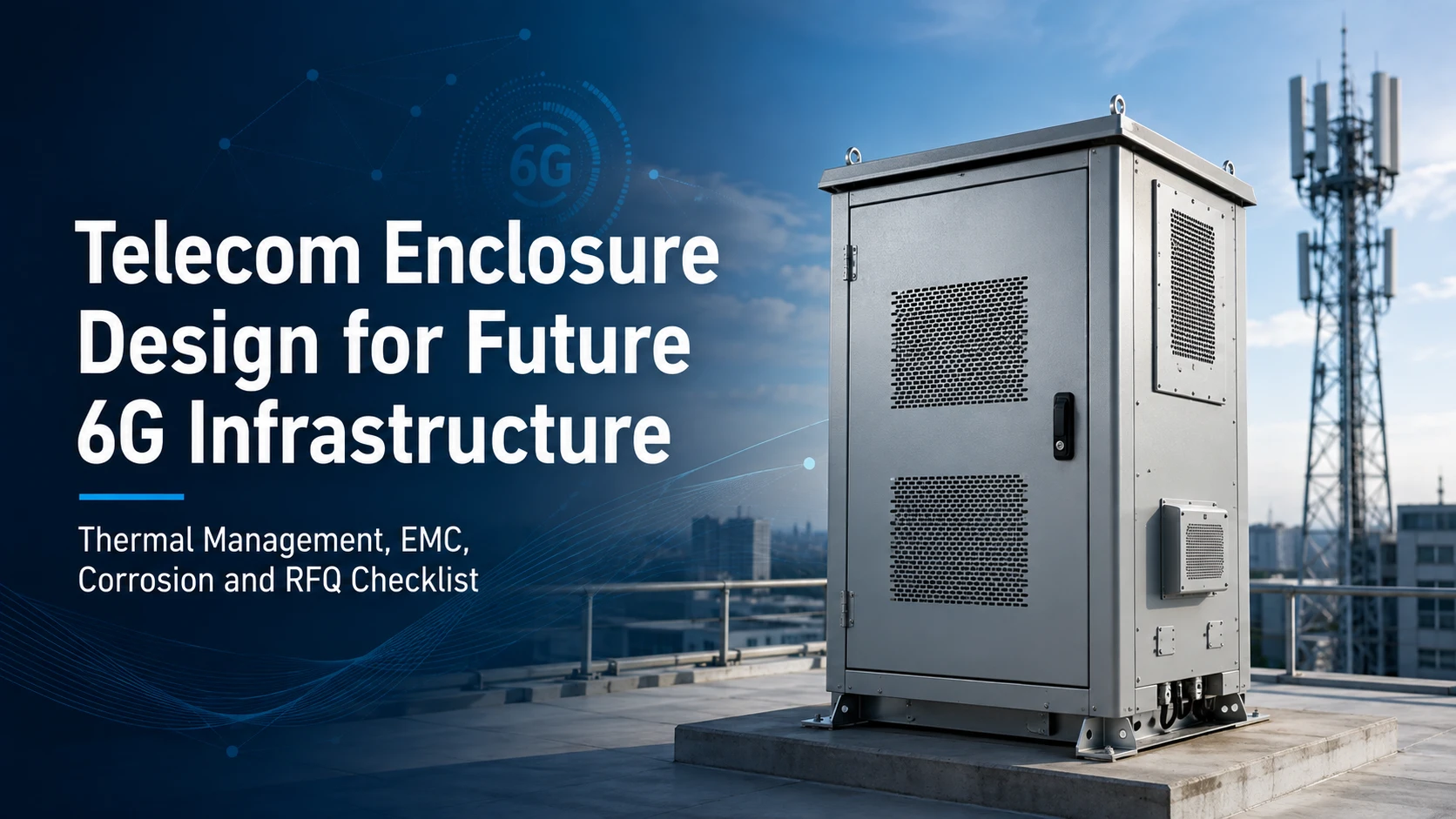
A telecom enclosure design for future 6G infrastructure should begin with equipment heat load, installation site, environmental exposure, electromagnetic compatibility, maintenance access, and manufacturing scope—not a “6G-ready” label. For equipment engineers and B2B buyers, the objective is to convert operating conditions into a buildable specification, a testable prototype, and a comparable RFQ.
What “6G-Ready Telecom Enclosure” Can—and Cannot—Mean Today
Separate Current Enclosure Requirements from Unfinished 6G Specifications
IMT-2030, the ITU framework associated with 6G, is still progressing through technical requirements, candidate technology, evaluation, and approval. Its radio-interface performance requirements do not prescribe one sheet metal material, IP rating, cooling method, or corrosion class for telecom cabinets. A product may be designed for future-generation communication equipment, but “6G compliant enclosure” is not a complete specification unless the customer defines the equipment and acceptance requirements.
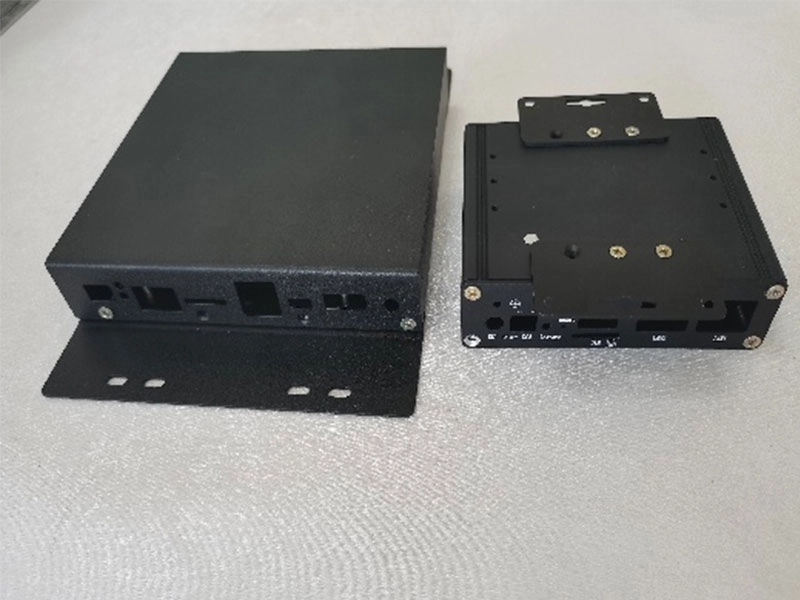
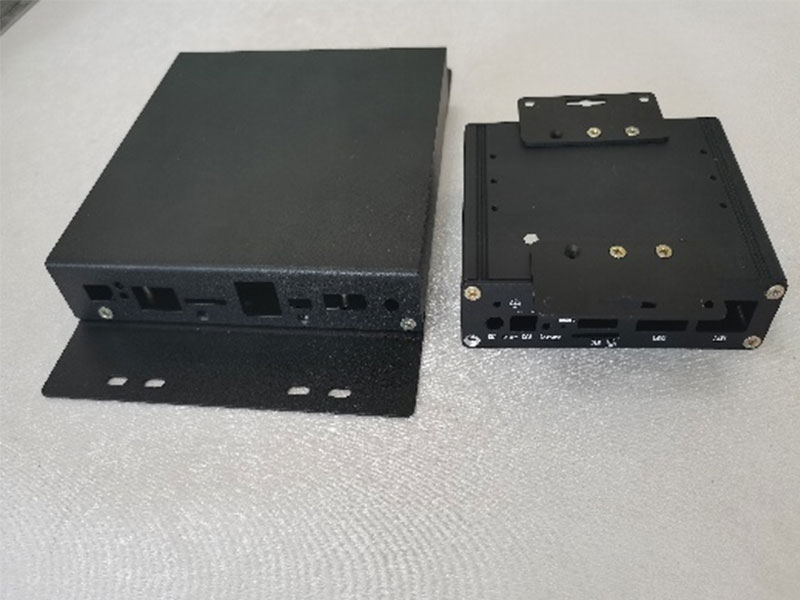
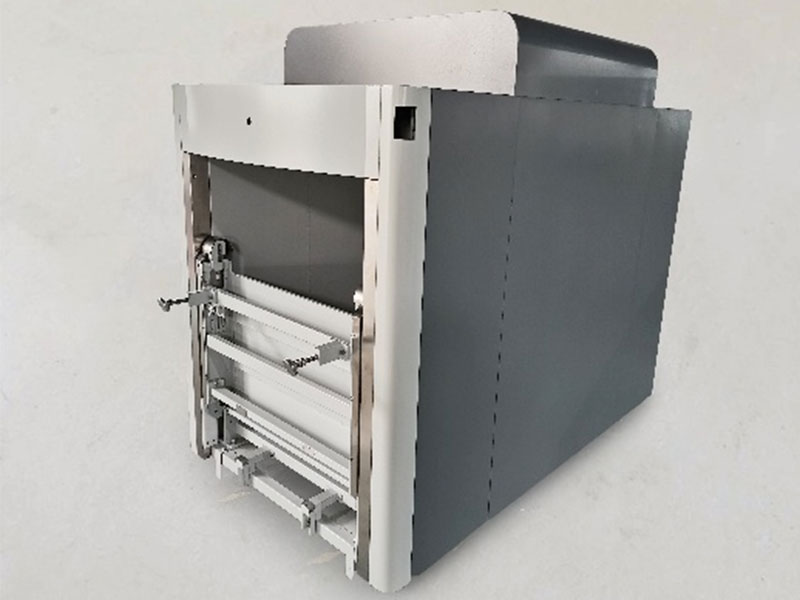
에이 6G network communication box enclosure can serve as a build-to-print product example, but its thermal, EMC, ingress, and corrosion performance must still be verified against the application. RFQs should replace broad future-ready claims with measurable requirements.
Define the Equipment, Installation Site, and Supplier Scope
Indoor boxes, outdoor pole-mounted enclosures, roadside cabinets, and weather-protected housings face different temperature, moisture, contamination, vibration, and service conditions. ETSI environmental standards classify telecommunications equipment by deployment and environmental severity, so the site should be defined before materials and tests are selected.
The OEM should provide equipment layout, heat dissipation, weight, mounting, cable interfaces, and access direction. The enclosure supplier converts those inputs into manufacturable panels, doors, joints, mounting features, and finishes. Buyers reviewing 저장촹카이 기계전기기술유한공사에 대하여 should distinguish confirmed manufacturing processes from project-specific performance claims.
Balance Thermal Management, Ingress Protection, and Condensation Control
Build the Thermal Input Before Selecting a Cooling Method
Cooling cannot be selected from enclosure size alone. Define internal heat dissipation, component distribution, ambient temperature limits, solar exposure, allowable internal temperature, and expected dust loading. These factors determine whether passive, ventilated, or sealed cooling is appropriate.
Open ventilation may suit a controlled indoor location but not a site exposed to rain, salt, or industrial contaminants. A highly sealed enclosure can improve ingress protection while trapping heat. The RFQ should state who is responsible for thermal analysis, prototype measurement, and approval.
Prevent Condensation Without Compromising Environmental Protection
An enclosure can resist external water and still develop internal condensation. Temperature cycling changes internal pressure, moisture may enter during maintenance, and humid air can condense on cooler metal surfaces. The risk depends on climate, sealing, shutdown cycles, internal heat, and orientation.
Possible controls include pressure-equalizing vents, drainage, internal heaters, or controlled circulation. Prototype testing should use the final door, gasket, cable glands, filters, and installed accessories. If condensation occurs, review the complete moisture and temperature path rather than assuming the gasket alone failed.
Design EMC Continuity into the Sheet Metal Enclosure
Control Seams, Doors, Panels, Gaskets, and Grounding Paths
A metal enclosure does not automatically provide adequate shielding. Electrical discontinuities can occur at doors, removable panels, hinges, painted joints, fasteners, and long seams. ETSI EN 300 386 defines EMC requirements for telecommunications network equipment, but compliance applies to the assembled equipment and its interfaces, not merely the metal housing.
Drawings should identify conductive contact areas, grounding studs, gasket locations, fastener patterns, and surfaces that must remain free of insulating coating. Conductive gaskets may suit frequently opened panels, but selection depends on frequency range, compression, environment, and maintenance.
Manage Ventilation and Cable Entries Without Creating Shielding Leaks
Ventilation openings and cable entries often become weak EMC paths. Large louvers may improve airflow but interrupt shielding continuity. Cable glands may preserve environmental sealing while still requiring bonding, filtering, or controlled placement.
Power, signal, and radio-frequency interfaces should be reviewed together with airflow and access. Powder coating can also isolate contact surfaces, so masked areas, door frames, grounding points, and fastener interfaces should be marked on the drawing. Final performance should be confirmed through system testing.
Select Materials and Corrosion Protection for the Deployment Environment
Compare Aluminum, Coated Steel, and Stainless Steel by Application
Material selection should consider stiffness, weight, fabrication, welding, electrical continuity, corrosion exposure, coating compatibility, and lifecycle cost. Coated steel may suit many moderate environments; aluminum can reduce weight; stainless steel may suit more demanding exposure but can increase material and fabrication cost. No single option fits every outdoor telecom cabinet.
Substitutions should require approval because alloy, coating, or temper changes may affect bending, welding, grounding, and corrosion.
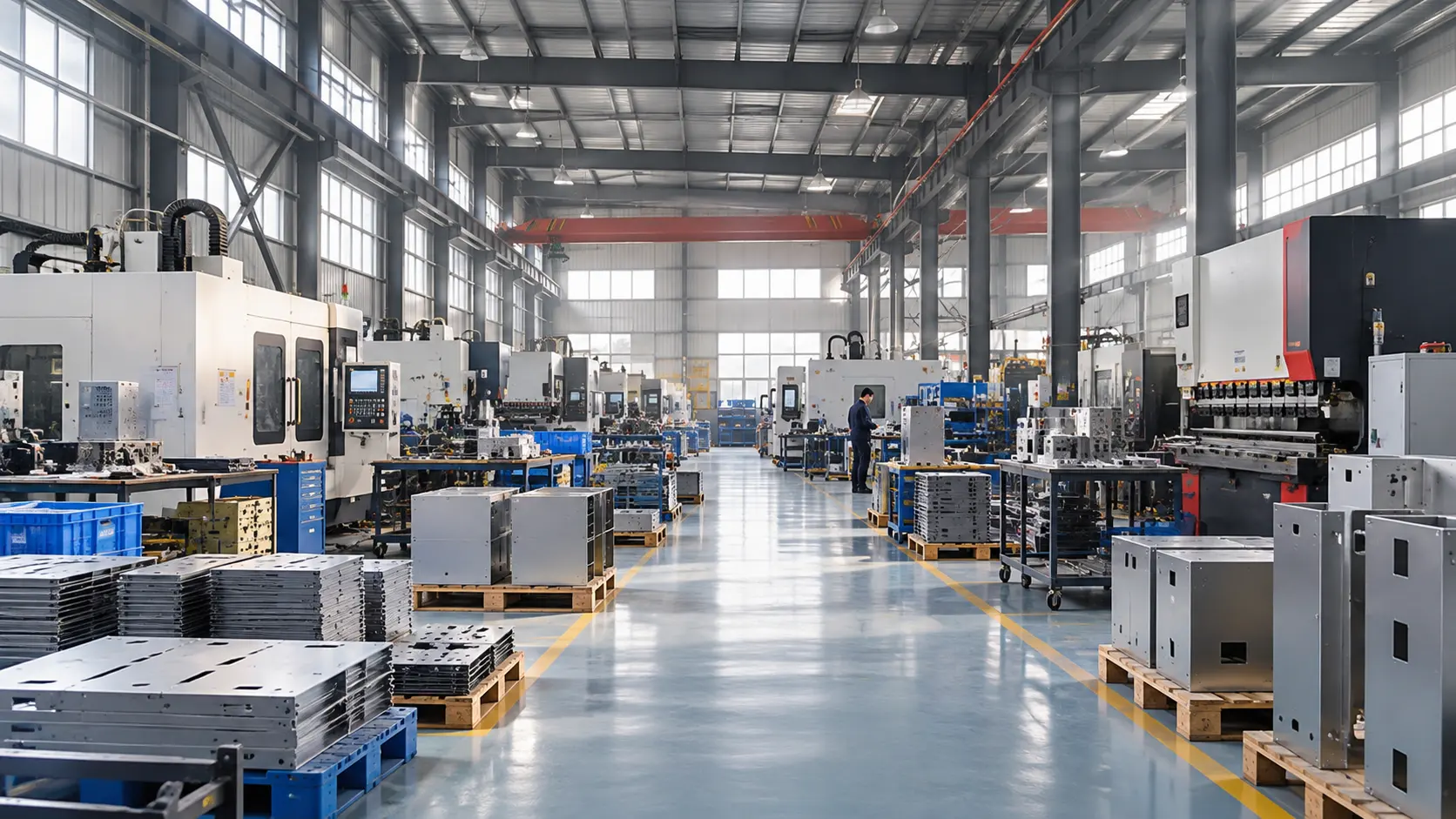
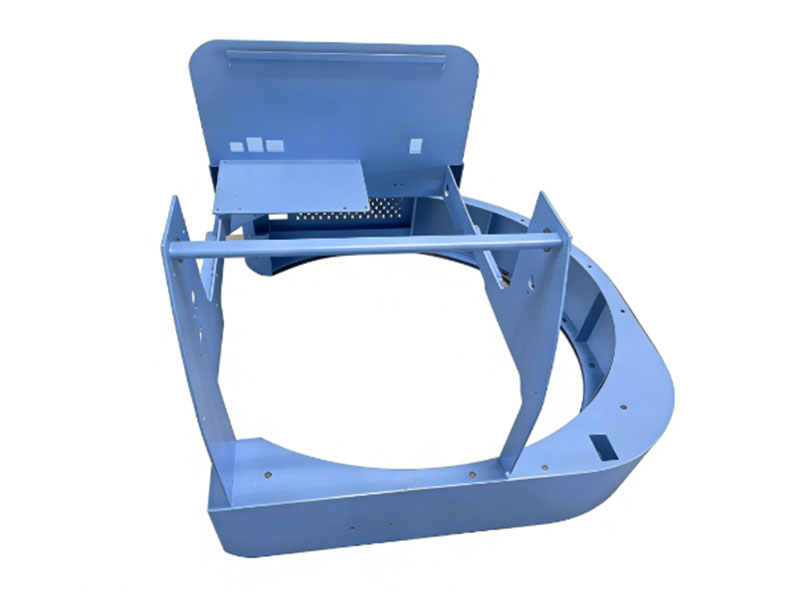
CK Metal Tech’s precision sheet metal manufacturing capabilities include laser cutting, punching, bending, riveting, welding, and processing of stainless steel, carbon steel, aluminum alloy, galvanized sheet, and aluminum-zinc-coated sheet. Suitability still depends on the drawing and deployment requirements.
Prevent Edge, Fastener, Weld, and Galvanic Corrosion
Corrosion commonly starts at cut edges, holes, welds, scratches, fasteners, and uncoated grounding areas. These locations may have thinner protection, heat-affected surfaces, trapped moisture, or dissimilar-metal contact.
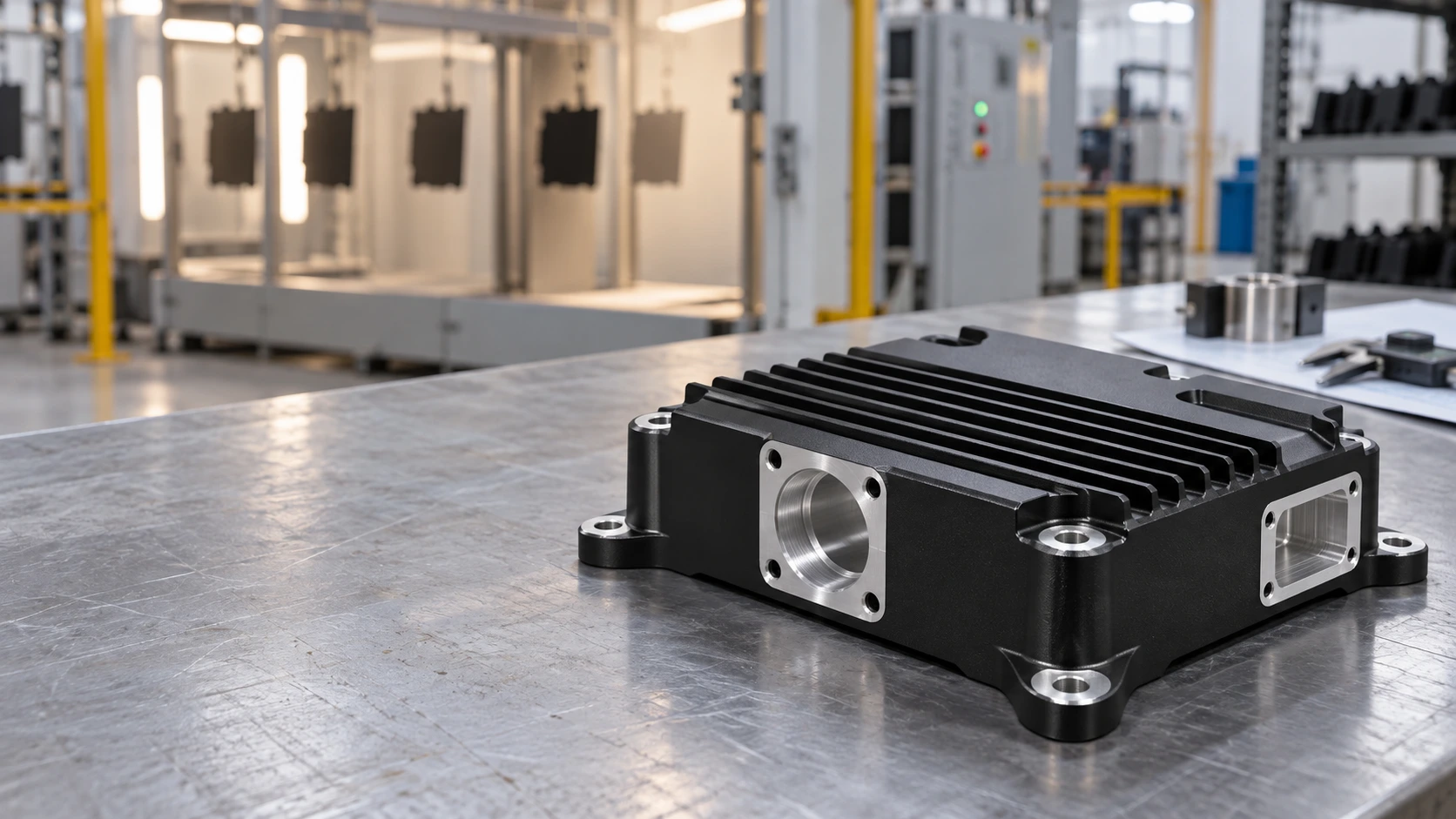
The RFQ should identify substrate, pretreatment, coating system, masking, fastener material, repair method, and acceptance criteria. Where different metals meet, review galvanic compatibility and consider isolation or sealing.
A salt-spray duration alone is incomplete. Buyers should also define specimen condition, scribe method if applicable, evaluation criteria, and how the laboratory test relates to actual service exposure.
Validate the Prototype Before Repeat Production
Define Test Ownership and the Required Assembly State
Thermal, EMC, ingress, corrosion, and mechanical checks may involve different parties. Thermal and EMC acceptance may require actual electronics, cables, software load, and cooling components.
Testing an empty enclosure may not represent the completed system. Cable glands, vents, locks, mounting plates, and purchased hardware can change sealing, airflow, and electrical continuity. Define the test sample, assembly state, test owner, report format, and approval authority. Before repeat production, freeze approved drawings, materials, gaskets, masking, and inspection points.
Review Common Failure Modes Before Production Approval
| Failure mode | Likely issue | Next action |
|---|---|---|
| Internal overheating | Heat input or cooling path undefined | Recheck heat load and assembled airflow |
| Condensation | Temperature cycling or moisture path overlooked | Review venting, drainage, heating, and shutdown conditions |
| EMC leakage | Continuity lost at a seam or penetration | Inspect bonding paths and retest the system |
| Water ingress | Gasket compression or cable entry inconsistent | Test the final assembled enclosure |
| Edge corrosion | Edges, welds, or fasteners lack protection | Review pretreatment and local repair |
| Door misalignment | Fabrication or coating changed geometry | Correct datums and assembly controls |
Prepare a Comparable RFQ and Qualify the Manufacturer
Include the Technical Inputs Required for a Quote
A custom telecom enclosure RFQ should include controlled 2D drawings, a 3D model, BOM, equipment layout, weight, heat dissipation, installation site, mounting method, ambient conditions, ingress requirements, EMC interfaces, material, finish, grounding points, cable entries, prototype quantity, annual volume, testing, assembly, and packaging.
When requirements remain open, request a DFM review and prototype quotation rather than a production price based on assumptions. The quotation should identify drawing revision, included components, outsourced processes, testing responsibility, and exclusions.
Evaluate Supplier Capabilities, Evidence, and Red Flags
A qualified manufacturer should explain the route from cutting and bending through joining, finishing, inspection, assembly, and packaging. Ask how door alignment, gasket compression, conductive contact areas, masked features, cable openings, and engineering changes are controlled. Warning signs include unsupported “6G-ready,” “IP-rated,” or “EMC-shielded” claims, quotations without revision references, and no distinction between enclosure inspection and complete-system validation.
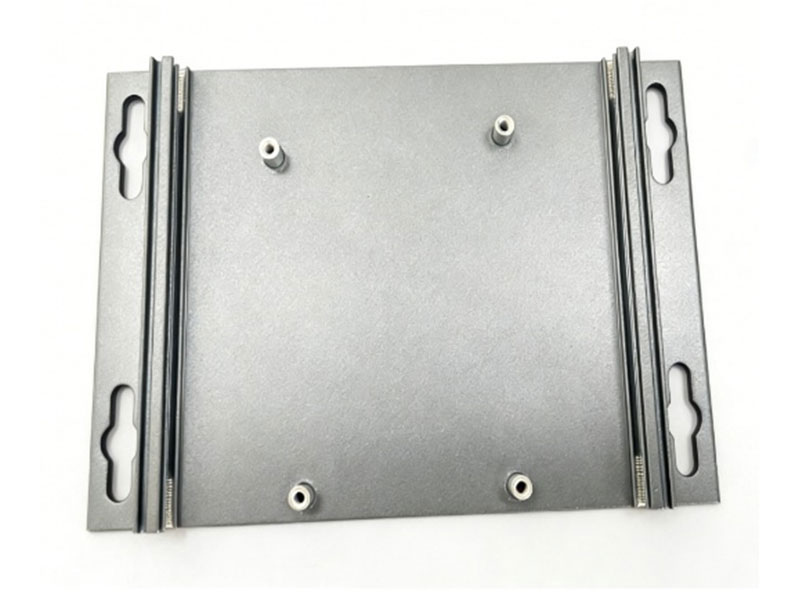
CK Metal Tech provides precision metal manufacturing and assembly capabilities covering sheet metal processing, machining, stamping, surface finishing, and component assembly. Its website also lists communication enclosure products; the suitable process remains dependent on material, geometry, quantity, and application.
결론
A telecom enclosure for future 6G equipment should be specified through measurable project conditions, not a future-ready label. Define the equipment, environment, heat load, EMC interfaces, moisture risks, corrosion exposure, maintenance access, and verification responsibility before comparing suppliers.
Buyers can submit telecom enclosure drawings for a manufacturing review with the model, dimensions, material, site conditions, heat information, quantity, finish, testing expectations, and assembly scope. CK Metal Tech can then review the manufacturing route without treating unconfirmed thermal, EMC, ingress, or corrosion performance as an established product claim.
자주 묻는 질문
Is there a final 6G telecom enclosure standard?
No universal final standard defines the material, cooling route, IP rating, or corrosion class for every 6G enclosure. Requirements should come from the specific equipment, deployment environment, applicable standards, and customer test plan.
How do you cool a sealed telecom enclosure?
The suitable method depends on internal heat, ambient temperature, solar exposure, enclosure size, allowable temperature, and ingress requirements. Options may include passive dissipation, heat exchangers, or sealed active cooling, subject to engineering verification.
How does powder coating affect EMC shielding?
Powder coating is electrically insulating and may interrupt grounding or bonding at doors, panels, fasteners, and contact surfaces. Drawings should identify masked conductive areas and final EMC test requirements.
Which material is suitable for an outdoor telecom cabinet?
The choice depends on weight, stiffness, fabrication, corrosion environment, coating system, electrical bonding, maintenance, and lifecycle cost. Material grade and finish should be verified against the deployment specification.
What information is needed for a custom telecom enclosure quote?
Provide drawings, BOM, equipment arrangement, weight, heat dissipation, installation method, environment, ingress and EMC requirements, material, finish, quantity, testing, assembly, and packaging.
댓글을 남겨주세요